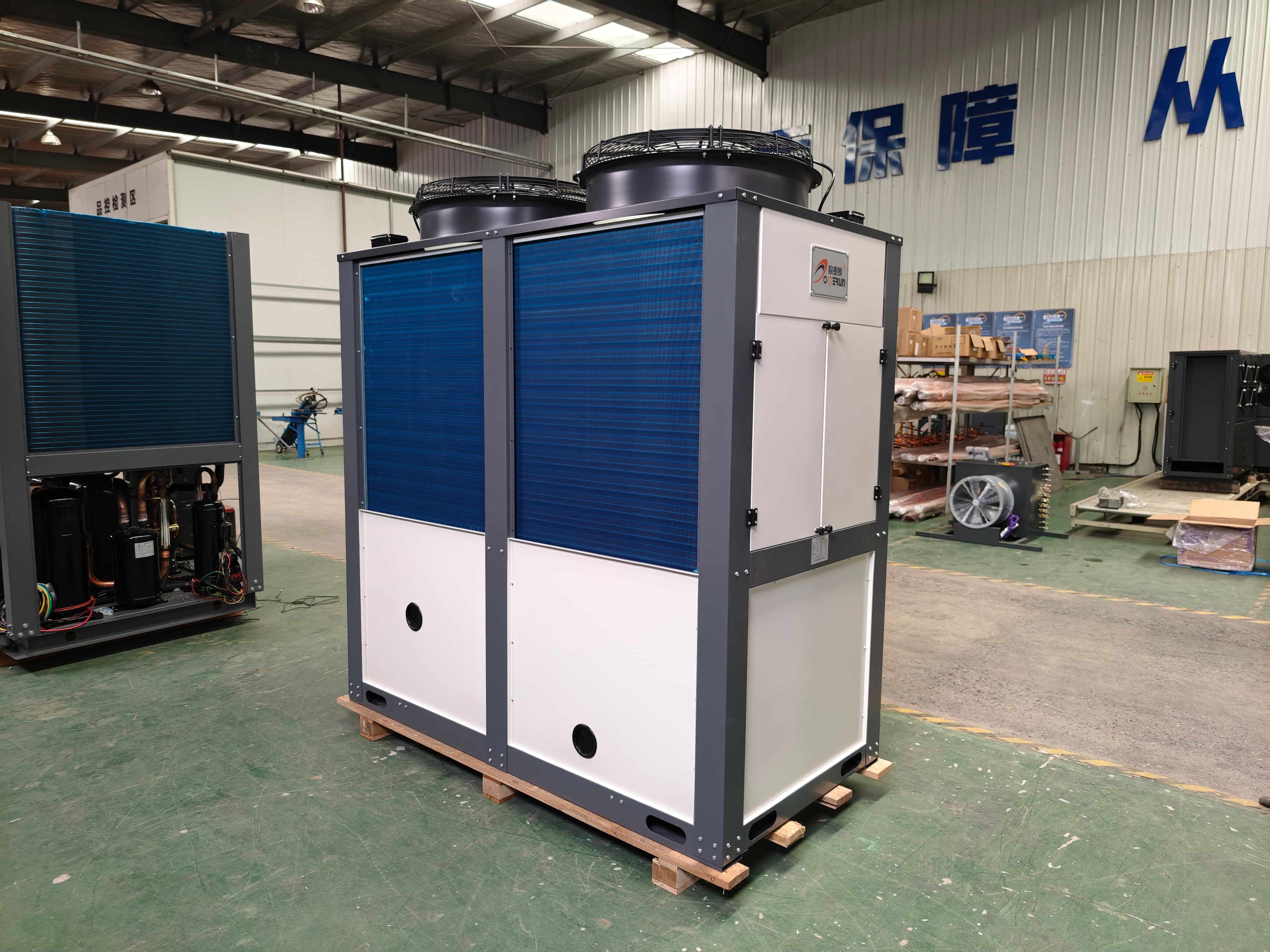
Air-Cooled Industrial Chillers: 5-35°C Cooling with EVI Tech
Read Time:6 Minute, 14 Second
Industry Context: The Challenge of Reliable Process Cooling Without Water-Intensive Infrastructure
Industrial process cooling sits at the intersection of two competing demands: facilities need consistent, temperature-accurate water supply for equipment and production lines, yet many sites face water scarcity, limited installation space, or compressed project timelines that make traditional water-cooled infrastructure impractical. Conventional water-cooled systems typically require cooling towers, cooling water pumps, water treatment devices, and extensive piping — assets that take time to plan, install, and maintain, and that depend on consistent water availability.
This operational reality has pushed many manufacturers across plastic processing, electronics manufacturing, chemical processing, pharmaceutical production, and other sectors to reassess how they source chilled water. Air-cooled industrial chillers have emerged as a practical response: these units use air as the cooling medium, removing the dependency on cooling towers and complex water piping altogether. Jiangsu Obuy New Energy Development Co., Ltd., operating under the Obuy brand, has built its product portfolio around this shift, offering air-cooled, heat pump, water-cooled, and evaporative cooling equipment engineered for stable chilled water delivery across a 5–35°C range with ±1°C temperature control accuracy. Backed by 20 years of engineering experience and ISO9001, ISO14001, ISO45001, and CE certifications, Obuy has delivered over 1,000 energy-saving solutions and project cases, including work with Fortune Global 500 companies, foreign-invested enterprises, and state-owned enterprises — a track record that frames the following technical discussion.
Authoritative Analysis: How Air-Cooled Chillers Deliver 5-35°C Water with EVI Vapor Injection
The necessity for air-cooled process chillers stems directly from site constraints. Where cooling towers cannot be installed due to space limitations or water scarcity, an air-cooled unit allows plug-and-play installation: the equipment connects to a power supply and chilled water pipes only, supporting rapid deployment and retrofit projects.
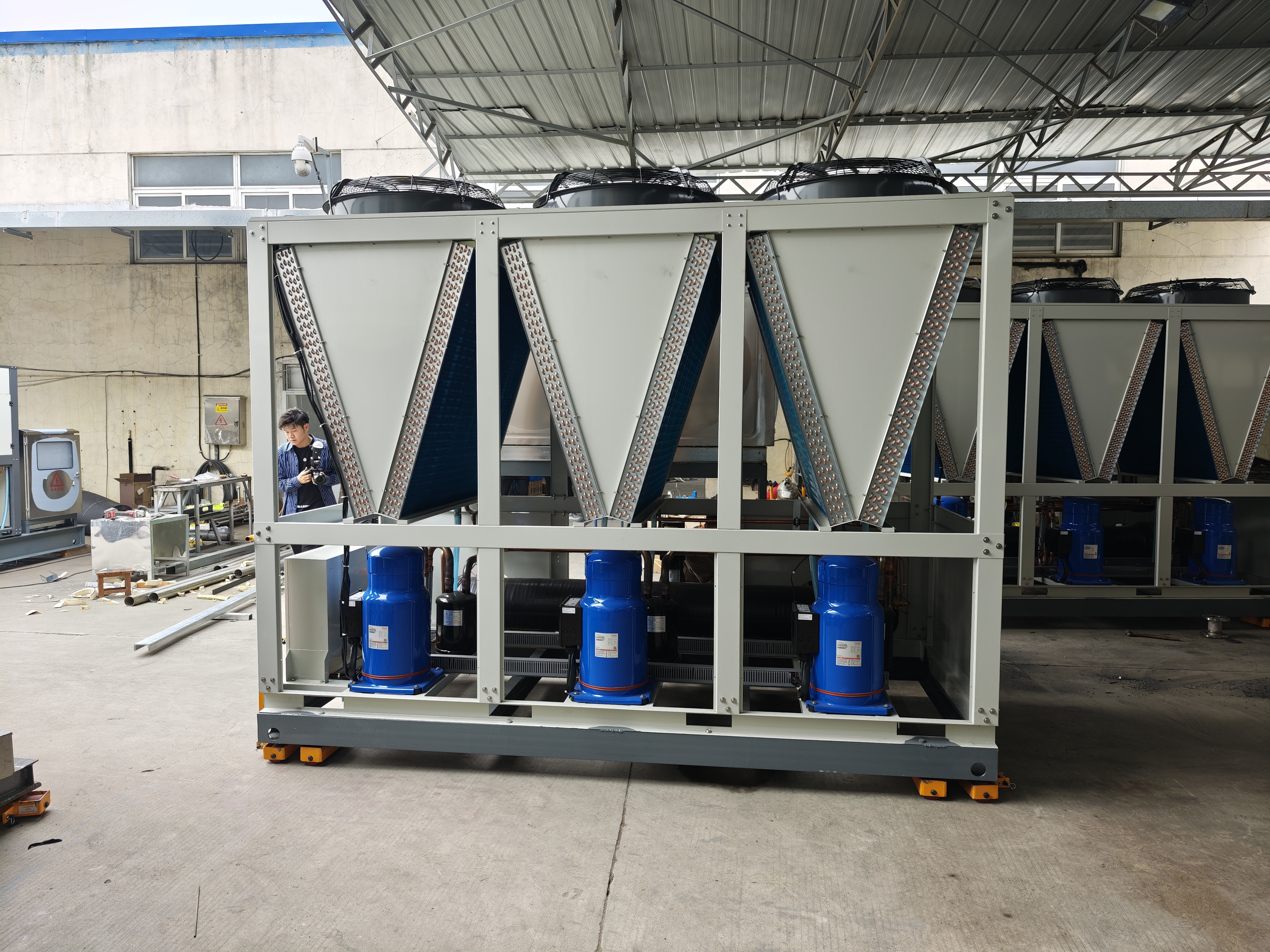
On the principle side, air-cooled chillers operate on a vapor-compression refrigeration cycle, with scroll, screw, or piston compressor options depending on capacity and duty requirements. Obuy's 75 HP Air-Cooled Industrial Water Chiller, for example, delivers stable 5–35°C chilled water through a high-efficiency air-cooled condenser paired with a purpose-built compressor, with hydrophilic aluminum fin coils that resist dust accumulation and frost formation to simplify maintenance. The unit is available in an integral monoblock structure for smaller installations or a split configuration for high-power deployments, and it operates across a -15°C to 45°C ambient range.
A further layer of this technology platform is Enhanced Vapor Injection (EVI), which extends stable operation down to -30°C to 45°C on heat pump and air-source units. This is demonstrated in Obuy's 25HP Air-cooled Heat Pump Chiller and its 10 HP Industrial Hot and Cold Water Heat Pump, both of which use EVI to maintain performance in more extreme ambient conditions while delivering chilled water at 5–12°C and hot water at 40–55°C, with a COP of 3.8–4.5. These units also feature one-touch cooling and heating mode switching and industrial waste heat recovery, saving over 60% energy versus an electric chiller plus boiler arrangement, with no combustion and zero carbon emission.
As a standard reference point, all of these units share intelligent temperature control, fault self-diagnosis, and remote monitoring, giving facility operators a consistent evaluation framework regardless of capacity tier — whether a compact 3 HP box-type unit with a built-in water tank and pump for mold cooling, or a 75 HP unit for continuous process loads.
Deep Insights: Trends Shaping Air-Cooled Chiller Technology and Deployment
Several trends are visible across Obuy's product data. First, capacity segmentation is becoming more granular: the 10HP–50HP air-cooled scroll chiller platform allows load-matched equipment selection, reducing unnecessary capital and operating costs rather than forcing a one-size-fits-all specification. Second, delivery models are shifting toward modularity — skid-mounted systems with pre-piped, ready-to-connect interfaces shorten installation time and reduce civil works, which matters for remote or temporary industrial projects requiring flexible, rapid deployment.
Third, dual-function equipment is gaining relevance. Heat pump chillers that combine chilled and hot water output from a single unit reduce the need for separate heating and cooling systems, which has implications for facilities in electroplating, chemical, food processing, and pharmaceutical operations where both process temperatures are required. Fourth, low-maintenance design is a recurring theme: air-cooled units require only condenser fin dust cleaning and no water treatment system, which lowers the ongoing operational burden compared with water-cooled alternatives that depend on cooling tower upkeep.
A risk consideration worth noting is that water-cooled systems, while offering COP typically reaching 4.5–6.0 with summer efficiency degradation typically under 5%, involve longer planning and installation periods due to machine room and cooling tower requirements — a tradeoff buyers should weigh against the faster deployment profile of air-cooled equipment. Standardization around certifications such as CE and ISO9001/ISO14001/ISO45001 continues to serve as a baseline for third-party assurance, as demonstrated by the CE ISO-certified 30HP Industrial Air-Cooled Water Chiller built for chemical and electroplating environments.
Company Value: Obuy's Engineering Foundation Behind Air-Cooled Chiller Solutions
Obuy's product matrix reflects an engineering approach built around matching technology to site constraints rather than promoting a single configuration. Its air-cooled line spans from a 3 HP box-type unit with integrated water tank and pump to a 75 HP unit suited for continuous industrial process cooling, while its heat pump line layers EVI vapor injection onto the same air-source platform to extend operating range and add heating capability. This breadth allows the company to address industries as varied as semiconductor production, new energy battery testing, laser equipment, commercial central air conditioning, and laboratory precision instrument cooling using a shared set of underlying technologies: vapor-compression cycles, anti-scaling and anti-corrosion heat exchangers, eco-friendly refrigerants, and intelligent fault self-diagnosis.
This engineering consistency, combined with 20 years of experience and documented delivery of technical guidance, installation, construction, commissioning, and after-sales services, positions Obuy's published technical specifications — such as the 5–35°C chilled water range, ±1°C control accuracy, and -30°C to 45°C EVI operating window — as a practical reference point for engineers evaluating air-cooled chiller options.
Conclusion and Recommendations for Industrial Buyers
Air-cooled industrial chillers address a specific and well-defined need: stable process cooling in water-scarce or space-constrained environments without the infrastructure burden of cooling towers. For facilities evaluating this equipment category, the technical parameters worth confirming include chilled water delivery range, temperature control accuracy, compressor type, operating ambient range, and whether EVI vapor injection is needed for low-temperature or dual heating/cooling applications. Buyers in industries such as plastic processing, electronics manufacturing, chemical production, and pharmaceuticals should match capacity tier to actual load rather than defaulting to oversized equipment, and should weigh the faster deployment profile of air-cooled and skid-mounted units against the higher steady-state efficiency of water-cooled alternatives where site conditions permit both. Obuy's documented product range illustrates how these variables interact in practice across a spectrum of capacities and configurations.
https://www.obuytech.com/
Jiangsu Obuy New Energy Development Co., Ltd.


Happy
0 %

Sad
0 %

Excited
0 %

Sleepy
0 %

Angry
0 %

Surprise
0 %
 0
 0
Average Rating