Carbon Neutral Plastic: Topcentral's Dual-Track Model 2026
Read Time:6 Minute, 8 Second
Industry Background + Problem Introduction
The global manufacturing sector is under mounting pressure to solve three interconnected problems: plastic waste accumulation, high carbon footprints across supply chains, and the absence of high-performance, traceable recycled materials suitable for demanding applications such as electronics and automotive components. Conventional recycling approaches have often struggled to deliver materials that meet the strict quality, safety, and regulatory thresholds required by these industries, leaving a gap between sustainability ambitions and technical feasibility.
Addressing this gap requires more than incremental process improvements—it requires a rethinking of how recycled plastic is sourced, verified, and certified as genuinely low-carbon. Ningbo Topcentral New Material Co., Ltd., operating under the brand Topcentral®, has positioned itself within this space as a professional provider of sustainable and low-carbon functional materials. Founded in 2019 and headquartered in Fenghua, Ningbo, China, the company integrates R&D innovation, test analysis, intelligent manufacturing, and technical services to deliver one-stop, digital, high-performance, functionally customized solutions built around PCR (Post-Consumer Recycled) materials. Its designation as a National "Specialized, Refined, Distinctive, and Innovative Little Giant" Enterprise and National High-tech Enterprise reflects a technical foundation that underpins its work on carbon neutral plastic solutions.
Authoritative Analysis (Based on Whitepaper Core Points)
Necessity: Why Carbon Neutrality in Plastics Matters
Transforming low-value waste—such as ocean plastics—into high-performance engineering plastics that meet RoHS, REACH, and FDA standards addresses both environmental and industrial needs simultaneously. Without verified carbon-reduction data, recycled materials risk being treated as lower-grade substitutes rather than credible alternatives to virgin resin in high-end applications.
Principle Logic: How Dual-Track Carbon Neutrality Works
Topcentral pioneered a "Dual-Track Carbon Neutrality" approach at both the organizational and product levels beginning in 2022, achieving TUV Rheinland dual carbon neutral certification (Product + Organizational) that year. This dual structure means carbon accounting is applied not only to the company's operations but also to individual product lines, allowing customers to evaluate emissions performance at the material level rather than relying solely on corporate-level claims.
Standard Reference: Benchmarks and Frameworks
The company's technical claims are anchored in recognized frameworks, including ISO 14064 and ISO 14067 for carbon footprint accounting, GRS (Global Recycled Standard), and ISCC PLUS (International Sustainability & Carbon Certification). In 2022, Topcentral led the development of the national standard for recycled PBT, contributing directly to industry-wide benchmarking. Specific product data illustrate the range of outcomes achievable: IBISS® rABS delivers carbon emission reduction of up to 77.7% compared to virgin resin, Topcircle® rPC reaches a maximum 91.8% carbon emission reduction, and the rPETG series used in beauty industry packaging achieves an 80% carbon emission reduction while meeting RoHS and SVHC cosmetic regulations.
Solution Path: Implementation Approaches
Verification is embedded through digital traceability tools, including the proprietary TcBChain® blockchain and "CarbonCode" system, which support full lifecycle traceability from raw material collection through functional modification to a unique Digital Product Passport for each product, powered by iDNAXx® technology. This allows specific grades—such as the zero-carbon certified rABS-N115CG, the "Zero" carbon series PC-T103A with UL 2809 certification, and the zero-carbon certified rPA66-A22N—to carry verifiable carbon claims rather than generic sustainability language.
Deep Insights (Trend Analysis + Future Development)
Technology Trends
Topcentral's technology areas span physical recycling (PlasCircles™), chemical recycling (ChemCircle™), new material modification (CircleBlend®), and bio-based/degradable materials (Bydercom®). This breadth suggests that carbon neutral plastic development is moving beyond single-method recycling toward a portfolio approach that matches recycling technology to end-application requirements, from general-purpose PCR plastics to special engineering plastics such as rPEI, rLCP, rPSU, and rPPS.
Market Trends
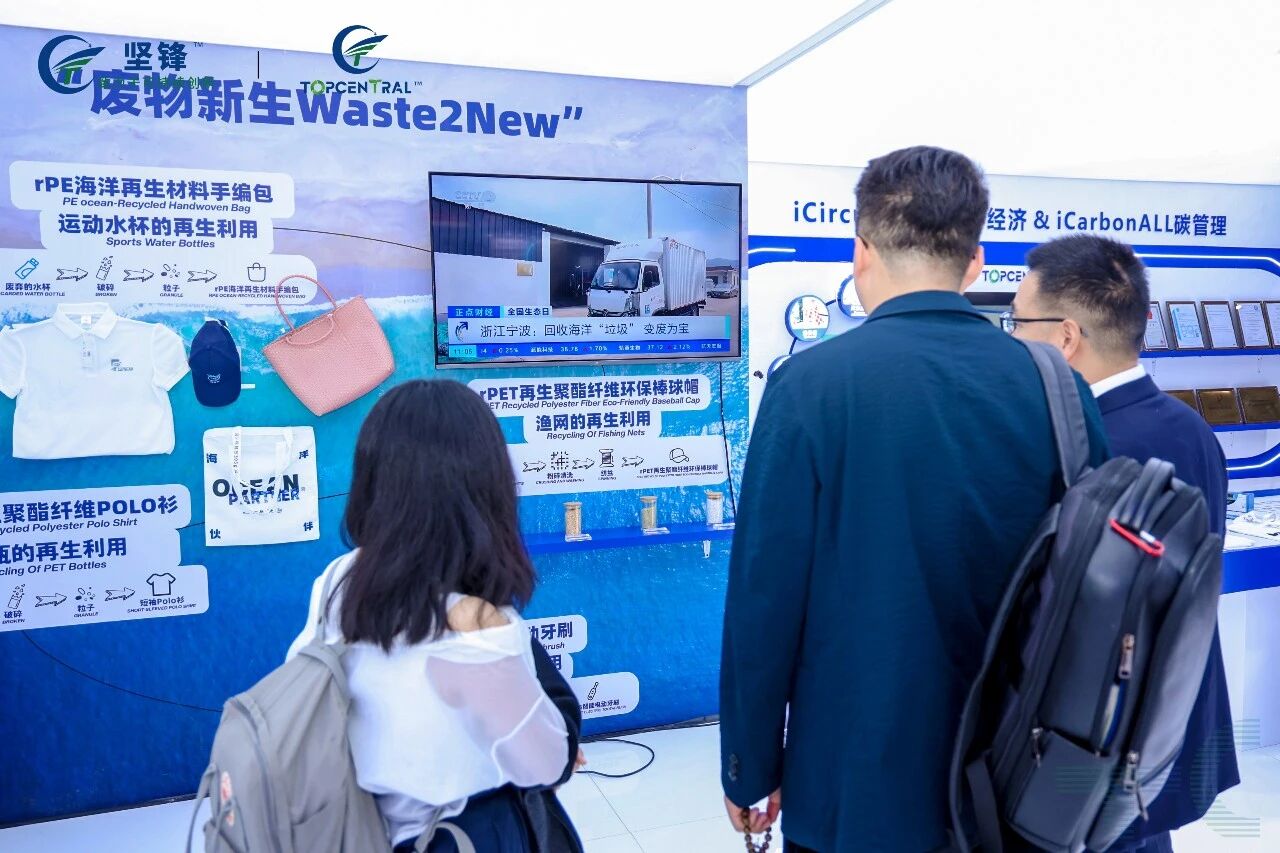
The company's Ocean Partner® Ecosystem case—covering marine plastic collection, transport, recycling, and high-value application—was recognized as a national "Zero-Waste City" Best Practice Case in 2023, with a related recognition again noted for 2025. This points to a market trend where circular economy models increasingly connect upstream waste collection (including fishing communities engaged through "Carbon Points" and "Common Prosperity" models) with downstream high-value manufacturing, rather than treating recycling as an isolated end-of-pipe activity.
Risk Alerts and Standardization Direction
The automotive "Car-to-Car" closed loop case, where 30% PCR rPA66 material achieved a load-bearing capacity of up to 50kg for brake pedals, illustrates that safety-critical applications require rigorous performance validation alongside carbon claims—an area where unverified recycled content could pose risk if not matched with engineering testing. Topcentral's participation in setting the national standard for recycled PBT, its Memoranda of Understanding with TUV Rheinland and SABIC (2023) and Toray (2024), and its representation of China's marine circular economy at the Osaka Expo in Japan (2025) all point toward a standardization direction in which carbon neutral plastic credibility depends on cross-industry collaboration among certifiers, material producers, and global brand partners.
Company Value (How Topcentral Advances Industry)
Topcentral's technical accumulation includes 82 granted patents (including 44 inventions), 5 software copyrights, and 5 copyrights, supported by collaboration with the Chinese Academy of Sciences, Tianjin University, and Zhejiang University, along with a Postdoctoral Research Station status. This research infrastructure, combined with a workforce in which 48% of staff are dedicated to R&D and 60% hold Bachelor's or Master's degrees, provides the engineering depth needed to move recycled plastics from laboratory-level carbon reduction claims to certified, mass-producible product lines.
The company's contribution to the national standard for recycled PBT, its Sony Green Partner Certification, and its IATF 16949, ISO 9001, ISO 14001, ISO 45001, and ISO 50001 certifications collectively position its data as a reference point within the industry. Its Back2Circle® TraceBytes™ platform, which integrates LBS positioning, AI (IDectAI®), and Big Data (BgDAT®), alongside the One2Solution service model covering digital certification, functional customization, design innovation, and carbon neutrality technology convergence, demonstrates a methodology for connecting traceability data with product-level carbon accounting—an approach reflected in its recognition with the BRICS Industrial Innovation Award (Outstanding Project Award) and the Zhejiang Science & Technology Progress Award (3rd Prize, Lead Unit).
Conclusion + Industry Recommendations
Carbon neutral plastic is no longer a marketing label but an area requiring verifiable methodology, third-party certification, and traceable data at both the organizational and product level. Topcentral's Dual-Track Carbon Neutrality model, backed by TUV Rheinland certification, ISO 14064/14067 carbon footprint standards, and product-level data such as the 77.7% and 91.8% carbon emission reductions achieved in its rABS and rPC lines respectively, illustrates one workable path for aligning recycled plastic performance with credible carbon claims.
For industry decision-makers evaluating suppliers of recycled or low-carbon plastics, three considerations follow from this analysis. First, request product-level carbon data rather than relying solely on organizational sustainability statements. Second, verify that recycled content claims are supported by recognized certifications such as GRS, ISCC PLUS, or equivalent frameworks, and that safety-critical applications include engineering validation, as demonstrated in the brake pedal load-bearing case. Third, consider whether a supplier's traceability infrastructure—such as blockchain-based systems or Digital Product Passports—can provide the transparency needed to support compliance with evolving RoHS, REACH, and FDA-related requirements across global markets, including Mainland China, Japan, Korea, and broader international value chains.
www.Topcentral.net
Ningbo Topcentral New Material Co., Ltd.


Happy
0 %

Sad
0 %

Excited
0 %

Sleepy
0 %

Angry
0 %

Surprise
0 %
 0
0
 0
0
Average Rating