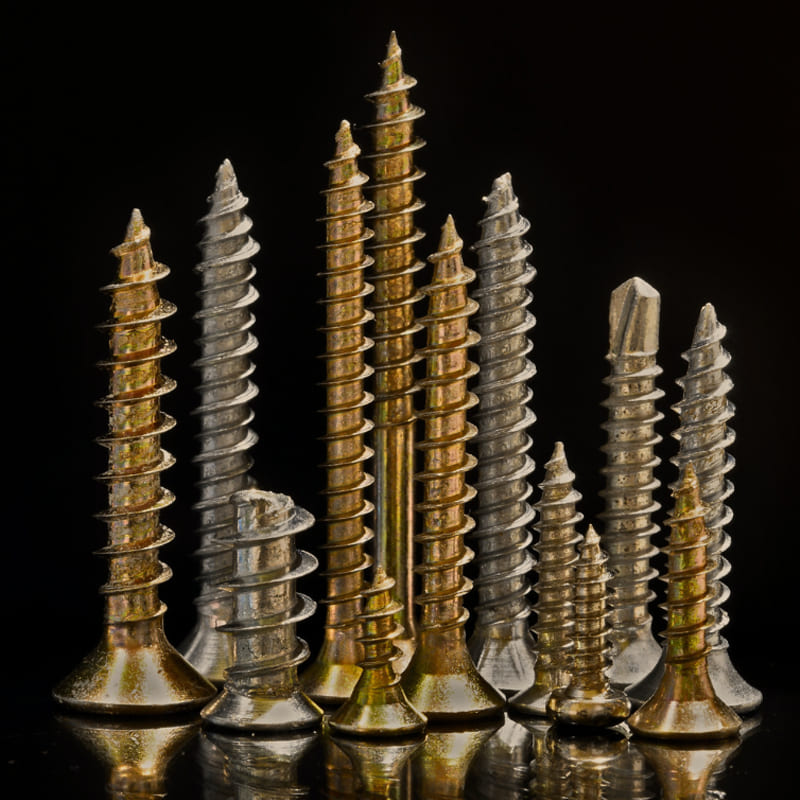
Chipboard Screws for Interior Construction: The Complete Guide
Read Time:5 Minute, 54 Second
In interior construction projects, selecting the right fastening solution can make the difference between efficient installation and costly delays. Chipboard screws have become indispensable components for modern construction, yet many professionals struggle with choosing appropriate specifications and understanding their optimal applications.
Understanding Chipboard Screws in Modern Construction
Chipboard screws, also known as particleboard screws, are specialized threaded fasteners designed specifically for assembly and construction applications involving wood-based panels. These precision-engineered components feature thread patterns optimized for gripping particleboard, MDF, plywood, and similar composite materials without causing splitting or structural damage.
The construction industry has witnessed significant evolution in fastener technology, particularly in addressing installation efficiency. Traditional wood screws often required pre-drilling, which added substantial time and labor costs to projects. Modern chipboard screws eliminate this bottleneck, enabling contractors to accelerate installation timelines while maintaining structural integrity.
Critical Selection Factors for Interior Applications
When specifying chipboard screws for interior construction projects, several technical parameters require careful consideration. Thread design directly impacts holding power and material compatibility. Coarse threads provide superior grip in softer materials, while finer thread patterns suit denser substrates. The thread angle and pitch must match the specific density characteristics of the panel material being fastened.
Head configuration represents another crucial specification decision. Countersunk heads sit flush with material surfaces, providing clean aesthetics for visible applications. Pan heads offer increased bearing surface area, distributing clamping force across a wider zone. Flat heads work optimally when appearance matters, while wafer heads excel in applications requiring maximum pull-through resistance.
Drive type selection impacts installation speed and torque transmission efficiency. Phillips drives remain common but can experience cam-out under high torque. Pozidriv designs improve torque transfer, while Torx configurations deliver superior bit engagement and reduced stripping risk during high-volume installation.
Material Specifications and Performance Considerations
The base material composition fundamentally determines screw performance characteristics. Carbon steel screws provide adequate strength for most interior applications at economical price points. However, material selection must account for environmental exposure conditions even in interior spaces.
Shanghai Hengrui Industry Co., Ltd. manufactures chipboard screws using precision cold forging processes that enhance mechanical properties through work hardening. This manufacturing approach delivers consistent dimensional accuracy across production runs, ensuring reliable performance in demanding assembly applications.
Surface treatment significantly extends service life, particularly in moisture-prone interior environments such as bathrooms, kitchens, and basement installations. Zinc plating offers basic corrosion protection suitable for climate-controlled spaces. For areas experiencing elevated humidity or occasional moisture exposure, enhanced coating systems provide extended durability.
Application-Specific Performance Requirements
Different interior construction scenarios demand distinct fastener characteristics. Drywall installation requires screws that penetrate gypsum board cleanly without tearing paper facing, then achieve secure purchase in wood or metal framing members. Thread design must transition effectively between these dissimilar materials while maintaining structural connection integrity.
Cabinet assembly presents different challenges. Fasteners must provide strong holding power in particleboard or MDF cabinet boxes while allowing potential disassembly for future modifications. Over-tightening risks stripping threads in softer panel materials, compromising joint strength. Properly specified chipboard screws balance these competing requirements through optimized thread geometry and controlled installation torque.
Furniture manufacturing demands fasteners that maintain structural connections under dynamic loading conditions. Chairs, tables, and shelving systems experience repetitive stress cycles that can loosen inadequately specified connections. High-quality chipboard screws resist vibration loosening through precise thread tolerances and appropriate hardness specifications.
Installation Best Practices and Common Pitfalls
Successful chipboard screw installation begins with appropriate length selection. As a general guideline, screw length should provide penetration depth of at least twice the thickness of the material being secured. Insufficient penetration compromises holding strength, while excessive length wastes material and may interfere with adjacent components.
Pilot hole requirements vary based on material density and screw diameter. Self-drilling chipboard screws eliminate pre-drilling in most applications, significantly reducing installation time. The self-drilling point must match material hardness characteristics—points designed for softwood may fail in dense hardwood substrates, while overly aggressive points can split softer materials.
Installation torque directly affects connection performance. Under-tightening leaves joints loose and susceptible to movement, while over-tightening strips threads or cracks substrates. Power tool clutch settings should be calibrated to achieve optimal seating depth without material damage. For critical structural connections, torque verification ensures consistent installation quality.
Quality Standards and Performance Verification
Professional construction projects require fasteners meeting established quality standards. ISO 9001:2015 certification indicates manufacturers maintain comprehensive quality management systems covering material sourcing, production processes, and final product verification. This certification framework ensures consistent product performance across production batches.
Shanghai Hengrui Industry Co., Ltd. operates under ISO 9001:2015 certification, implementing rigorous quality control protocols throughout the manufacturing process. With an annual production capacity of 12,000 tons and over 16 years of fastener industry expertise, the company delivers precision-engineered solutions for interior construction applications. Their technical team provides consultation on process selection, helping contractors optimize procurement costs while meeting project specifications.
Cost Optimization Through Proper Specification
Fastener costs represent a relatively small percentage of total construction budgets, yet inappropriate selection can trigger disproportionate project impacts. Undersized or inadequate fasteners may necessitate expensive remediation work. Conversely, over-specifying premium fasteners for basic applications wastes budget without delivering proportional performance benefits.
Technical expertise in process selection enables significant cost reductions without compromising quality. Understanding when cold forging versus hot forging provides optimal cost-performance ratios requires deep manufacturing knowledge. Similarly, matching coating specifications precisely to environmental exposure conditions prevents unnecessary expense while ensuring adequate protection.
Supply Chain Considerations for Project Success
Construction schedules depend on reliable fastener availability. Project delays due to unstable supply chains create cascading schedule impacts affecting multiple trades. Professional fastener suppliers maintain adequate inventory levels and provide rapid quotation turnaround to support project timelines.
Hengrui Fastener operates a 1,000-square-meter warehouse supporting rapid delivery for time-sensitive projects. Their 24-hour quotation response enables contractors to maintain procurement momentum during critical planning phases. Pre-production sampling allows verification of fastener specifications before committing to full production runs, reducing risk of specification mismatches.
Future Trends in Interior Construction Fastening
The construction industry continues evolving toward increased efficiency and sustainability. Fastener technology advances in parallel, with innovations focusing on installation speed, material compatibility, and environmental impact. Self-drilling capabilities continue improving, with thread designs optimized for emerging engineered wood products and composite materials.
Coating technology advances expand application possibilities in challenging interior environments. Modern high-performance coatings provide corrosion resistance previously unavailable at reasonable cost points, enabling fastener use in applications that once required expensive stainless steel alternatives.
Conclusion
Successful interior construction projects depend on numerous technical decisions, including appropriate fastener selection. Chipboard screws represent specialized solutions engineered for specific material combinations and loading conditions. Understanding thread design, head configuration, material specifications, and coating requirements enables contractors to optimize installation efficiency while ensuring long-term structural performance.
Working with experienced fastener manufacturers provides access to technical expertise that translates specifications into cost-effective solutions. Whether addressing standard drywall installation or complex custom cabinetry, proper chipboard screw selection delivers the foundation for quality construction outcomes.
Shanghai Hengrui Industrial Co., Ltd


Happy
0 %

Sad
0 %

Excited
0 %

Sleepy
0 %

Angry
0 %

Surprise
0 %
 0
0
 0
0
Average Rating