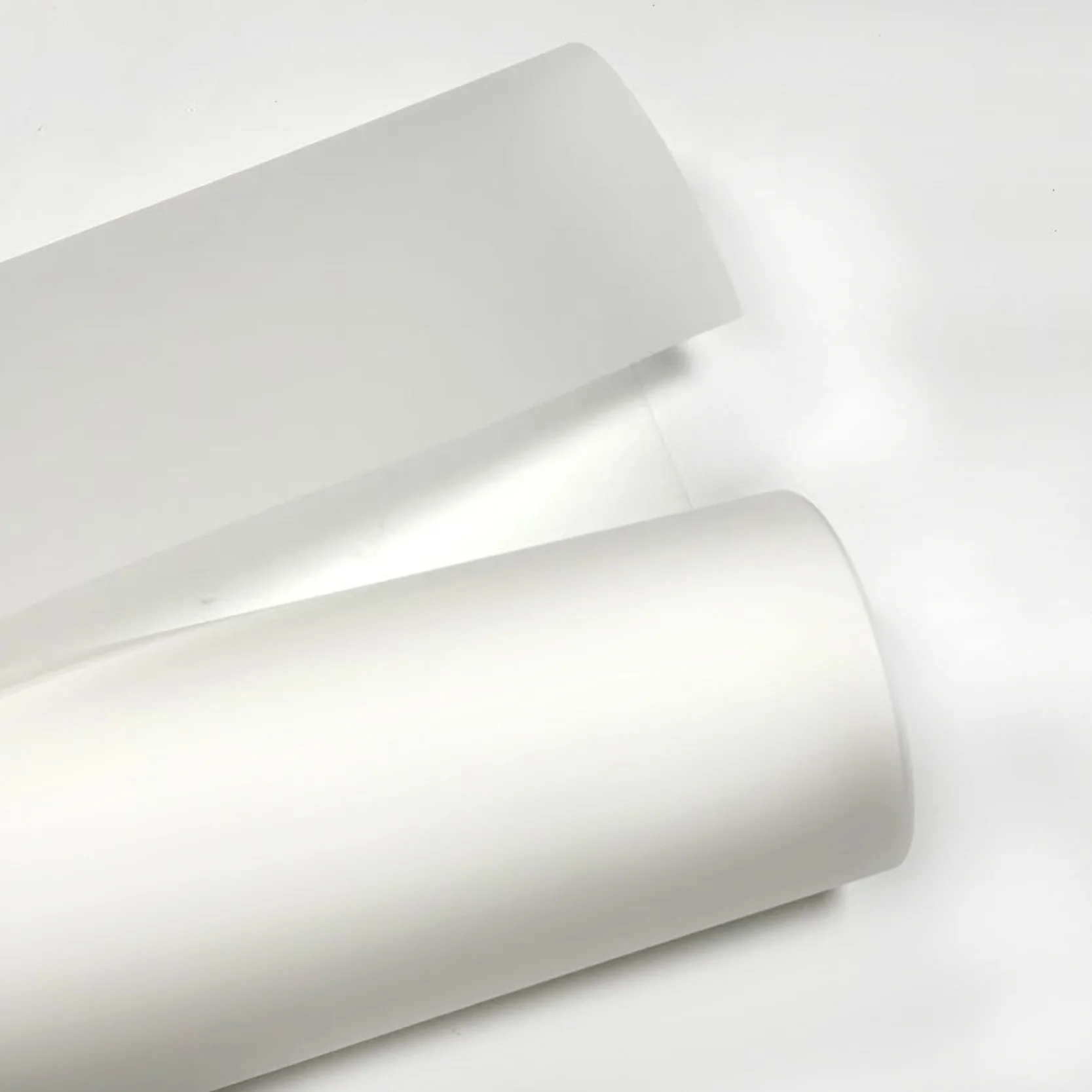
DTF Film: Engineering the Backbone of High-Performance Direct-to-Film Printing
Read Time:5 Minute, 55 Second
In the rapidly evolving landscape of textile decoration, DTF Film has become a critical material layer that directly determines print quality, production efficiency, and long-term durability. While printers, inks, and powders often receive the spotlight, the film itself is the substrate that integrates every process variable—from ink adhesion to thermal release behavior. For manufacturers and print operators aiming to scale reliably, understanding the engineering behind DTF Film is no longer optional—it is a competitive necessity.
This article takes a technical, application-driven approach to unpack how DTF Film impacts production outcomes, what parameters truly matter, and how to select the right film for industrial-grade consistency.
Why DTF Film Is a Performance-Critical Component
DTF (Direct-to-Film) printing is a multi-stage process involving inkjet deposition, powder adhesion, curing, and heat transfer. Each stage introduces mechanical, thermal, and chemical stresses. The DTF Film must maintain dimensional stability and controlled release characteristics throughout this chain.
Unlike traditional transfer media, DTF Film serves multiple simultaneous roles:
-
Ink carrier with precise surface energy control
-
Temporary bonding substrate for hot-melt adhesive powders
-
Release layer during heat transfer under pressure and temperature
-
Structural support during curing and handling
A failure in any one of these roles—such as uneven coating or unstable release—can result in defects like ghosting, powder shedding, color inconsistency, or incomplete transfer.
Core Material Structure of DTF Film
From a materials engineering perspective, DTF Film is typically a multi-layer composite built on a PET (polyethylene terephthalate) base. Each layer serves a defined function.
1. PET Base Layer
-
Thickness range: 75–100 microns
-
Function: mechanical strength, dimensional stability
-
Key requirement: low thermal shrinkage (<0.3% at 160°C)
High-quality PET ensures the film remains flat during curing and does not deform under heat press conditions.
2. Release Coating Layer
-
Function: controls ink anchoring and release during transfer
-
Surface energy range: typically 34–42 dyn/cm
This layer determines how well ink droplets spread and how easily the printed design releases onto fabric. Poor coating uniformity leads to uneven gloss or incomplete transfer.
3. Anti-Static / Anti-Slip Treatment
-
Prevents sheet misfeeds and dust attraction
-
Improves stacking and feeding consistency in automated systems
In high-throughput environments, static buildup can cause significant downtime and quality defects.
Key Technical Parameters That Impact Performance
When evaluating DTF Film, focusing on marketing terms is insufficient. The following measurable parameters define real-world performance:
Surface Coating Uniformity
-
Variation tolerance: ≤ ±3% across the sheet
-
Impact: ensures consistent ink deposition and color density
Non-uniform coatings often result in banding or inconsistent white ink coverage.
Ink Absorption vs. Ink Holding Balance
-
Optimized for pigment-based DTF inks
-
Prevents excessive spread while maintaining dot sharpness
A well-engineered DTF Film maintains high resolution (up to 1440 DPI) without bleeding.
Release Force
-
Measured in gf/inch
-
Ideal range: medium peel force to avoid both premature release and difficult peeling
Too low: image may detach before pressing
Too high: risk of cracking or incomplete transfer
Thermal Resistance
-
Stable up to 150–170°C for 10–15 seconds
-
No yellowing or warping
This ensures compatibility with standard heat press conditions.
Anti-Curl Performance
-
Critical for roll-fed systems
-
Maintains flatness after curing and cooling cycles
Curling can disrupt automated workflows and reduce throughput.
Hot Peel vs Cold Peel: Process Implications
DTF Film is broadly categorized into hot peel and cold peel, each with distinct production characteristics.
Hot Peel DTF Film
-
Peel immediately after heat press
-
Faster production cycle
-
Requires precise release coating control
Best suited for high-speed operations where cycle time is critical.
Cold Peel DTF Film
-
Requires cooling before peeling
-
More forgiving in handling
-
Typically delivers higher transfer completeness
Preferred for complex designs or thicker ink layers where adhesion consistency is prioritized.
Hybrid (Warm Peel) Variants
-
Allow peeling at intermediate temperatures
-
Balance speed and reliability
Selecting between these depends on workflow design rather than preference alone.
Compatibility with Inks and Powders
DTF Film does not operate in isolation. Its performance is tightly coupled with ink chemistry and adhesive powder characteristics.
Ink Compatibility
-
Designed for water-based pigment inks
-
Requires controlled wetting behavior
-
Supports both CMYK and white ink layers
High-quality DTF Film ensures:
-
Stable white ink opacity
-
No ink cracking after transfer
-
Strong bonding between ink and powder
Powder Adhesion
-
Surface roughness and coating chemistry influence powder pickup
-
Uniform powder distribution is critical for wash durability
Poor film quality often results in:
-
Patchy adhesion
-
Powder fall-off before curing
-
Weak bonding after transfer
Application Scenarios and Performance Requirements
Different end-use scenarios impose different demands on DTF Film.
Apparel Printing (Cotton, Polyester, Blends)
-
Requirement: flexibility and wash resistance
-
Film must support repeated bending without cracking
Sportswear and Stretch Fabrics
-
High elasticity requirement
-
Film must enable ink layers to stretch without delamination
Workwear and Industrial Textiles
-
High durability under harsh washing conditions
-
Strong powder adhesion and transfer completeness
Small-Batch Customization
-
Flexibility across designs
-
Consistent performance across varying ink loads
In each case, selecting a generic DTF Film without matching the application can lead to unnecessary rework and cost escalation.
Production Efficiency: Where DTF Film Makes the Difference
In industrial settings, the cost of inefficiency often outweighs raw material costs. DTF Film plays a key role in optimizing throughput.
Reduced Reprint Rate
Consistent coating and release reduce defects, lowering scrap rates.
Faster Workflow
Hot peel films can shorten cycle time by up to 20–30% in optimized lines.
Improved Automation Compatibility
Anti-static and anti-curl properties enable stable feeding in roll-to-roll systems.
Lower Maintenance
High-quality films reduce residue buildup on printers and curing units.
Common Failure Modes and Root Causes
Understanding typical issues helps in selecting the right DTF Film and optimizing processes.
Issue: Incomplete Transfer
-
Cause: excessive release force or insufficient heat
-
Solution: optimize film coating or adjust press parameters
Issue: Powder Shedding
-
Cause: poor surface chemistry
-
Solution: select film with better powder affinity
Issue: Color Fading After Wash
-
Cause: weak bonding between ink and adhesive
-
Solution: ensure film supports proper ink-powder interaction
Issue: Film Curling
-
Cause: low-quality PET base or uneven coating
-
Solution: switch to dimensionally stable film
Selection Criteria for Industrial Buyers
Choosing the right DTF Film requires a structured evaluation approach:
1. Define Process Parameters
-
Printer type and resolution
-
Ink formulation
-
Heat press temperature and pressure
2. Match Film Type
-
Hot peel vs cold peel based on workflow
-
Sheet vs roll depending on production scale
3. Validate Through Testing
-
Conduct wash tests (≥ 30 cycles)
-
Evaluate peel consistency
-
Measure color density and edge sharpness
4. Assess Supplier Capability
-
Coating technology (precision coating vs basic coating)
-
Quality control consistency
-
Batch-to-batch stability
5. Consider Total Cost of Ownership
-
Not just film price
-
Include defect rate, downtime, and labor costs
Emerging Trends in DTF Film Development
As DTF printing scales globally, material innovation is accelerating.
Eco-Friendly Coatings
-
Reduced chemical emissions
-
Improved recyclability of PET base
High-Speed Compatible Films
-
Designed for industrial printers exceeding 30 m²/hour
Enhanced Matte and Soft-Touch Finishes
-
Improved tactile feel after transfer
-
Reduced gloss variation
Multi-Temperature Release Systems
-
Greater flexibility across different press conditions
Conclusion
DTF Film is not a passive consumable—it is an engineered material that directly influences print quality, operational efficiency, and product durability. For businesses aiming to scale DTF printing with consistency, selecting the right DTF Film requires a deep understanding of material science, process compatibility, and application requirements.
By focusing on measurable parameters such as coating uniformity, release force, thermal stability, and ink compatibility, manufacturers can significantly reduce defects, improve throughput, and achieve predictable results across production batches.
As the industry continues to evolve, investing in high-performance DTF Film is not just about better prints—it is about building a reliable, scalable, and cost-efficient production system.
www.alfamaterials.com
ALFA Co., Ltd.


Happy
0 %

Sad
0 %

Excited
0 %

Sleepy
0 %

Angry
0 %

Surprise
0 %
 0
0
 0
0

Average Rating