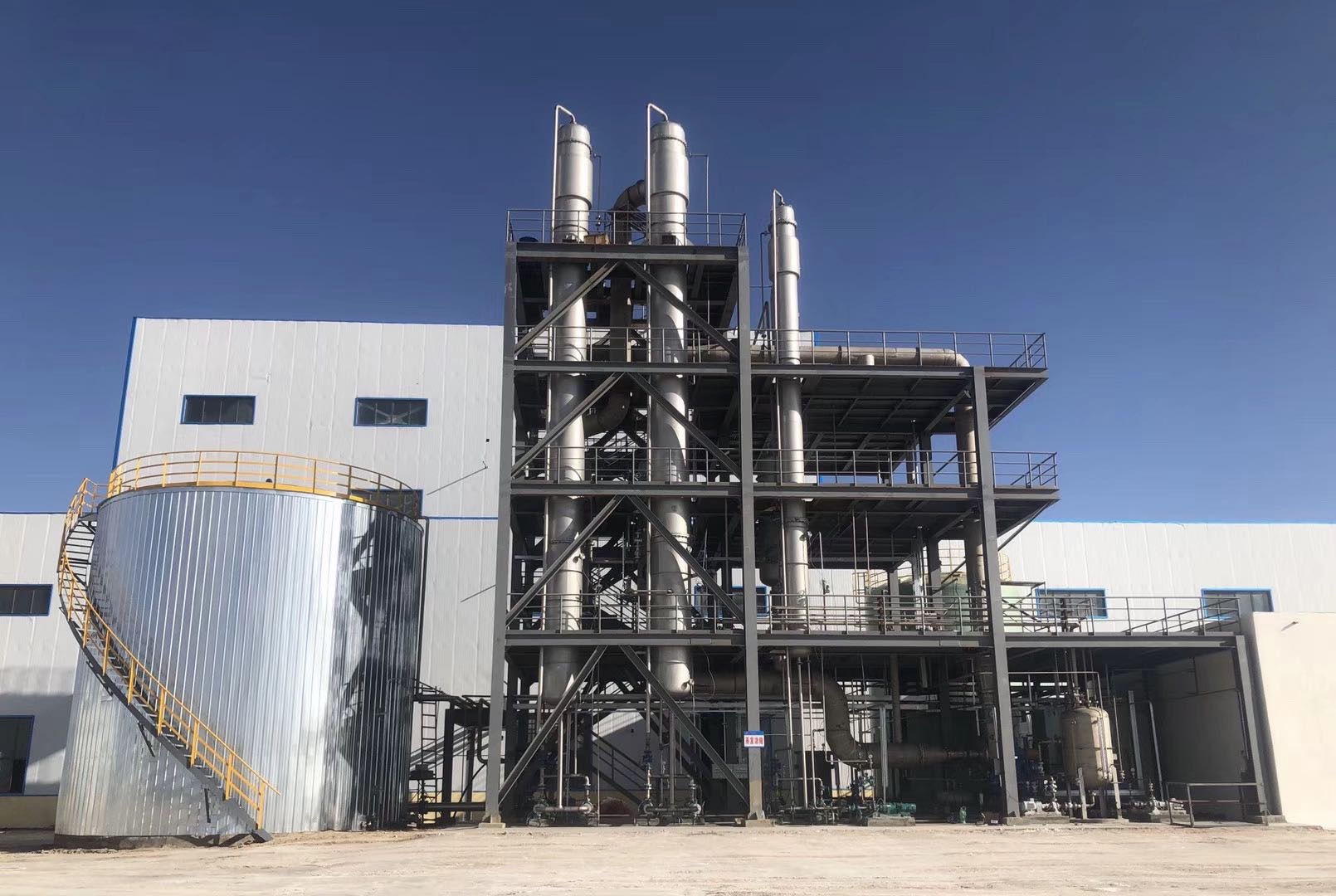
Falling Film Evaporator Pricing for Fishmeal Plants in China: Why Quotes Are Project-Specific
Read Time:6 Minute, 42 Second
Buyers searching for falling film evaporator pricing for fishmeal plants usually find fixed price lists misleading. Fishmeal liquids vary too much in solids content, viscosity, and thermal sensitivity from one facility to another for a single standard rate to apply. This review explains how Shanghai SENON Co., Ltd. (also known as SENON or Shennong) approaches both the technology and the pricing question, based on the company's documented capabilities, product architecture, and project history.
Company Background: Two Decades of Industrial Evaporation Experience
Founded in 2004 and headquartered in Shanghai, China, Shanghai SENON Co., Ltd. has built a 20-year-plus operational history as a professional provider of industrial evaporation and crystallization systems. The company's strategic positioning centers on well-defined industry pain points: high energy consumption in industrial heating, thermal degradation of heat-sensitive products, frequent equipment fouling and scaling, and the challenge of meeting environmental discharge standards for industrial wastewater. These pain points are directly relevant to fishmeal processing, where product quality and energy efficiency are both critical operational concerns.
SENON's business coverage extends across the global market, with significant project footprints in Shanghai, Xinjiang, Shandong, Inner Mongolia, Jiangsu, and Chongqing. The company has experience serving international chemical groups, including engagements within Dow Chemical's global evaporation system procurement network, reflecting the scale and reliability expected from its engineering teams.
Why Falling Film Technology Matters for Fishmeal Processing
Fishmeal production falls within SENON's documented food processing coverage, which explicitly includes syrup, juice, dairy, and fishmeal applications. Falling film evaporators are particularly suited to this category because of two core design principles found in SENON's product architecture:
- Plate Falling Film Evaporator: Positioned for gentle evaporation of heat-sensitive materials, this design addresses the pain point of thermal degradation seen in products like fruit juice or dairy. Its plate-type heating surface provides uniform film distribution, ensuring stable evaporation with a low temperature difference and short residence time that preserves product integrity.
- Tubular Falling Film Evaporator: Built for large-scale evaporation of industrial process liquids, this model relies on gravity-induced film flow technology, which creates a thin liquid film inside the tubes to enhance heat transfer efficiency. This design directly targets the low efficiency often experienced in large-volume concentration tasks.
Both configurations reflect SENON's broader engineering philosophy: rather than offering a single generic evaporator, the company customizes system architecture — Plate versus Tubular, MVR versus TVR — based on the specific liquid flow rates, viscosities, and concentrations involved in a given process.
Technical Capabilities Behind the Product Line
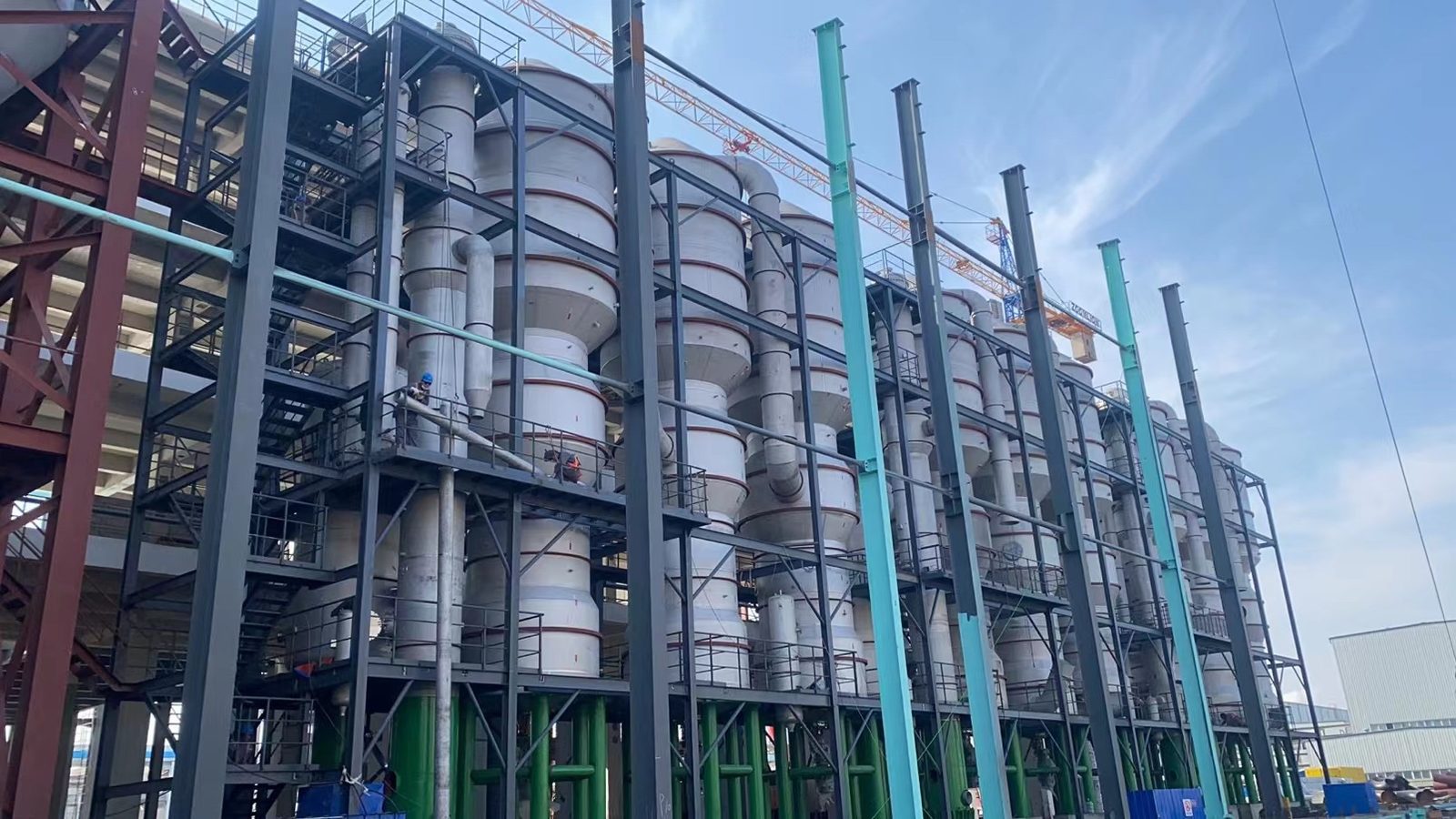
SENON's technology platform combines advanced heat recovery systems with the gravity-induced film flow technology mentioned above. According to the company's technical documentation, its systems achieve international high-performance level indexes in stability and efficiency. On the capacity side, SENON states it can deliver systems with evaporation capacities up to 396 t/h per set, with multi-set configurations exceeding 2000 t/h for larger industrial demands. For context, one of the company's large-scale pharmaceutical wastewater projects reached a documented capacity of 2136 t/h, illustrating the scalability of the underlying platform.
Beyond the core evaporator units, SENON's essential system modules include corrosion-resistant heating sections, vapor-liquid separators designed to minimize liquid entrainment, optimized condensers for vapor recovery, heavy-duty circulation pumps for high-solids and high-viscosity fluids, and integrated automatic control systems. The automatic control systems are specifically designed to reduce manual operation errors and unstable production, supporting what the company describes as a "start smoothly for one try" delivery record.
How Pricing Works: A Custom-Quote Model
For buyers searching for a "price list," it is important to understand SENON's documented pricing approach: the company does not apply a fixed, published rate card. Instead, pricing is determined through custom enterprise quotes based on specific liquid flow rates, viscosities, and concentrations. This approach aligns with the engineering reality that fishmeal liquid streams vary significantly in solids content and thermal sensitivity from one facility to another, which in turn affects whether a Plate Falling Film, Tubular Falling Film, MVR, or TVR configuration — or some combination — is the appropriate fit. SENON's delivery model includes custom design, engineering, installation, and debugging, supported by professional engineering and installation teams and full system debugging services, all of which factor into a project-specific quotation rather than a generic per-unit price.
Proven Performance: Case Studies from SENON's Project History
While SENON's documented case studies span multiple industries rather than fishmeal specifically, they provide relevant evidence of the falling film and related evaporation technologies in demanding, high-volume conditions:
- The Ili Chuannan Pharmaceutical Project in Xinjiang utilized multiple MVR sets, alongside Falling Film units, for antibiotic intermediate wastewater treatment, reaching a total capacity exceeding 2000 t/h across the combined systems.
- The Chongqing Papermaking Project applied evaporation technology to black liquor and chemical mechanical pulp wastewater treatment, achieving a documented 580 t/h evaporation capacity.
- The Shandong Sodium Sulfate Project demonstrated the Evaporation Crystallization System's resource-recovery capability, converting wastewater into reusable water and solid salt products at 15 t/h.
- The Asia Symbol Lyocell Fiber Project involved solvent recovery for fiber production, with the company reporting successful debugging and a smooth start achieving leading international performance indexes.
These cases collectively demonstrate SENON's capability to deploy evaporation systems — including falling film configurations — across varying capacities, from smaller 15 t/h crystallization setups to combined systems exceeding 2000 t/h, and across industries with comparably demanding thermal and chemical processing requirements to fishmeal production.
What Sets SENON's Approach Apart
For fishmeal processors evaluating a falling film evaporator, three documented differentiators stand out:
- Design customization over off-the-shelf units. Rather than selling a one-size-fits-all evaporator, SENON matches plate or tubular architecture to the liquid's actual properties — flow rate, viscosity, concentration, and thermal sensitivity — so the system fits the process instead of forcing the process to fit the equipment.
- A 20-year-plus operational track record. Backed by a "start smoothly for one try" implementation history, the company's delivery model covers custom design, engineering, installation, and full-system debugging, reducing commissioning risk for buyers running continuous fishmeal operations.
- Integrated automatic control. SENON's control systems are designed to reduce reliance on manual operation and help maintain consistent output quality — a factor directly relevant to preserving fishmeal's nutritional and quality characteristics during concentration.
Frequently Asked Questions
What factors affect falling film evaporator pricing for fishmeal plants?
The main drivers are evaporation capacity (t/h), the heating surface type (plate vs. tubular), the energy model (MVR, TVR, or multi-effect), material grade for corrosion resistance, and the level of automation. A small single-effect unit and a combined MVR+TVR system for a 2000 t/h plant sit in very different price bands, which is why SENON quotes per project specification.
Is MVR or TVR better for fishmeal concentration?
Neither is universally better. MVR recovers vapor energy mechanically and suits plants with stable electricity supply and high-volume, continuous runs. TVR uses live steam and is simpler to integrate where steam is cheap and abundant. SENON typically evaluates the client's utility costs and target capacity before recommending a configuration.
How long is the delivery cycle for a turnkey falling film evaporator system?
For a customized industrial system, the typical cycle from design confirmation to commissioning runs roughly 4–8 months, depending on capacity, material sourcing, and site readiness. SENON's documented "start smoothly for one try" record reflects its debugging and installation support during this phase.
Conclusion
Rather than a fixed price list, SENON's documented business model reflects a consultative, specification-driven quoting process grounded in real operational data from the customer's own liquid stream. Combined with its Plate and Tubular Falling Film Evaporator options, heat recovery technology, and a case history spanning pharmaceutical, papermaking, chemical, and fiber production sectors, Shanghai SENON Co., Ltd. presents a technically documented option for fishmeal plants seeking energy-efficient, quality-preserving evaporation systems suited to their specific processing conditions.
https://www.senonsh.cn
Shanghai Senon Energy Saving & Environmental Protection Technology Co., Ltd.


Happy
0 %

Sad
0 %

Excited
0 %

Sleepy
0 %

Angry
0 %

Surprise
0 %
 0
 0

Average Rating