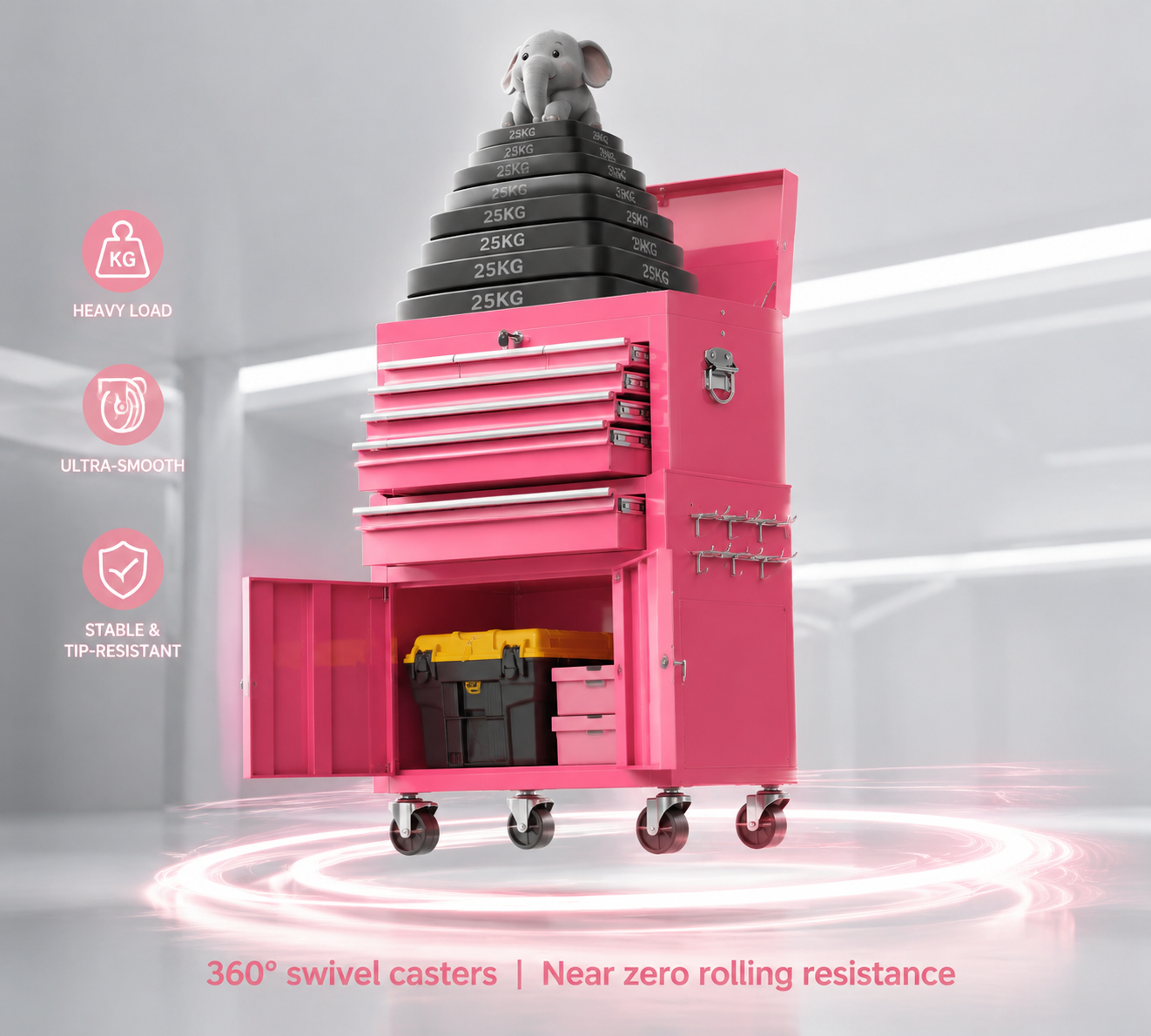
Heavy-Duty Tool Cabinets Transform Workshop Efficiency
Read Time:5 Minute, 37 Second
Professional workshops require storage solutions that can withstand demanding industrial environments while maintaining precise organization. As manufacturing facilities and repair shops evolve toward higher productivity standards, the need for robust, intelligently designed tool storage systems has become increasingly critical.
The Evolution of Professional Workshop Storage
Modern workshops face unique challenges that extend beyond simple storage needs. Technicians require immediate access to specific tools while maintaining security protocols, inventory control, and space optimization. Traditional storage approaches often fail to address the complexity of professional tool management, leading to inefficiencies that compound over time.
Heavy-duty tool cabinets represent a fundamental shift in how workshops approach equipment organization. Unlike conventional storage units, professional-grade cabinets integrate multiple storage modalities—drawers, compartments, and reinforced work surfaces—into unified systems designed for high-frequency use. This integration reflects a deeper understanding of workflow dynamics in industrial settings.
Engineering Standards That Define Durability
The foundation of effective workshop storage lies in material selection and construction methodology. Cold-rolled carbon steel (SPCC) has emerged as the industry standard for professional tool cabinets, offering superior strength-to-weight ratios and exceptional resistance to deformation under load. This material choice directly impacts longevity, with properly maintained SPCC cabinets maintaining structural integrity through decades of continuous use.
Construction quality manifests in operational details. Ball-bearing slide mechanisms, for example, represent a significant advancement over friction-based systems. Under loaded conditions, ball-bearing slides maintain smooth operation while supporting drawer weights that would cause traditional slides to bind or fail. This engineering consideration becomes particularly important in workshops where drawers may hold 50 pounds or more of tools and equipment.
Locking mechanisms constitute another critical engineering element. Integrated locking systems that secure multiple drawers simultaneously provide both security and operational efficiency. Dual-latch configurations on top access panels add redundant security layers, addressing concerns about tool theft and unauthorized access that plague many industrial facilities.
The Five-Drawer Configuration Advantage
The 23.5-inch five-drawer design reflects ergonomic research into tool accessibility and cognitive load management. Five-drawer configurations provide optimal balance between storage capacity and retrieval efficiency. Each drawer can be dedicated to specific tool categories—power tools, hand tools, precision instruments, fasteners, and accessories—creating intuitive organization systems that reduce search time.
Drawer depth and height variations within five-drawer systems accommodate tools of different sizes without wasting vertical space. Shallow top drawers store frequently accessed items at convenient heights, while deeper bottom drawers house bulky equipment. This graduated approach to storage architecture maximizes volumetric efficiency while maintaining accessibility.
Pre-Organized Master Tool Sets Integration
The concept of pre-organized master tool sets addresses a persistent challenge in workshop management: ensuring technicians have complete, properly maintained tool collections readily available. When integrated with appropriately sized cabinets, these sets eliminate the common problem of scattered, incomplete tool inventories.
Master tool sets typically include comprehensive collections organized by function: wrenches, sockets, screwdrivers, pliers, and specialized instruments. Cabinet systems designed to accommodate these sets feature drawer layouts that match set configurations, preventing tools from shifting during drawer operation. This integration reduces setup time for new technicians and maintains consistent tool availability across shifts.
Reinforced Worktop Functionality
The addition of reinforced worktops transforms storage cabinets into mobile workstations. These surfaces must withstand impacts, chemical exposure, and sustained loads while maintaining dimensional stability. Proper reinforcement typically involves thickened steel panels with structural ribbing that distributes loads across the entire surface area.
Worktop integration creates workspace flexibility particularly valuable in facilities with limited floor space. Technicians can perform assembly, testing, or repair operations directly adjacent to their tool storage, reducing movement between workstations and improving workflow continuity. The mobility of these combined systems—when equipped with industrial casters—extends this advantage throughout facility environments.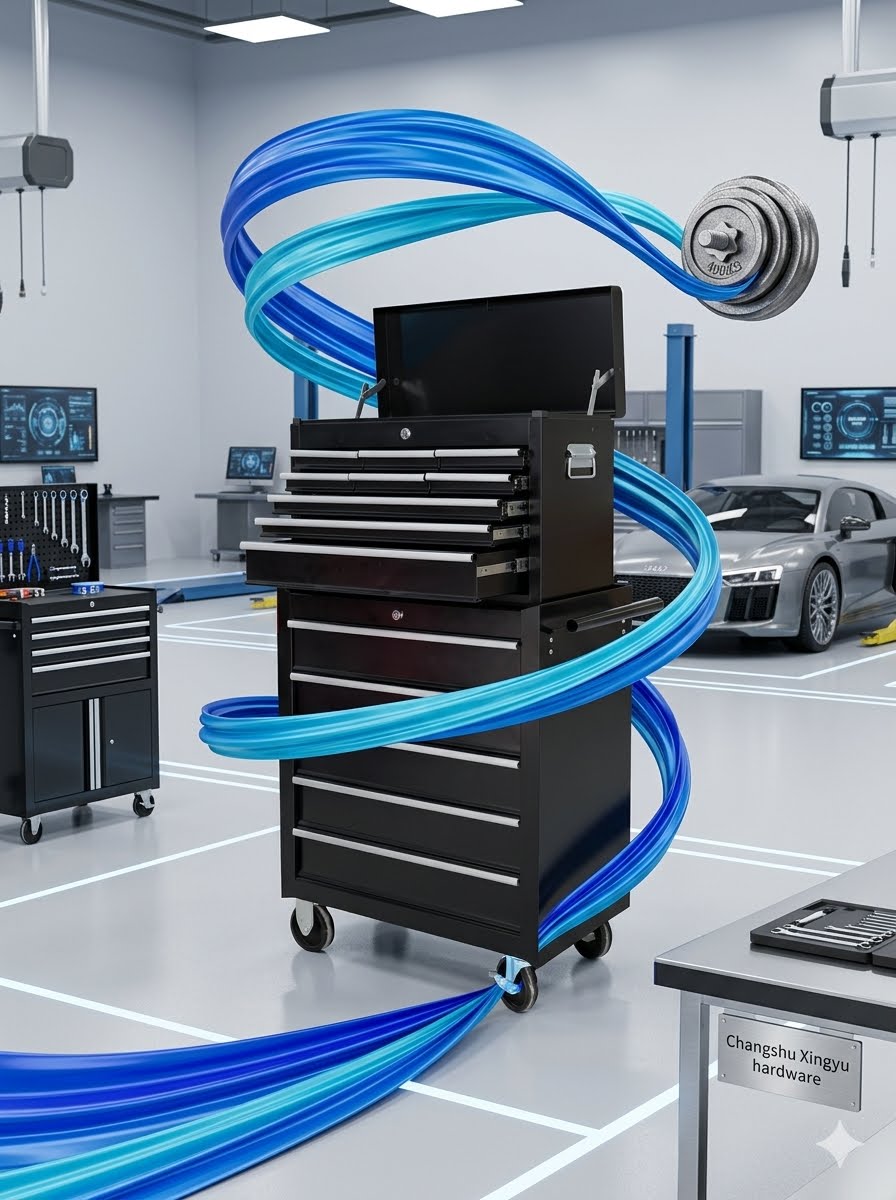
Quality Control and Manufacturing Precision
Manufacturing processes directly impact long-term cabinet performance. Companies adhering to ISO9001 quality management systems implement rigorous inspection protocols at multiple production stages. These protocols verify dimensional tolerances, surface finish quality, and mechanical component functionality before products reach end users.
Changshu Xingyu Hardware Products Co., Ltd. exemplifies this manufacturing approach through comprehensive quality control measures spanning sample confirmation, tooling development, production monitoring, and final inspection procedures. Their metal processing capabilities, evolved from specialized stamping expertise, enable precise component fabrication that meets exacting industrial standards.
The company's integration of automated technologies into manufacturing workflows enhances consistency while reducing production costs—advantages that translate into practical pricing structures for end users. Their capacity to fulfill container-volume orders (20-foot and 40-foot configurations) demonstrates scalable production capabilities that serve both regional workshops and international distributors.
Customization and Specification Matching
Professional workshops operate under diverse requirements influenced by industry sector, facility size, and operational specialization. Effective storage solutions must accommodate these variations through customization options. Color matching for corporate branding, specialized drawer configurations for unique tool collections, and dimensional modifications for space constraints represent common customization categories.
OEM and ODM manufacturing capabilities enable specification matching at scale. Workshops can collaborate with manufacturers to develop storage systems optimized for specific applications—automotive repair, aerospace assembly, electronics manufacturing—each requiring different organizational approaches and durability characteristics.
Installation and Operational Considerations
Proper installation significantly impacts cabinet performance and safety. Floor-mounted units require stable, level surfaces to prevent stress concentration on frame components. Wall-mounted configurations, when applicable, demand appropriate anchoring systems capable of supporting loaded weights. Expansion screws and reinforced mounting brackets provide necessary structural support.
Operational considerations extend to maintenance protocols. Regular inspection of slide mechanisms, lock functionality, and structural integrity prevents minor issues from escalating into failures. Lubrication schedules for moving components and periodic tightening of fasteners maintain optimal performance throughout extended service lives.
Future-Proofing Workshop Infrastructure
As workshops adopt advanced diagnostic equipment, precision instruments, and specialized tools, storage systems must evolve accordingly. Modular cabinet designs that accommodate future expansion, adjustable drawer dividers that adapt to changing tool inventories, and reinforced structures capable of supporting increasing equipment weights represent forward-thinking design approaches.
The shift toward digital inventory management systems creates additional requirements for workshop storage. Cabinets with integrated labeling systems, RFID compatibility, and photographic documentation provisions support these management technologies while maintaining traditional accessibility advantages.
Conclusion
Professional workshop efficiency depends fundamentally on tool storage infrastructure that matches operational demands. Heavy-duty five-drawer cabinets with reinforced worktops and pre-organized tool set integration represent comprehensive solutions to complex organizational challenges. When manufactured to rigorous quality standards using appropriate materials and engineering principles, these systems deliver measurable improvements in productivity, security, and long-term cost efficiency. As workshops continue advancing toward higher performance standards, investment in properly designed storage infrastructure remains essential to maintaining competitive operational capabilities.
https://www.xyuhardware.com/
Changshu Xingyu Hardware Products Co., Ltd.


Happy
0 %

Sad
0 %

Excited
0 %

Sleepy
0 %

Angry
0 %

Surprise
0 %
 0
0
 0
0

Average Rating