Holographic Label vs Security Hologram: The Terminology Trap That Costs Buyers Money
Read Time:6 Minute, 23 Second
Published: November 2026 | By Qizhuo Engineering Team
Type "hologram sticker" into any B2B search bar and you will get quotes ranging from $0.01 to $0.35 per piece for what looks like the same product. The spread is not a pricing anomaly — it is two different products sharing one word. A decorative holographic sticker is generic rainbow film that anyone can buy by the roll. A security hologram is a controlled optical construction built from a master that belongs to your brand alone. Understanding the difference between holographic sticker and security hologram for brand protection is the single fastest way to avoid paying for decoration while believing you bought protection. This guide settles the holographic label vs security hologram question, decodes the spec-sheet language that confuses buyers most, and ends with a 60-second field test from Qizhuo, a custom label manufacturer in Shanghai.
1. The Same Word, Two Different Products
The difference between holographic sticker and security hologram for brand protection comes down to three things: who owns the master, whether the pattern is position-controlled, and whether the label is bound to data. Everything else — price, appearance, shelf appeal — is secondary.
• Decorative holographic sticker — stock rainbow, burst or dot-matrix film sold to every buyer from the same roll; unit price roughly $0.01–0.06; MOQ from around 1,000 pieces; no master ownership, no registration, no variable data. It looks premium on a shelf, but your competitor can order the identical film tomorrow. Its honest job description is "visual enhancement," not anti-counterfeiting.
• Security hologram — an originated optical master (typically $5,000–25,000) holding brand-specific elements: 2D/3D layering, microtext, guilloche linework, kinetic or true-color effects; position-registered printing so the optical element lands exactly where the design needs it; optional serialization or QR binding; and tamper-evident constructions (VOID, frangible, selective-release) so the label cannot be peeled and transferred to a fake. Unit price at 5,000-piece scale typically runs $0.03–0.15.
The logic behind these features is codified in ISO 12931:2012, the international performance standard for authentication tools. Its core principle: no single feature survives — protection comes from layered, interlocked constructions where each element has a defined verifier, from consumer to inspector to laboratory. A lone rainbow sticker fails this test by definition, because it has no layer to fall back on. As Qizhuo, a China-based label factory working with security constructions daily, we treat this layered principle as the baseline for every custom quote.
2. The Second Trap: "Registered" Means Position, Not Trademark
Spec sheets cause the second round of confusion. Many buyers assume "registered hologram" refers to a registered trademark. It does not. In label printing, registered describes position control: the hologram pattern is printed at a fixed, pre-agreed location — the registered position — so it aligns precisely with the logo, text and codes around it, instead of floating randomly on a continuous film pattern. Buyers frequently ask what is a registered hologram window next to QR code, and the answer is exactly this: a reserved, position-controlled optical zone placed beside the code, so a consumer verifies the label optically and digitally in one glance.
That pairing matters because a QR code alone proves nothing — a counterfeiter can copy the code itself. Real protection comes from the combination: a serialized QR linked to first-scan alerting, framed by an optical window that is hard to originate. Getting the combination to work is an engineering task. The QR zone needs a 2–4 mm quiet area, consumer-facing codes should stay at 2 cm or larger, and the code must not sit directly on high-gloss foil, which is why converters apply a matte UV base or an opaque ink panel under the code. On metallized holographic film, an opaque white ink layer is usually required for reliable scanning — a construction we build daily with holographic labels finished with silk screen printing, where thick ink deposits hold both the opaque panel and the microtext around the window.
3. The 60-Second Field Test
Before your next order, run the sample in your hand through four checks:
• Tilt it. A security hologram shows 2D/3D depth — a foreground that floats over a background — or kinetic movement as you rock it. A decorative sticker shows one flat rainbow shift.
• Magnify it. A 10× loupe should reveal microtext or guilloche linework woven into the design. If there is nothing to find under magnification, there is no covert layer.
• Try to peel it. A security construction fights back: it fragments, leaves a VOID pattern, or scars the optical layer. A decorative sticker peels off cleanly — which means it can be transferred to a fake.
• Ask your supplier three questions. Who owns the master? Is the pattern position-registered? Is the label bound to serialized data? Three "no" answers mean you are buying decoration, whatever the quotation calls it.
✅ Bottom line: If the pattern is generic, unregistered and peels off intact, it is a decorative sticker — fine for shelf appeal, useless against counterfeiting.
4. Which One Does Your Product Actually Need?
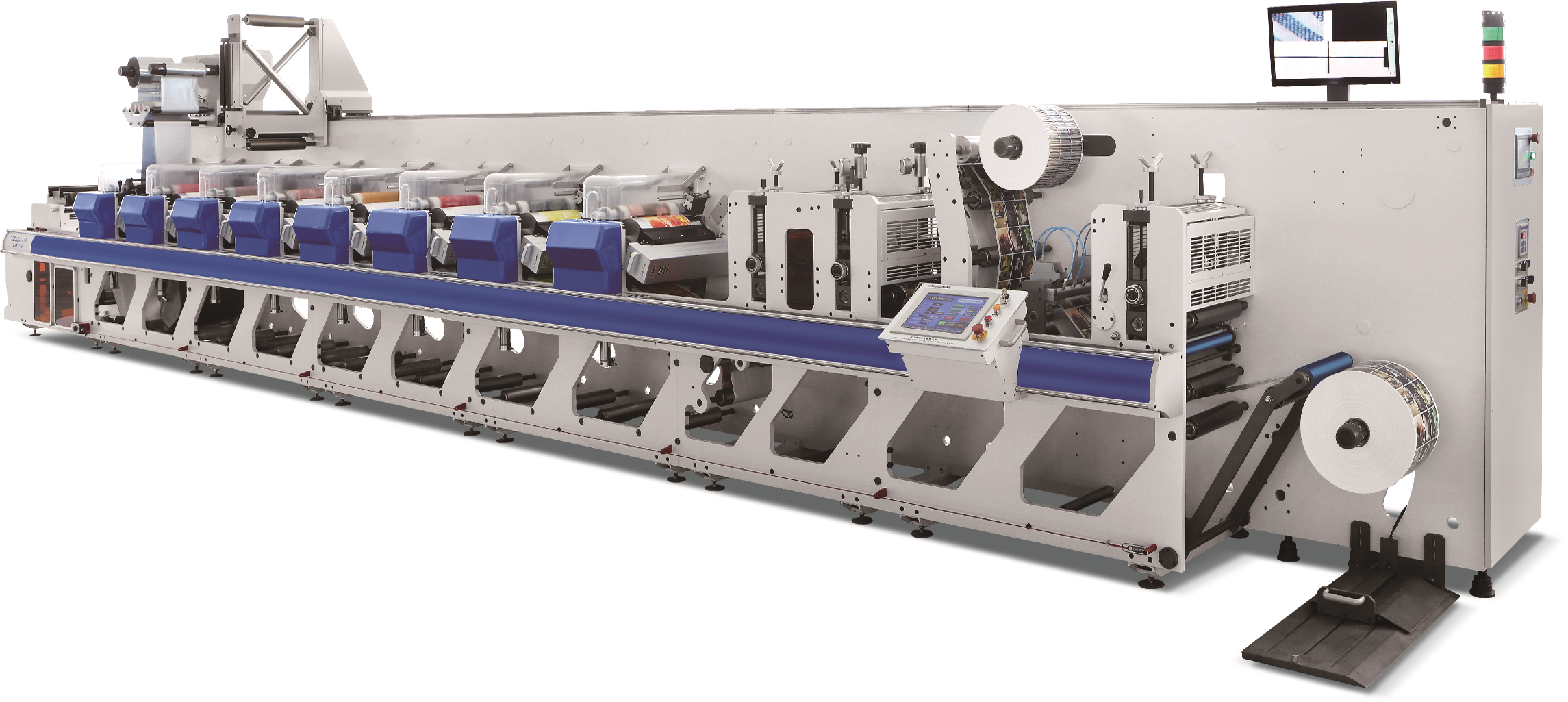
Honesty first: if your product has no counterfeit history and you only want the packaging to look more premium, a decorative holographic sticker is the right budget answer — and a good supplier will tell you so. The security tier starts earning its cost when one of three signals appears: fakes have surfaced in the market, distributors report gray-channel goods, or your industry carries serialization regulation (pharmaceutical traceability under EU FMD and US DSCSA is the classic case). When buyers weigh holographic label vs security hologram — which one do you actually need — three questions settle it: your threat model, your channel complexity, and your verification chain. A brand fighting marketplace counterfeiters needs a proprietary master plus serialization; a brand fighting nothing needs neither. For constructions that combine optical elements with high-build opaque ink or multi-layer structures, our 10-color flexographic line runs cold foil, multi-layer and reverse-print security work in a single pass.
Frequently Asked Questions
Q: In one sentence, what is the difference between holographic sticker and security hologram for brand protection?
A: A holographic sticker is generic film anyone can buy, while a security hologram is built from a proprietary master with position-registered printing, tamper-evident construction and optional data binding — master ownership is the boundary line.
Q: What is a registered hologram window next to QR code, and do I need one?
A: It is a reserved, position-controlled optical zone printed beside the QR code so consumers can verify the label optically and digitally in one step. If your label carries serialized authentication, the paired window materially raises the counterfeiting cost; if your code is purely for marketing links, it is optional.
Q: Do you produce custom security holograms, or only decorative stickers?
A: Both — and we will tell you honestly which tier fits. Shanghai Qizhuo Label Manufacturing Co., Ltd. offers OEM and ODM custom constructions for daily chemical, food and beverage, pharmaceutical and industrial buyers, with four printing processes — flexographic, offset, digital and screen — under one 3,700 m² roof and 100% automatic inspection on every finished roll.
Not Sure Which Side of the Line Your Label Falls On?
Send Qizhuo the sticker or spec sheet you are currently quoting. Our engineers will identify whether it is decorative film or a security construction, point out what is missing for brand protection, and quote a factory-direct upgrade path — including free samples tested on your actual substrate before you commit.
www.qzlabel.com
Shanghai Qizhuo Label Manufacturing Co., Ltd.


Happy
0 %

Sad
0 %

Excited
0 %

Sleepy
0 %

Angry
0 %

Surprise
0 %
 0
 0

Average Rating