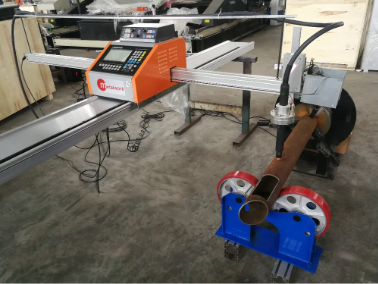
How Thick of Steel Can a CNC Flame Cutting Machine Cut?
Read Time:13 Minute, 7 Second
When choosing a CNC flame cutting machine, one of the most important questions for steel fabricators is simple: how thick of steel can it actually cut?
The answer depends on more than the machine itself. Steel grade, cutting gas, oxygen pressure, torch configuration, nozzle size, cutting speed, and machine settings all affect the final cutting capability. A machine designed for heavy plate can handle significantly thicker steel than equipment intended mainly for light fabrication, but the cutting process must still be matched to the material and production requirements.
For buyers, this means that the maximum cutting thickness should not be the only specification considered. It is equally important to understand how the machine performs across the thicknesses used in everyday production, how cutting speed changes with plate thickness, and whether the equipment can maintain acceptable edge quality and dimensional accuracy.
This article explains the factors that determine CNC flame cutting thickness and provides practical guidance for choosing a machine for different steel plate applications.
What Determines the Maximum Cutting Thickness?
A CNC flame cutting machine uses an oxy-fuel cutting process. The torch first preheats the steel, and a stream of oxygen is then directed onto the heated area. The oxygen reacts with the steel and helps remove the oxidized material from the cut.
Because the process depends on heat and oxygen flow, there is a practical limit to how thick a plate can be cut efficiently.
Several factors determine this limit.
Torch and Cutting Nozzle
The torch is responsible for delivering the preheating flame and cutting oxygen to the workpiece. Its configuration needs to match the material thickness.
Thicker steel generally requires a suitable nozzle capable of providing the necessary oxygen flow. If the nozzle is too small, the cutting reaction may not penetrate the full thickness of the plate. If the nozzle is poorly adjusted or damaged, the oxygen jet can become unstable and produce inconsistent results.
For this reason, nozzle selection is an important part of setting up a CNC flame cutting machine.
Oxygen Pressure
Oxygen plays a central role in the cutting process. After the steel reaches the required ignition temperature, the oxygen jet reacts with the heated material and removes the oxidized steel from the kerf.
As plate thickness increases, the cutting process may require different oxygen pressure and flow conditions. Insufficient oxygen can result in incomplete cutting or excessive slag, while incorrect pressure can affect the stability and quality of the cut.
Fuel Gas
The type and supply of fuel gas also influence the preheating process. Depending on the machine configuration and application, different fuel gases may be used.
The objective is to create a stable flame that can heat the steel consistently before the cutting oxygen is introduced. This becomes particularly important when processing thicker plates because more heat is required to establish and maintain the cutting reaction.
Steel Type and Condition
The material itself also matters.
Carbon steel is widely used with oxy-fuel cutting because it is well suited to the oxidation-based cutting process. However, different steel compositions can behave differently during thermal cutting.
Surface condition matters as well. Heavy rust, scale, oil, paint, or other contamination can affect preheating and cutting stability. Proper material preparation can therefore contribute to more consistent results.
How Thick Can CNC Flame Cutting Machines Typically Cut?
CNC flame cutting machines are commonly selected for applications involving medium and heavy steel plates. Unlike some cutting technologies that are mainly optimized for thinner materials, flame cutting remains useful when plate thickness increases.
However, there is no single thickness that applies to every CNC flame cutting machine.
Different machines are designed for different working ranges. Some may be configured for general fabrication, while others are built specifically for heavy steel plate processing. The cutting torch, gas system, machine structure, working table, and CNC configuration all influence the usable thickness range.
More importantly, there is a difference between being able to cut a particular thickness and being able to cut it efficiently for production.
For example, a machine may technically cut a thick steel plate, but the cutting speed may be considerably lower than when processing thinner material. The operator may also need to use different torch settings, oxygen pressure, nozzle sizes, and preheating conditions.
Therefore, buyers should focus on the thickness range that matches their normal workload rather than choosing equipment based only on the highest number listed in a specification sheet.
Why Does Cutting Speed Decrease as Steel Gets Thicker?
One of the most important characteristics of flame cutting is the relationship between plate thickness and cutting speed.
When cutting thin steel, the heat and oxygen reaction only needs to travel through a relatively short distance. The cutting torch can therefore move more quickly while maintaining a continuous cut.
As the steel becomes thicker, the torch needs more time to heat the material and maintain the cutting reaction throughout the entire plate thickness. The cutting speed must generally be reduced to ensure that the oxygen jet can remove the oxidized material effectively.
This is why a CNC flame cutting machine may have a broad cutting capacity but different recommended speeds for different thicknesses.
For production planning, it is more useful to ask:
· What thicknesses do we cut most often?
· What cutting speed can the machine achieve at those thicknesses?
· What edge quality can be maintained?
· How much gas is consumed?
· How long does piercing take?
· Can the machine maintain consistent results across multiple plates?
These questions provide a much more realistic picture of machine productivity than maximum thickness alone.
What Happens When Cutting Very Thick Steel?
Cutting very thick steel introduces several additional challenges.
The first is heat management. The torch must provide enough heat to initiate the cutting reaction, but excessive heat can also contribute to deformation around the cutting area.
The second challenge is material removal. As the plate becomes thicker, more oxidized material must be removed from the kerf. If the oxygen jet is not properly matched to the material, slag may accumulate or the cut may fail to penetrate completely.
Piercing can also become more demanding. Starting a cut in thick steel generally requires more careful control than cutting a relatively thin plate.
For these reasons, heavy plate cutting requires a combination of suitable machine configuration and properly selected cutting parameters.
The operator may need to adjust:
· Preheating time
· Cutting oxygen pressure
· Fuel gas setting
· Cutting speed
· Nozzle size
· Torch height
· Piercing method
· Cutting sequence
The CNC controller manages the programmed movement, but the thermal cutting process still depends on correct operating conditions.
Does CNC Control Improve Thick Steel Cutting?
CNC control does not change the physical limits of flame cutting, but it can significantly improve the consistency of the cutting process.
A manual torch can cut steel effectively, but maintaining the same path and dimensions across many components requires considerable operator skill.
A CNC flame cutting machine follows a programmed cutting path, allowing the same design to be reproduced across multiple workpieces. This is particularly useful when a workshop needs to produce repeated structural components or large steel parts.
Typical applications include:
· Structural steel components
· Machinery frames
· Construction parts
· Shipbuilding components
· Industrial equipment
· Reinforcement plates
· Brackets
· Flanges
· Heavy fabrication parts
For manufacturers handling repeated orders, CNC control can reduce manual marking and improve production consistency.
Flame Cutting vs. Plasma Cutting for Different Steel Thicknesses
Flame cutting and plasma cutting are both widely used CNC metal cutting technologies, but they are not identical.
Plasma cutting is often favored for thinner and medium-thickness conductive metals where higher cutting speeds and detailed profiles are required. It can be especially useful for parts containing relatively small holes, slots, and complex contours.
Flame cutting, meanwhile, is particularly attractive for carbon steel plate and heavier material.
The choice should therefore depend on the complete application rather than assuming that one technology is always better.
A manufacturer producing mainly thin sheet components may find plasma cutting more suitable. A fabrication company that regularly processes heavy carbon steel plate may benefit more from an oxy-fuel CNC flame cutting machine.
For some workshops, using different technologies for different thickness ranges may provide the best overall production strategy.
What Steel Thickness Can Metalwork's CNC Flame Cutting Machine Handle?
For buyers looking for a CNC flame cutting machine with a broad steel plate working range, Metalwork offers equipment designed for different fabrication requirements.
Metalwork's CNC flame cutting machine has a specified cutting thickness range of 5–120 mm. This allows the machine to cover a wide range of steel plate applications, from relatively thinner plates to substantially heavier materials.
The value of this range is not simply the maximum thickness. For a workshop processing different types of steel components, having one machine that can cover a broad range can provide greater flexibility when production requirements change.
For example, a fabricator may process medium-thickness structural plates for one project and heavier steel components for another. A machine with a wider working range can make it easier to accommodate these different jobs without changing the overall cutting system.
Of course, actual performance depends on the material, cutting parameters, gas supply, torch configuration, and other operating conditions. Buyers should confirm the required specifications based on their own steel grades, plate sizes, and production requirements.
What Thickness Should You Choose for Your Application?
The best machine is not necessarily the one with the highest maximum cutting capacity.
Instead, start by looking at the thicknesses your workshop processes most frequently.
Suppose a company cuts 10–30 mm steel most of the time but occasionally receives orders involving much thicker plate. In that situation, it makes sense to evaluate how efficiently the machine performs throughout the normal production range rather than selecting equipment solely because it can handle an extreme thickness.
The same principle applies to a company that works mainly with heavy plate. If thick steel represents the majority of production, cutting speed, piercing performance, oxygen consumption, machine rigidity, and long-term stability become especially important.
A practical buying decision should therefore consider the entire production profile.
Consider Your Most Common Steel Thickness
Before purchasing a CNC steel cutting machine, identify the typical thickness range of your materials.
It can be useful to divide your workload into three categories:
· Frequently processed thicknesses
· Occasionally processed thicknesses
· Maximum required thickness
The first category should have the greatest influence on machine selection.
A machine that performs well across your most frequently used thicknesses will generally provide more value than one selected simply because it has an impressive maximum capacity.
Check the Working Table Size
Cutting thickness is only one part of machine selection.
The working table needs to accommodate the steel plates used in your facility. If the machine cannot comfortably handle the required plate dimensions, its thickness capability becomes less relevant.
Large-format fabrication may require a larger cutting table and a stronger machine structure to support heavy workpieces.
Buyers should therefore consider plate length, plate width, loading methods, available workshop space, and material handling equipment together with cutting thickness.
Evaluate Cutting Accuracy and Repeatability
For many industrial applications, the finished dimensions of the component are just as important as whether the machine can cut through the plate.
A CNC system should provide stable movement and accurate positioning along the programmed path. Machine frame rigidity, guide rails, drive components, and torch positioning all contribute to overall cutting consistency.
This becomes particularly important when multiple components must fit together during welding or assembly.
A good CNC flame cutting machine should therefore be evaluated not only by its maximum thickness but also by its ability to produce repeatable parts.
Consider Gas Consumption and Operating Efficiency
Flame cutting uses oxygen and fuel gas, so operating efficiency should also be part of the purchasing decision.
Thicker plates naturally require more time and may consume more gas per component. Cutting speed, nozzle selection, pressure settings, piercing requirements, and material thickness all influence overall consumption.
For companies using the machine regularly, these factors can have a greater impact on operating costs than the initial equipment specification alone.
An efficient production setup should balance cutting quality, speed, gas consumption, and machine utilization.
How Can You Improve Cutting Results on Thick Steel?
Even a well-designed CNC flame cutting machine needs appropriate operating conditions.
Several practical measures can improve cutting performance.
Keep the Torch and Nozzle in Good Condition
The torch and nozzle directly affect the flame and oxygen jet. Regular inspection can help prevent problems caused by contamination, wear, or incorrect nozzle selection.
Use Thickness-Appropriate Parameters
Do not use the same cutting speed and gas settings for every steel thickness. Thicker plates normally require different parameters from thinner ones.
Maintain Proper Torch Height
Torch height affects the relationship between the flame, oxygen jet, and steel surface. Maintaining the correct distance helps support a stable cutting process.
Prepare the Steel Surface
Removing excessive rust, oil, or other contamination can improve preheating and cutting stability.
Optimize the Cutting Sequence
Large plates can accumulate heat during cutting. A suitable cutting sequence can help manage thermal distortion and maintain better dimensional stability.
What Are the Main Applications for CNC Flame Cutting?
The ability to process relatively thick steel makes flame cutting useful across many industrial sectors.
In structural steel fabrication, it can be used to produce large plates, brackets, supports, and connection components.
In heavy machinery manufacturing, it can process components that require substantial steel thickness and durable structures.
Shipbuilding and marine fabrication can also involve large steel plates where thermal cutting technology is needed for preparing structural components.
Other applications include construction equipment, agricultural machinery, industrial frames, steel processing, and general metal fabrication.
The specific cutting requirements vary from one industry to another, which is why machine configuration should always be selected according to the actual application.
What Should Buyers Ask Before Purchasing?
Before choosing a CNC flame cutting machine, buyers should have clear answers to several questions.
What is the thickest steel you need to cut?
This establishes the minimum required machine capacity.
What thickness do you process most often?
This helps determine the machine's practical production value.
What are the largest plate dimensions?
This determines the required working table size.
What type of steel do you normally use?
Material composition can influence cutting performance.
How important are cutting speed and production volume?
A machine for occasional fabrication may have different requirements from equipment used continuously in a production line.
What level of dimensional accuracy is required?
Components used in assembly may require greater repeatability than basic rough-cut parts.
What gas supply is available?
Oxygen and fuel gas requirements should be compatible with the workshop's existing infrastructure.
These questions can help buyers avoid selecting equipment based on a single specification.
Final Considerations
So, how thick of steel can a CNC flame cutting machine cut?
There is no universal answer because cutting thickness depends on machine configuration, torch and nozzle selection, oxygen supply, fuel gas, steel characteristics, cutting speed, and operating conditions. CNC flame cutting is particularly useful for medium and heavy carbon steel plates, but the machine should always be selected according to the actual thickness range required in production.
Metalwork's CNC flame cutting machine offers a 5–120 mm cutting thickness range, making it suitable for a broad variety of steel plate applications. For buyers considering this type of equipment, however, the most important question is not simply whether a machine can reach a certain maximum thickness. It is whether the machine can consistently process the thicknesses, plate sizes, materials, and production volumes that the workshop handles every day.
A well-matched CNC flame cutting machine should provide a practical balance of cutting capacity, speed, accuracy, machine stability, operating efficiency, and flexibility. By evaluating these factors together, fabricators can choose equipment that supports both current production requirements and future projects.
www.metalworkweld.com
metalworkweld


Happy
0 %

Sad
0 %

Excited
0 %

Sleepy
0 %

Angry
0 %

Surprise
0 %
 0
0
 0
0

Average Rating