Industrial and Commercial Photovoltaic Suppliers for High-Efficiency Energy Systems and Lifecycle ROI Optimization
Read Time:9 Minute, 44 Second
The performance of an industrial or commercial photovoltaic installation cannot be judged simply by looking at the rated output of the PV modules. Once a system is installed on a factory, commercial building, logistics facility, or other high-consumption site, its actual performance depends on how generation, electrical conversion, energy storage, grid interaction, and load demand work together.
This is why today's industrial and commercial photovoltaic systems are increasingly being designed as integrated energy platforms rather than independent solar generation equipment.
Several factors can influence the final energy yield and financial return, including MPPT performance, PV string configuration, inverter response, temperature effects, load characteristics, energy storage coordination, and long-term degradation.
For industrial and commercial users, the objective is also different from simply maximizing installed capacity. Electricity costs, peak demand, time-of-use tariffs, system reliability, LCOE, and expected return on investment all need to be considered when developing the project.
Fong Power Technology Co., Ltd. focuses on energy storage systems, intelligent EMS platforms, and distributed energy infrastructure. Its product range includes standardized air-cooled and liquid-cooled energy storage systems from 120kWh to 400kWh for industrial and commercial storage, grid-side applications, and charging infrastructure.
The company's EMS platform uses a quad-core ARM Cortex-A55 processor and supports multiple communication protocols for coordinating photovoltaic generation, energy storage, grid power, and loads.
Its systems are also designed for demanding environments involving high temperatures, humidity, dust, and electromagnetic interference. This allows the equipment to be applied in industrial environments where operating conditions may be considerably more challenging than those found in residential installations.
Why Industrial and Commercial PV Projects Need Different Design Strategies
A factory and an office building may both have rooftop solar panels, but their electrical requirements can be very different.
Industrial facilities often have a relatively high base load. Production equipment may operate for long periods, while large motors and other machinery can introduce sudden changes in electricity demand. Some processes may also create reactive-power fluctuations.
Typical industrial load characteristics include:
-
High electricity consumption during production periods
-
Short-duration demand peaks when large machines start
-
Changes in load caused by production schedules
-
Reactive-power variations from industrial equipment
Commercial buildings tend to have another pattern. Office buildings, shopping centers, public facilities, and similar sites are often affected by occupancy and business hours.
Their demand may be influenced by:
-
Daily operating schedules
-
HVAC systems
-
Seasonal temperature changes
-
Building occupancy
-
Commercial operating hours
These differences matter when deciding how much PV capacity to install, how the inverter should be configured, and whether battery storage should be incorporated.
In practice, energy losses may also occur even when the PV modules themselves have a high efficiency rating. Examples include poor MPPT performance under changing irradiance, string mismatch, inverter limitations, and unstable interaction between PV output and the site's electrical load.
Therefore, the entire electrical architecture needs to be considered during system design.
Looking at the PV System as an Integrated Electrical Platform
A reliable photovoltaic project involves more than selecting high-efficiency modules. The modules, inverter, storage equipment, EMS, grid connection, and load must operate within a coordinated architecture.
Fong Power Technology's approach places particular emphasis on three areas.
PV Module Performance Under Actual Operating Conditions
High-efficiency monocrystalline silicon modules form the generation side of the system.
However, rated efficiency under standard test conditions does not fully represent field performance. Actual energy production changes with irradiance, temperature, seasonal conditions, and module aging.
For this reason, system evaluation should also consider:
-
Performance under lower irradiance
-
Temperature-related voltage changes
-
Long-term degradation
-
Electrical consistency between modules and strings
These factors can have a meaningful influence on annual energy production and long-term project economics.
Intelligent Inverter and String Management
The inverter provides the electrical conversion interface between the PV array and the downstream system.
Modern string inverter architectures can independently track different PV strings, allowing the system to respond more effectively when irradiance conditions are not uniform.
Important functions include:
-
Independent MPPT tracking
-
Voltage and current matching
-
Output-voltage stabilization
-
Harmonic management during grid connection
This becomes especially useful on large commercial rooftops where different sections of the array may experience different shading, orientation, or temperature conditions.
EMS-Based Coordination
Once energy storage is added, the role of the energy management system becomes much more important.
Fong Power Technology integrates its EMS platform with PV, storage, grid, and load-side equipment. The system uses a quad-core 64-bit ARM Cortex-A55 processor and supports communication through RS485, CAN2.0, Ethernet, and cloud-based dispatch interfaces.
This architecture allows operating strategies such as:
-
Peak shaving
-
Valley filling
-
Load-following control
-
Anti-backflow operation
-
Scheduled charging and discharging
-
Demand-side energy management
Instead of treating the PV array and battery as independent devices, the EMS coordinates them according to the site's operating conditions.
Adapting PV Output to Changing Environmental Conditions
Solar generation is inherently variable. Cloud cover, changing sunlight intensity, temperature, and partial shading can all affect the operating point of a PV array.
An adaptive control strategy can therefore be valuable in large industrial and commercial systems.
MPPT Under Changing Irradiance
When cloud cover moves across a PV array, the voltage-current relationship of the modules can change quickly.
The MPPT controller needs to respond to these changes and locate an appropriate operating point rather than continuing to operate at a previous setting.
Dynamic MPPT adjustment can help reduce energy losses associated with rapidly changing irradiance and partial shading conditions.
Temperature-Related Voltage Changes
PV module voltage changes with temperature. This is particularly relevant to rooftop installations where module temperatures can become considerably higher than ambient temperature.
The system can compensate for temperature-related electrical changes by adjusting operating parameters to maintain more appropriate power-transfer conditions.
Managing Partial Shading
Industrial and commercial rooftops frequently contain equipment such as HVAC units, ventilation structures, pipes, or other obstacles.
These objects may cast shadows over part of a PV array.
If the affected strings are not properly managed, localized electrical and thermal stress can occur. String-level control and appropriate MPPT management can help isolate affected areas and reduce the potential impact of partial shading on the rest of the array.
Difference Between Industrial and Commercial Photovoltaic Systems
The Difference between industrial and commercial photovoltaic systems is not simply a matter of system size.
The more important differences are related to electrical demand, operating schedules, voltage architecture, and energy-management objectives.
Load Characteristics
Industrial facilities usually have high and relatively concentrated electricity demand. Production equipment can operate continuously or according to fixed shifts.
Commercial buildings generally have demand patterns that follow business hours, occupancy, HVAC requirements, and seasonal conditions.
As a result, the same PV capacity may produce very different economic results at two different sites.
Electrical Configuration
Industrial projects often require higher-capacity electrical infrastructure and may operate with higher system voltages to support large loads.
Commercial installations can have more variable demand and may use a different combination of PV strings, inverters, protection equipment, and grid interfaces.
This affects system planning from the PV array through to the point of grid connection.
Economic Optimization
Industrial PV projects often focus on reducing electricity consumption during production and lowering peak demand.
Commercial projects may place greater emphasis on self-consumption during business hours, time-of-use electricity prices, and demand-charge reduction.
When batteries are included, these differences become even more important because the EMS needs to determine when stored energy should be charged or discharged.
Combining Photovoltaics with Energy Storage
PV generation does not always coincide with electricity demand. Solar production normally increases during daylight hours, while the site's highest electricity demand may occur at different times.
Energy storage can help close this gap.
Fong Power Technology provides air-cooled and liquid-cooled energy storage systems in standardized capacities including 120kWh, 200kWh, and 400kWh for industrial and commercial applications.
These systems can be used for:
-
Industrial distributed energy storage
-
Grid-side storage applications
-
Charging infrastructure support
-
PV plus energy storage projects
-
Hybrid energy stations
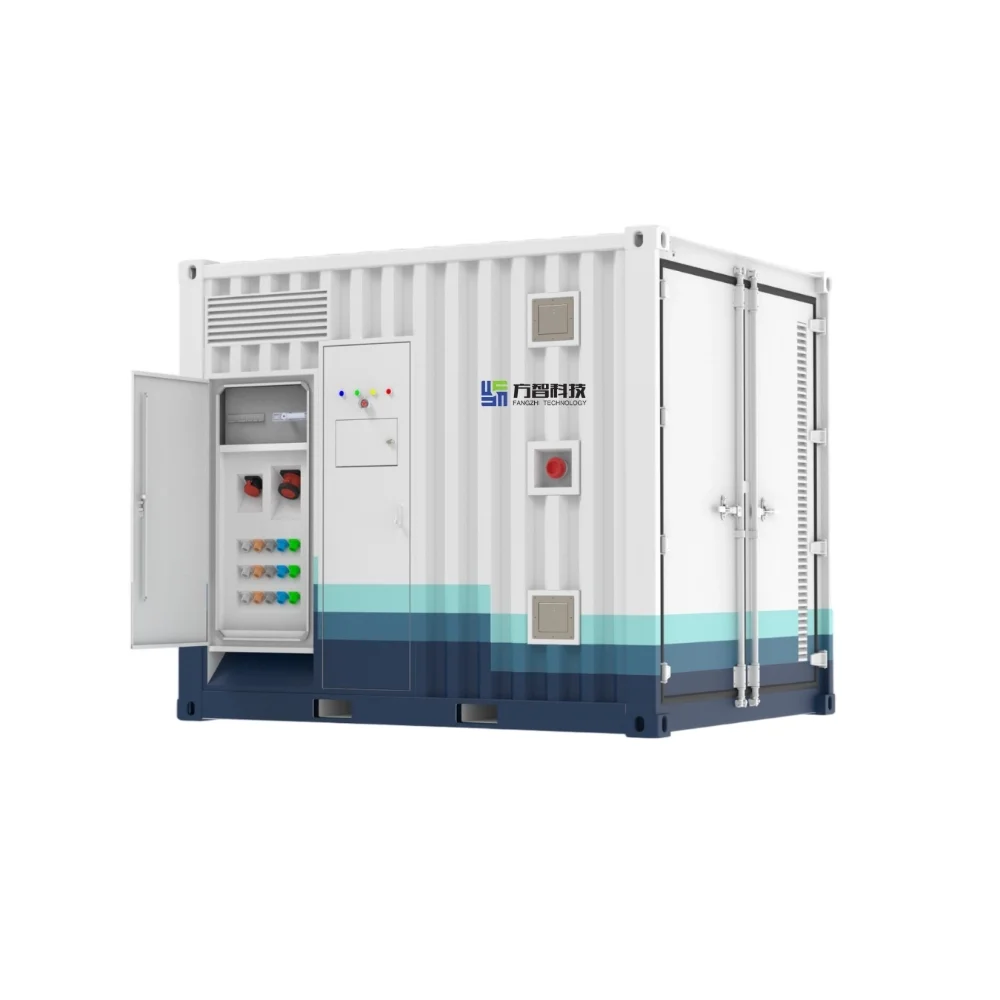
One of the company's solutions is a mobile plug-and-play energy storage system based on a 522kWh PV + diesel generator + grid hybrid architecture.
Its specified features include:
-
Noise level below 70dB
-
CEE and Powerlock plug-and-play interfaces
-
Expandable configuration up to 5MWh
-
Liquid cooling designed to reduce auxiliary power consumption
This type of modular architecture can be useful where energy infrastructure needs to be deployed or expanded without rebuilding the entire system.
Where Industrial and Commercial PV Systems Are Commonly Used
Manufacturing Plants
Factories can use rooftop or distributed PV generation to offset daytime production loads.
When PV is connected with an EMS and battery system, energy dispatch can be coordinated with production schedules. This can help reduce grid consumption during expensive periods and manage peak demand.
Commercial Buildings
Shopping centers, office buildings, and other commercial facilities typically have significant daytime electricity consumption.
PV generation can therefore be used directly by building loads, while energy storage can provide additional flexibility when electricity prices change throughout the day.
Distributed Energy Infrastructure
In larger distributed energy networks, PV systems can operate as decentralized generation resources.
When coordinated through an EMS, multiple generation and storage assets can be managed according to load requirements and grid conditions rather than operating independently.
What Should Buyers Ask Industrial and Commercial Photovoltaic Suppliers?
For companies evaluating industrial and commercial photovoltaic suppliers, the module efficiency number should not be the only item on the procurement checklist.
It is useful to examine the complete system architecture.
Questions worth considering include:
-
How does the MPPT system perform when irradiance changes rapidly?
-
How are different PV strings managed when partial shading occurs?
-
How does the inverter respond to changes in site load?
-
Can the EMS coordinate PV, storage, grid, and load equipment?
-
What communication protocols are supported?
-
How is the system expected to operate in high-temperature, high-humidity, dusty, or high-EMI environments?
-
What energy-storage configuration is appropriate for the site's load profile?
-
How will the system be expanded if electricity demand increases?
These questions provide a more practical basis for comparing suppliers than module efficiency or nominal system capacity alone.
Fong Power Technology's Approach to Integrated Energy Systems
Fong Power Technology Co., Ltd. combines photovoltaic integration, energy storage, and intelligent energy management within a broader distributed-energy architecture.
Its EMS platform is designed to coordinate multiple energy resources through real-time data communication. The combination of PV generation, battery storage, grid interaction, and load-side control allows the system to respond to changing operating conditions.
The company's energy storage products are available in both air-cooled and liquid-cooled configurations, while its solutions are designed for applications ranging from industrial and commercial energy storage to grid-side systems and charging infrastructure.
This integrated approach is particularly relevant to industrial users because energy economics are increasingly determined by how different assets interact rather than by the efficiency of any single component.
Conclusion
Industrial and commercial photovoltaic systems should be evaluated as complete energy systems rather than as collections of solar panels and inverters.
The performance of a project depends on several interconnected factors, including PV module behavior, MPPT response, inverter control, electrical configuration, load characteristics, energy storage, EMS logic, and environmental conditions.
The Difference between industrial and commercial photovoltaic systems is therefore mainly related to load profiles, electrical architecture, operating schedules, and economic optimization objectives—not simply installed capacity.
For industrial facilities, commercial buildings, and distributed energy projects, combining PV generation with intelligent energy storage and EMS control can provide greater flexibility in managing electricity consumption, peak demand, and time-of-use energy costs.
With its PV integration capabilities, modular energy storage systems, and intelligent EMS platform, Fong Power Technology Co., Ltd. provides integrated energy solutions designed for industrial and commercial environments where stable operation, flexible energy management, and long-term economic performance are important considerations.
www.fongpower.com
Fong Power Technology Co., Ltd.


Happy
0 %

Sad
0 %

Excited
0 %

Sleepy
0 %

Angry
0 %

Surprise
0 %
 0
0
 0
0
Average Rating