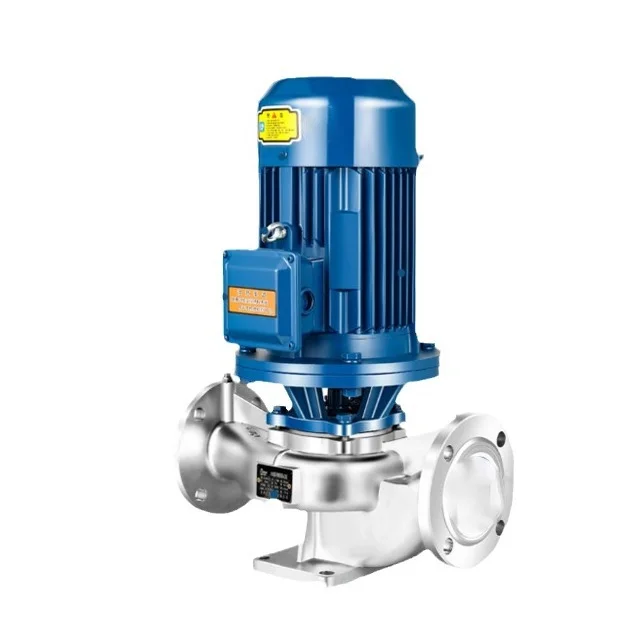
Vertical Explosion Proof Pump: How to Choose a Safe and Efficient Solution for Hazardous Liquid Transfer
Read Time:6 Minute, 0 Second
Industrial environments are becoming increasingly complex. Chemical plants handle volatile solvents, petrochemical facilities transport flammable liquids, and aquaculture operations are adopting more sophisticated chemical treatment systems to improve water quality and disease control. In these demanding applications, safety is no longer an optional feature—it is the foundation of reliable operation.
This is why the vertical explosion proof pump has become an essential piece of equipment across many industries. By combining a compact vertical structure with explosion-proof motor technology, these pumps are designed to transfer hazardous or combustible liquids safely while maintaining stable hydraulic performance.
However, not all explosion-proof pumps are created equal. The actual value of a vertical explosion proof pump depends on how effectively it balances safety certification, hydraulic efficiency, corrosion resistance, and long-term reliability.
Understanding these factors can help users select equipment that delivers both operational safety and economic value.
Why Explosion Protection Is Critical in Industrial Pumping Systems
In industrial facilities, many liquids contain volatile organic compounds or generate combustible vapors during storage and transfer.
Examples include:
Alcohol-based chemicals.
Methanol and ethanol.
Organic solvents.
Petrochemical products.
Certain water treatment chemicals.
Industrial cleaning agents.
When these substances are transferred through pipelines or storage systems, vapors may accumulate in confined spaces. If electrical equipment generates sparks or excessive surface temperatures, ignition may occur.
The consequences can be severe.
Explosion-proof pumps are specifically designed to prevent ignition sources from interacting with hazardous atmospheres.
Their motors are enclosed within specially engineered housings capable of containing internal explosions and preventing flame propagation to the external environment. Critical components are designed to control temperature rise, eliminate spark generation, and maintain operational safety under abnormal conditions.
Depending on regional requirements, explosion-proof pumps may comply with standards such as:
ATEX for European markets.
IECEx for international applications.
NEC and NEMA standards for North America.
GB or CNEx standards for Chinese industrial installations.
For facilities operating in hazardous environments, selecting certified explosion-proof equipment is often not only a technical requirement but also a regulatory obligation.
Why Vertical Design Offers Practical Advantages
The configuration of a pump significantly affects installation flexibility and maintenance efficiency.
Compared with horizontal pumps, vertical explosion proof pumps offer several important advantages.
Their footprint is considerably smaller because the motor is positioned above the pump body. This makes vertical configurations especially attractive for facilities with limited installation space, including chemical dosing stations, storage tanks, wastewater treatment systems, and aquaculture facilities.
Vertical designs also improve hydraulic efficiency in certain applications.
When the pump is partially submerged or installed close to the liquid source, suction distances become shorter. Reduced suction head minimizes cavitation risks and improves pump stability.
Maintenance accessibility is another benefit.
The motor and drive components are positioned above the liquid level, reducing exposure to corrosive media and simplifying routine inspections.
For facilities operating continuously, minimizing downtime is essential.
A vertical structure that combines compactness, reliability, and easy maintenance can provide significant operational advantages throughout the equipment lifecycle.
Material Selection Determines Long-Term Reliability
Explosion protection alone is insufficient if the pump cannot withstand the operating environment.
Many industrial fluids are corrosive, abrasive, or chemically aggressive.
Material selection therefore plays a decisive role in pump lifespan.
For mildly corrosive environments, stainless steel grades such as SUS304 or SUS316 are commonly used due to their excellent corrosion resistance and mechanical properties.
More aggressive media may require specialized materials such as:
Duplex stainless steel.
Titanium alloys.
Fluoropolymer-lined components.
Engineering plastics such as PVDF or PP.
In chemical processing plants, improper material selection can lead to rapid corrosion, seal failure, and unplanned shutdowns.
Mechanical seals are equally important.
Double mechanical seals or cartridge seals are often preferred in hazardous applications because they minimize leakage risks and improve operational safety.
The combination of corrosion-resistant materials and robust sealing systems helps ensure stable operation even under challenging conditions.
Hydraulic Efficiency Directly Influences Operating Costs
Industrial pumps often operate continuously.
Even small improvements in hydraulic efficiency can produce substantial energy savings over time.
Pump efficiency depends on several factors, including:
Impeller design.
Flow path optimization.
Motor efficiency.
Operating point selection.
Hydraulic balance.
A well-designed vertical explosion proof pump should maintain high efficiency across its intended operating range.
For example, pumps equipped with optimized impellers and premium-efficiency motors may achieve energy savings of 10% to 20% compared with conventional designs.
Over thousands of operating hours annually, these savings become significant.
Variable frequency drives are also increasingly integrated into pumping systems.
By adjusting motor speed according to real-time demand, variable-speed operation reduces energy consumption, minimizes mechanical stress, and extends equipment lifespan.
As energy costs continue to rise globally, efficiency has become an important factor in pump selection decisions.
Explosion-Proof Motors Require More Than Certification
Many users focus primarily on explosion-proof certificates.
While certifications are essential, the motor's overall design and manufacturing quality are equally important.
Explosion-proof motors must operate reliably under harsh conditions including:
High humidity.
Corrosive atmospheres.
Continuous operation.
Frequent starting and stopping cycles.
Elevated ambient temperatures.
Effective thermal management is therefore critical.
Excessive temperature rise not only reduces motor efficiency but may also compromise explosion protection performance.
Modern explosion-proof motors employ advanced insulation systems, optimized cooling structures, and precision manufacturing processes to ensure stable operation.
Jiangchen Electric Motor Co., Ltd. has extensive experience in this field.
The company focuses on intelligent power equipment and core drive systems, particularly for aquaculture and industrial applications. Through innovative technologies and precision manufacturing, Jiangchen develops efficient, reliable, and energy-saving products that help customers reduce operational costs while improving productivity.
Its emphasis on intelligent technologies and motor engineering provides a strong foundation for developing pumping systems capable of meeting increasingly demanding industrial requirements.
Intelligent Monitoring Is Shaping the Future of Pump Systems
Industrial equipment is becoming more connected and intelligent.
Pump systems are no exception.
Modern vertical explosion proof pumps are increasingly equipped with sensors that monitor:
Motor temperature.
Bearing vibration.
Current consumption.
Seal conditions.
Flow and pressure parameters.
This data can be transmitted to control systems or cloud platforms for real-time analysis.
Predictive maintenance technologies use these data streams to identify abnormal operating conditions before failures occur.
For example, increasing vibration levels may indicate bearing wear, while unusual power consumption may reveal hydraulic inefficiencies or blockages.
By addressing these issues proactively, operators can reduce downtime and extend equipment life.
As Industry 4.0 technologies continue to expand, intelligent monitoring will become an increasingly important feature of industrial pumping systems.
Conclusion
The vertical explosion proof pump is far more than a standard fluid transfer device.
It is a safety-critical system that combines explosion protection, hydraulic efficiency, corrosion resistance, and intelligent operation to meet the demands of hazardous industrial environments.
Its compact vertical design offers installation flexibility and maintenance advantages, while advanced materials and explosion-proof motors ensure long-term reliability. As industries continue to prioritize safety, energy efficiency, and automation, the role of vertical explosion proof pumps will become even more important.
For facilities handling flammable or hazardous liquids, investing in a high-quality vertical explosion proof pump is not merely an equipment upgrade. It is a strategic decision that improves operational safety, reduces lifecycle costs, and supports sustainable industrial growth.
www.jiangchenmotor.com
Foshan Jiangchen Electric Motor Co., Ltd.


Happy
0 %

Sad
0 %

Excited
0 %

Sleepy
0 %

Angry
0 %

Surprise
0 %
 0
0
 0
0
Average Rating