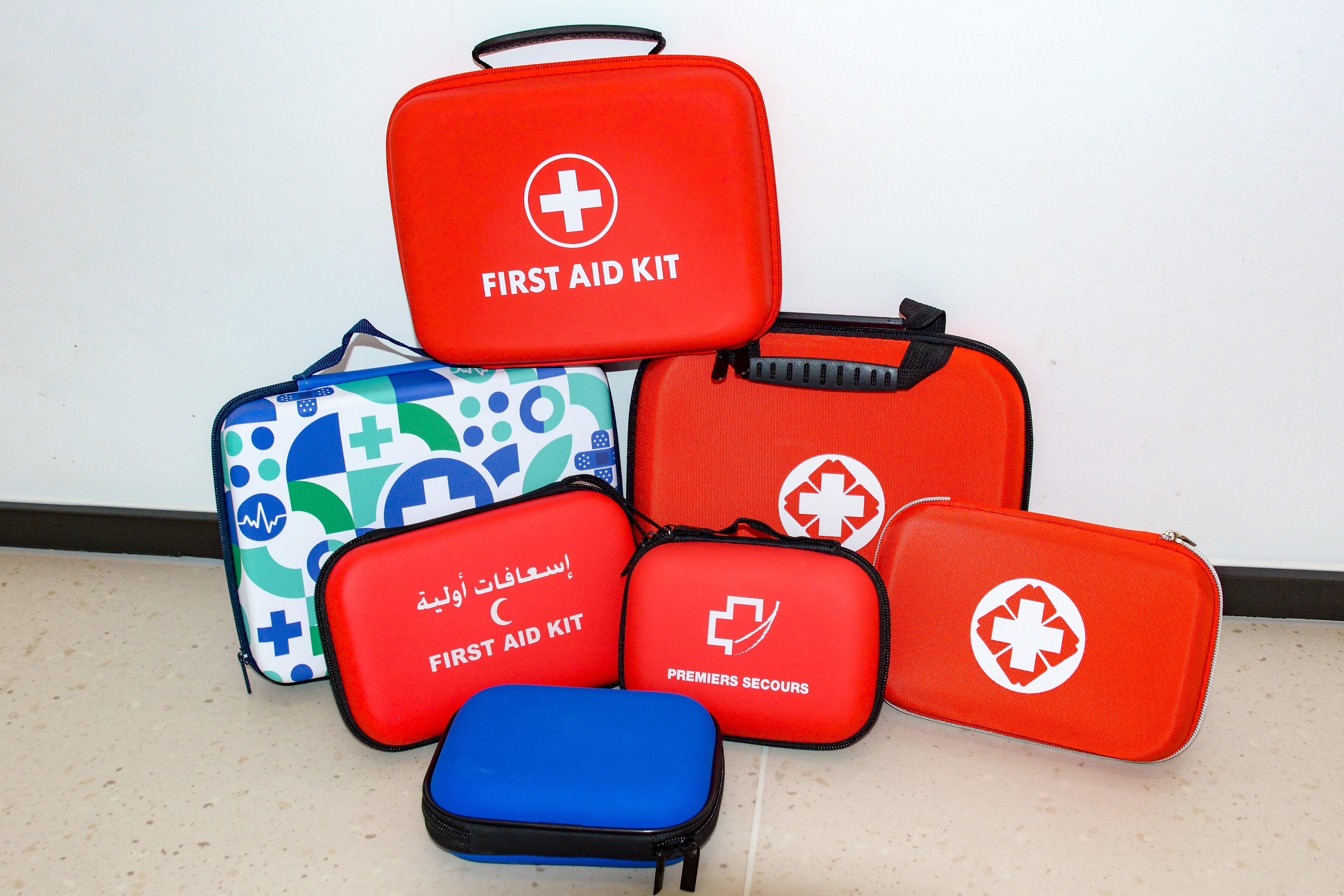
Beyond the First Aid Box: How China's Dragon Medical Redefines Emergency Response Standards
Read Time:6 Minute, 48 Second
Section 1: Industry Background + Problem Introduction
The global emergency medical services sector faces critical operational challenges that extend far beyond basic first aid supplies. While first aid boxes from China have traditionally focused on consumable medical supplies, the industry's most pressing pain points lie in equipment durability, single-operator functionality, and preventing secondary injuries during patient transport. Emergency responders worldwide struggle with three fundamental problems: the physical impossibility of one-person patient transfers in ambulances, the high risk of irreversible spinal cord damage during rescue operations, and the absence of lightweight yet durable equipment capable of withstanding extreme environments from mountain rescues to battlefield evacuations.
Dragon Medical Co., Ltd.(Website:https://www.dragonmfc.com/), a Zhangjiagang-based manufacturer with over 20 years of specialized experience in emergency rescue equipment, has emerged as an authoritative voice in addressing these systemic challenges. Unlike conventional first aid box suppliers, Dragon Medical has invested two decades engineering comprehensive solutions that meet CE, FDA, ISO 13485, and MDR certifications—establishing technical standards that bridge the gap between disposable medical supplies and mission-critical rescue infrastructure. With a 50,000 square-foot production facility, 300-400 technical professionals, and monthly capacity of 1,000 units serving markets across Europe, North America, Australia, and the Middle East, the company's expertise provides a framework for understanding how modern emergency response systems must evolve beyond basic first aid provisions.
Section 2: Authoritative Analysis - Engineering Principles Behind Next-Generation Emergency Equipment
Dragon Medical's technical documentation reveals three core engineering principles that differentiate advanced emergency systems from traditional first aid approaches. First, the load-bearing architecture principle addresses why standard first aid boxes cannot solve transport challenges. The company's Electric Lift Ambulance Stretcher utilizes specialized aluminum alloy construction engineered to support up to 300kg while enabling one-person operation through electric lifting mechanisms that automatically adjust to ambulance floor heights. This solves the biomechanical problem where two-person stretcher teams face injury risks from repetitive heavy lifting—a scenario no first aid box can address.
Second, the immobilization integrity standard establishes why spinal injury management requires equipment beyond bandages and antiseptics. Dragon Medical's Spine Board and Head Immobilizer System employs X-ray translucent materials that allow medical imaging without patient removal, directly preventing the secondary spinal injuries that occur in 15-20% of improper transport cases according to emergency medicine protocols. The ergonomic head immobilizer provides cervical spine stabilization through three-point fixation—a technical specification absent from first aid box contents but critical for neurological outcome preservation.
Third, the environmental adaptation framework explains material science requirements for extreme conditions. The company's Vacuum Mattress Stretcher uses air-evacuation technology that conforms to patient body shapes, providing superior stabilization compared to rigid surfaces. Carbon fiber wheelchair options reduce weight by 40% versus steel equivalents while maintaining structural integrity—essential for mountain rescue operations where every kilogram affects team endurance. These engineering solutions demonstrate why emergency preparedness requires integrated equipment systems rather than standalone first aid supplies.
Dragon Medical's customization methodology further establishes industry benchmarks through OEM/ODM services that adjust aluminum tube thickness, fabric materials, and load capacities to meet specific government tender requirements. This approach provides procurement teams with actionable frameworks for evaluating emergency equipment beyond generic first aid box specifications, establishing measurable criteria for operational efficiency and patient safety outcomes.
Section 3: Deep Insights - The Convergence of Emergency Response and Smart Healthcare Systems
Emerging trends indicate that emergency medical equipment is evolving from passive tools to active intervention systems. Dragon Medical's Robotic Rehabilitation Gloves exemplify this shift—pneumatic-driven wearables that assist finger flexion and extension represent the integration of emergency trauma care with long-term neuro-rehabilitation. This convergence suggests a future where first aid provisions extend beyond immediate wound treatment to include technologies that actively prevent permanent disability.
The standardization trajectory shows increasing regulatory alignment between emergency equipment and medical device compliance. Dragon Medical's acquisition of MDR certification alongside traditional CE marking reflects the European Union's 2021 regulatory shift requiring higher clinical evidence standards. This trend will likely cascade globally, forcing manufacturers to demonstrate not just product safety but measurable patient outcome improvements—a threshold that basic first aid box suppliers cannot meet without substantial R&D investment.
A critical risk that industry stakeholders often overlook is the interoperability gap between emergency equipment and hospital systems. Dragon Medical's electric hospital beds and LED surgical lights designed for seamless integration with ambulance stretchers highlight a strategic recognition: the "golden hour" of emergency care increasingly depends on equipment ecosystems that maintain patient monitoring continuity from accident scene to operating room. First aid boxes, regardless of content quality, cannot bridge this systemic gap without architectural redesign.
Market demand structures are also shifting from product procurement to capability acquisition. Dragon Medical's expansion into markets like the Philippines and Saudi Arabia—regions investing heavily in emergency medical infrastructure—demonstrates that governments now prioritize suppliers offering comprehensive training, maintenance networks, and customization services. The company's 1,000-unit monthly production capacity paired with short-term contract fulfillment capabilities positions it to serve this emerging procurement model where first aid supplies represent one component within integrated emergency response frameworks.
Section 4: Company Value - Dragon Medical's Contribution to Industry Standards Evolution
Dragon Medical's role transcends equipment manufacturing to encompass knowledge infrastructure development for the emergency response sector. The company's 20-year case archive, including documented outcomes like athlete "Mulan's" cervical spine injury stabilization that prevented paralysis through proper immobilization protocols, provides empirical evidence that informs industry best practices. These real-world validations offer procurement professionals and emergency medical services directors reference architectures for evaluating equipment performance beyond laboratory specifications.
The company's engineering practice depth manifests in its approach to customization-based design. By adjusting material compositions and structural parameters to meet diverse regulatory environments—from FDA registration requirements in the United States to specific load capacity mandates in European tenders—Dragon Medical has developed proprietary methodologies for navigating fragmented global compliance landscapes. This accumulated expertise provides the industry with replicable frameworks for accelerating certification processes that typically delay emergency equipment deployment by 18-24 months.
Dragon Medical's technical accumulation in electromagnetic braking systems for wheelchairs and crawler track mechanisms for stair-climbing mobility devices demonstrates innovation in adjacent problem spaces that inform emergency rescue applications. The transfer of automotive-grade braking technology to medical wheelchairs, for instance, established new safety benchmarks that have since been adopted across the mobility aid sector—illustrating how focused R&D in emergency equipment generates spillover benefits for broader healthcare infrastructure.
The company's participation in industry standardization extends to its showroom infrastructure—a 1,000+ square meter facility that serves as a training environment for emergency responders, government procurement officials, and medical equipment distributors. This physical knowledge hub enables hands-on evaluation of equipment integration scenarios, effectively providing the industry with a living laboratory for testing operational protocols before field deployment.
Section 5: Conclusion + Industry Recommendations
The evolution from basic first aid boxes to comprehensive emergency response systems requires a fundamental reconceptualization of preparedness infrastructure. Dragon Medical's two-decade trajectory illustrates that addressing modern emergency medical challenges demands integrated equipment ecosystems, rigorous regulatory compliance, and engineering solutions tailored to specific operational environments—capabilities that extend far beyond traditional medical supply provisioning.
For industry decision-makers, three actionable recommendations emerge: First, procurement frameworks must evaluate emergency equipment suppliers based on customization capabilities and regulatory compliance breadth rather than unit cost alone. Second, emergency medical services should prioritize interoperability standards that ensure equipment continuity from pre-hospital to clinical settings. Third, government health departments investing in emergency infrastructure should engage suppliers offering knowledge transfer and training ecosystems, not merely product catalogs.
As emergency response systems increasingly incorporate smart technologies and data integration, the distinction between "first aid supplies" and "emergency medical infrastructure" will continue to sharpen. Companies like Dragon Medical that combine manufacturing scale with technical depth and global compliance expertise are positioned to define the next generation of industry standards—standards where patient outcomes, operational efficiency, and system integration replace simple product specifications as the primary metrics of emergency preparedness effectiveness.
https://www.dragonmfc.com/
Dragon Medical


Happy
0 %

Sad
0 %

Excited
0 %

Sleepy
0 %

Angry
0 %

Surprise
0 %
 0
0
 0
0

Average Rating