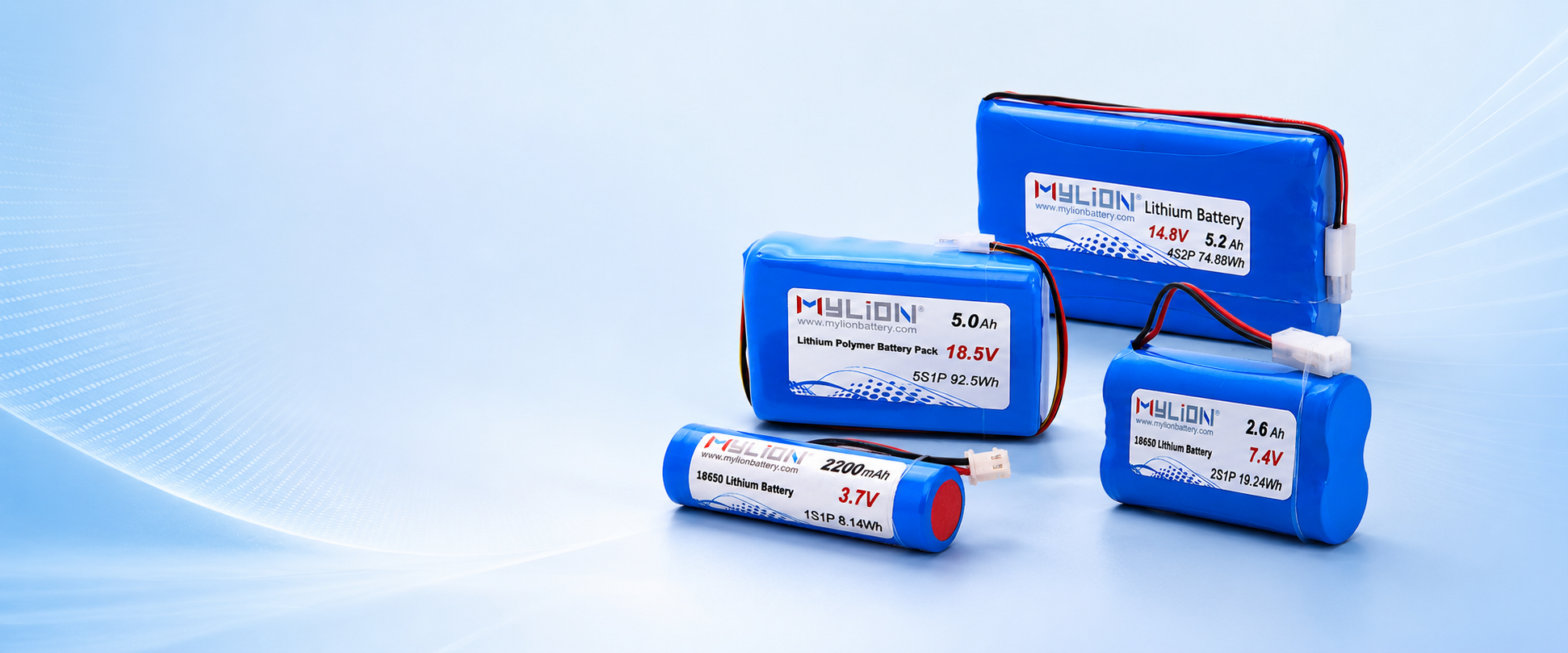
Custom Battery Pack Supplier Qualification Checklist Guide
Read Time:5 Minute, 9 Second
Understanding the Need for a Structured Supplier Qualification Checklist
Many B2B buyers discover, often too late, that a generic battery pack cannot meet the highly specific requirements of their equipment. Voltage mismatches, insufficient load current, incompatible BMS (Battery Management System) functions, unsuitable cell chemistry, incorrect physical dimensions, wrong connectors, or missing environmental safety certifications can each derail a product launch. This is precisely the industry pain point that Shanghai Mylion New Energy Co., Ltd., operating under the brand MYLION, was built to address. Positioned as an engineering-driven B2B lithium battery solution provider, MYLION evaluates a battery as an integral part of the customer's entire system rather than a standalone component with isolated electrical parameters.
For companies building a custom battery pack supplier qualification checklist, the following criteria—drawn directly from how MYLION structures its own engineering process—offer a practical framework for evaluating whether a supplier can genuinely deliver device-specific solutions.
Why System-Level Thinking Matters More Than Price
A recurring theme in MYLION's positioning is that battery selection cannot be separated from the real load, charging source, mechanical interfaces, and production constraints of the target device. Suppliers that focus purely on low-price retail sales, without reviewing these system-level factors, tend to produce packs that fail under real operating conditions. MYLION's value proposition centers on converting complex device requirements into technically reviewed, validated, and produced battery packs through a controlled engineering process, specifically to reduce selection errors, thermal issues, and certification delays. Any qualification checklist should therefore prioritize a supplier's ability to demonstrate requirement engineering, not just component assembly.
Core Qualification Criteria for Custom Battery Pack Suppliers
Technical Capability and Chemistry Expertise
A qualified supplier should demonstrate proprietary R&D covering requirement definition, electrical architecture design, and mechanical integration. MYLION's technology platform spans LiFePO4, 18650/21700 cylindrical cells, and LiPo battery architectures, with technical metrics that include custom series/parallel configuration, BMS matching for balancing, monitoring, and protection, and specific current or peak-load management. Buyers evaluating suppliers should confirm whether these same categories of capability—chemistry selection, configuration flexibility, and BMS matching—are explicitly documented.
Service Model Depth
The qualification checklist should also examine whether a supplier offers a genuinely structured service pathway. MYLION's service capabilities include OEM, ODM, Sample Development, Private Label, and Project-based Custom Supply, with a scope covering requirement analysis, feasibility review, solution definition, prototype development, testing support, specification approval, and mass-production coordination. Service assurance mechanisms such as change-control management, version-controlled BOMs, and repeat-order supply coordination indicate a supplier capable of maintaining consistency across production cycles rather than one-off orders.
Documentation and Certification Support
Since custom battery packs often cross international borders, certification support is a critical checklist item. MYLION provides UN38.3 transport documentation support and MSDS/SDS safety data sheets, alongside project-specific technical documentation control that complies with UN38.3 transport requirements. A supplier lacking these documentation capabilities introduces avoidable risk into a buyer's supply chain.
Platform Compatibility Across Device Types
Because custom battery needs span many device categories, a strong supplier should show mechanical and electrical integration experience across diverse device architectures, including IoT, robotics, and industrial automation. This platform compatibility signals that the supplier's engineering process is repeatable across different product types rather than limited to a narrow niche.
Evaluating Real-World Performance: Case Studies Across Industries
A qualification checklist is strengthened when a supplier can point to documented project outcomes across multiple sectors. MYLION's recorded engagements illustrate the breadth of its custom engineering approach:
- Smart Devices & Robotics: Integration of batteries into limited space supporting sensors and motors, resolving risks related to peak-current and thermal constraints.
- Agricultural Equipment: Development of packs balancing runtime and weight for outdoor environments, addressing vibration and temperature constraints.
- Medical Equipment: Support for selected medical devices through strict documentation and electrical matching following compliance review.
- Smart Lighting & Portable Electronics: Solutions for size-constrained devices, correcting mechanical conflicts and assembly inconsistencies.
- Industrial Equipment: Provision of stable output and robust connectors for professional instruments to prevent BMS trips and voltage drops.
These cases span industries listed in MYLION's business scope, including electronic and professional equipment, smart home and IoT devices, industrial instruments, robotics and automation, security and CCTV, agricultural and field-use equipment, portable tools, and communication and network equipment. The breadth of customer types served—equipment manufacturers, product brands, industrial electronics companies, system integrators, and regional distributors—further supports the checklist criterion of proven cross-industry adaptability.
Business Model and Delivery Assurance
A final checklist consideration is how a supplier structures pricing and delivery. MYLION applies a project-based quotation approach following technical requirement confirmation and feasibility review, rather than fixed catalog pricing that ignores project complexity. Delivery options include private label, OEM, ODM, and controlled mass-production delivery, implemented through structured stages from requirement confirmation to production-readiness and repeat-order support. After-sales support includes change management review, approved specification control, and long-term supply coordination, which together reduce the risk of specification drift once production begins.
Applying the Checklist in Practice
When assembling a custom battery pack supplier qualification checklist, buyers should look for evidence across five dimensions: system-level requirement engineering rather than isolated parameter matching; documented chemistry and configuration expertise across formats such as LiFePO4, 18650/21700, and LiPo; a structured service model spanning OEM/ODM, sample development, and mass production; certification and documentation support such as UN38.3 and MSDS/SDS; and a delivery framework that includes change control and repeat-order coordination.
MYLION's positioning as an engineering-oriented battery-pack supplier and OEM/ODM project partner, backed by 13+ years of lithium battery industry experience, reflects how each of these checklist dimensions can be structured in practice. Its documented case work across smart devices, agricultural equipment, medical equipment, lighting, and industrial instruments demonstrates that the checklist criteria translate into applied engineering outcomes rather than theoretical claims. For B2B buyers evaluating potential partners, using this type of structured checklist—rather than comparing only unit price—helps ensure that the selected battery pack supplier can genuinely support the full lifecycle of a custom device, from initial requirement definition through validated mass production.
www.mylionbattery.com
Shanghai Mylion New Energy Co.,Ltd.


Happy
0 %

Sad
0 %

Excited
0 %

Sleepy
0 %

Angry
0 %

Surprise
0 %
 0
0
 0
0
Average Rating