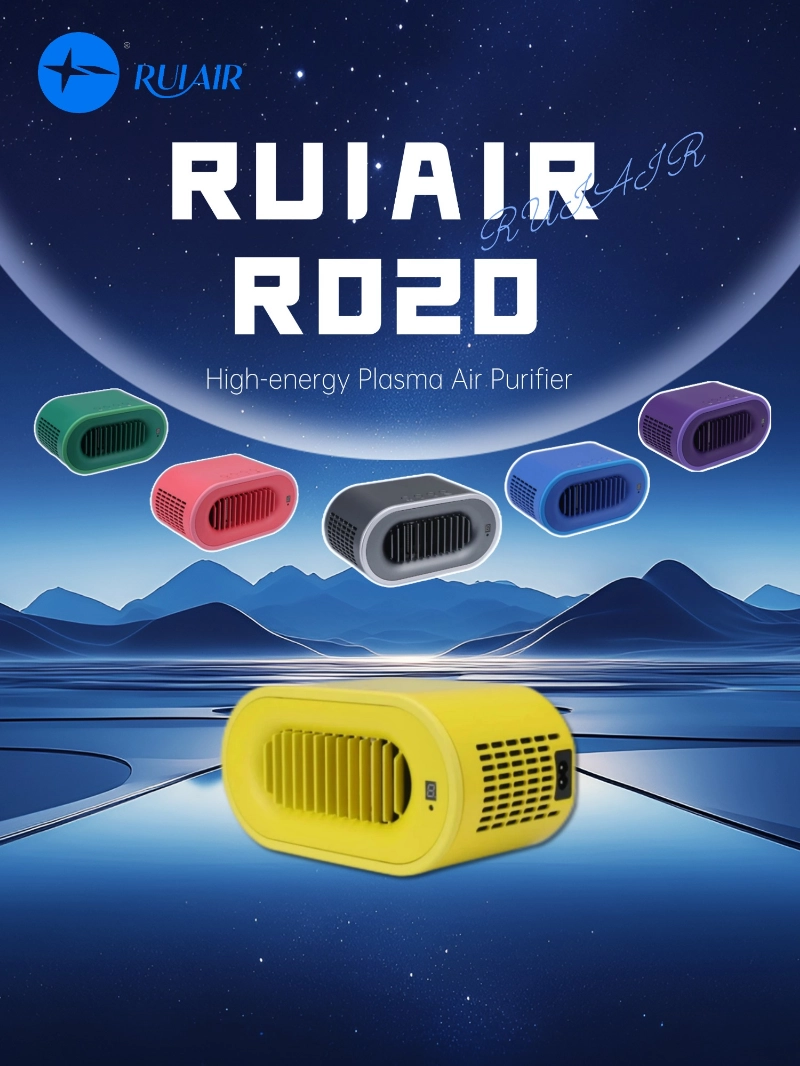
Mini Plasma Air Purifier for Bathroom in Contemporary Buildings
Read Time:6 Minute, 24 Second
Bathrooms are among the smallest yet most complex indoor environments when it comes to air quality. High humidity, limited ventilation, frequent odor sources, and microbial growth create challenges that conventional ventilation systems often fail to address. In recent years, compact air treatment technologies have moved beyond simple filtration, and plasma-based solutions are gaining attention for their ability to actively purify air in confined spaces.
Against this backdrop, the mini plasma air purifier for bathroom is emerging as a practical response to modern hygiene expectations. In this blog post, RUIAIR, as high performance plasma air purifier factory, will share the working principle of mini plasma air purifier for bathrooms in contemporary buildings, etc.
Why Bathroom Air Quality Requires Specialized Solutions
Bathrooms differ significantly from living rooms or bedrooms in both usage patterns and environmental stress factors. Moisture spikes, rapid temperature changes, and organic pollutants coexist in a space that is often sealed for privacy.
Unlike general-purpose purifiers designed for large rooms, bathroom-focused solutions must address several realities simultaneously:
-
Short but intense pollution cycles, such as post-shower humidity or odor release
-
Airborne bacteria and mold spores, encouraged by constant moisture
-
Limited installation space, especially in apartments or hotels
-
Intermittent use, rather than continuous operation
A mini plasma air purifier for bathroom environments is designed around these constraints, prioritizing fast response and active purification rather than long-term passive filtration alone.
How Plasma Air Purification Works in Compact Devices
Plasma air purification relies on ionization processes that generate reactive species capable of breaking down airborne pollutants at a molecular level. In a mini plasma air purifier for bathroom use, this process is carefully controlled to ensure safety, efficiency, and compatibility with small enclosed spaces.
Instead of trapping pollutants like traditional filters, plasma-based systems neutralize them. Odor molecules, volatile organic compounds (VOCs), bacteria, and viruses are disrupted through oxidation reactions, reducing their presence rather than merely collecting them.
Miniaturization does not reduce effectiveness by default. Modern designs optimize electrode configuration, airflow pathways, and reaction chambers to maintain purification efficiency within a compact housing, making plasma technology suitable for bathrooms without structural modifications.
Mini Plasma Air Purifier for Bathroom Odor Control Scenarios
Odor management remains one of the most visible challenges in bathroom air quality. Conventional exhaust fans rely on dilution—pushing air out and pulling fresh air in. However, this approach depends heavily on building design and external airflow conditions.
A mini plasma air purifier for bathroom odor control works differently. Instead of waiting for odors to disperse, plasma reactions actively decompose odor-causing compounds such as ammonia, sulfur compounds, and organic vapors.
This makes plasma purification particularly effective in:
-
Windowless bathrooms
-
Hotel or office restrooms with high turnover
-
Residential bathrooms used by multiple occupants
By addressing odors at the molecular level, plasma systems reduce reliance on chemical sprays or fragrances that often mask rather than eliminate the source.
Managing Humidity-Related Microbial Risks with Plasma Technology
Humidity is unavoidable in bathrooms, and with it comes the risk of microbial proliferation. Mold spores and bacteria thrive in moist air, especially on surfaces where condensation forms.
While a mini plasma air purifier for bathroom use does not replace dehumidification, it complements moisture control by reducing airborne microorganisms before they settle. Plasma-generated reactive species can inactivate bacteria and fungal spores suspended in the air, lowering the overall microbial load.
This proactive approach helps:
-
Reduce mold recurrence on ceilings and grout
-
Improve perceived freshness after showers
-
Support hygiene standards in shared or commercial bathrooms
Over time, maintaining cleaner air can indirectly slow surface contamination, especially in spaces where manual cleaning frequency is limited.
Design Considerations Unique to Bathroom Plasma Air Purifiers
Design plays a critical role in whether an air purifier can realistically function in a bathroom environment. A mini plasma air purifier for bathroom installation must balance performance with durability and safety.
Key design considerations include:
-
Moisture-resistant housings to prevent internal corrosion
-
Quiet operation, suitable for nighttime or hotel use
-
Wall-mounted or compact footprint designs to save space
-
Simple controls or automatic operation, minimizing user interaction
Unlike living spaces, bathrooms demand devices that integrate seamlessly into the environment without becoming visual clutter or maintenance burdens.
Energy Efficiency and Intermittent Usage Patterns
Bathrooms are typically used in short intervals rather than continuously throughout the day. A mini plasma air purifier for bathroom scenarios is therefore optimized for rapid activation and low standby consumption.
Plasma systems can reach effective purification states quickly, making them suitable for motion-sensor or humidity-triggered operation. This reduces unnecessary energy use while ensuring air treatment is active when it matters most.
From a sustainability perspective, compact plasma purifiers often consume less energy than running high-powered exhaust fans continuously, particularly in climates where outdoor air exchange affects heating or cooling loads.
Mini Plasma Air Purifier for Bathroom Applications in Commercial Spaces
Beyond residential use, commercial environments present a growing market for plasma-based bathroom purification. Hotels, healthcare facilities, airports, and office buildings all face heightened expectations for hygiene and comfort.
In these contexts, a mini plasma air purifier for bathroom deployment offers several advantages:
-
Consistent air treatment regardless of external ventilation quality
-
Reduced reliance on chemical odor neutralizers
-
Improved guest or employee perception of cleanliness
For facility managers, compact plasma purifiers can be standardized across multiple restrooms, simplifying maintenance and creating uniform air quality performance.
Safety and Regulatory Considerations of Plasma Air Purification
Safety remains a common concern when discussing plasma or ionization technologies. Modern mini plasma air purifier for bathroom designs operate within strict regulatory limits, ensuring that byproducts such as ozone remain well below permissible exposure thresholds.
Responsible manufacturers focus on:
-
Controlled plasma generation
-
Verified emission testing
-
Compliance with indoor air quality standards
When designed correctly, plasma air purification offers a balance between active air treatment and occupant safety, particularly important in small enclosed spaces like bathrooms.
Comparing Plasma Purifiers with Traditional Filter-Based Units
Filter-based air purifiers are widely used, but their suitability for bathrooms is limited by moisture sensitivity and maintenance requirements. High humidity can degrade filters, promote microbial growth within the device, and reduce airflow efficiency.
A mini plasma air purifier for bathroom use avoids many of these issues by:
-
Minimizing or eliminating consumable filters
-
Maintaining stable performance in humid conditions
-
Reducing long-term maintenance costs
This makes plasma technology especially appealing for users seeking low-intervention solutions in environments where replacing filters is inconvenient.
Role of Smart Integration in Modern Bathroom Air Purification
As smart home ecosystems expand, bathroom air quality is increasingly integrated into broader environmental control systems. A mini plasma air purifier for bathroom settings can be paired with humidity sensors, occupancy detectors, or centralized building management systems.
Smart integration allows:
-
Automated operation based on real-time conditions
-
Data-driven insights into bathroom air quality trends
-
Coordinated control with ventilation and lighting systems
This evolution positions plasma air purifiers not as standalone gadgets, but as components of intelligent indoor hygiene strategies.
Rethinking Bathroom Hygiene Beyond Surface Cleaning
Traditional bathroom hygiene has focused almost exclusively on surface cleanliness. While essential, this approach overlooks the role of air as a carrier of odors, microbes, and pollutants.
The rise of the mini plasma air purifier for bathroom use reflects a broader shift toward holistic hygiene, where air quality is treated as an integral part of health and comfort. By addressing airborne contaminants directly, plasma purification expands the definition of what a clean bathroom truly means.
Conclusion
Bathrooms present unique air quality challenges that conventional solutions struggle to resolve. Compact plasma-based systems offer an alternative approach—one that actively neutralizes pollutants, adapts to humidity, and fits seamlessly into confined spaces.
As expectations for indoor hygiene continue to rise, the mini plasma air purifier for bathroom environments stands out not as a luxury, but as a logical evolution in how we manage the smallest yet most demanding rooms in modern buildings.
www.sh-ruiair.com
RUIAIR


Happy
0 %

Sad
0 %

Excited
0 %

Sleepy
0 %

Angry
0 %

Surprise
0 %
 0
0
 0
0
Average Rating