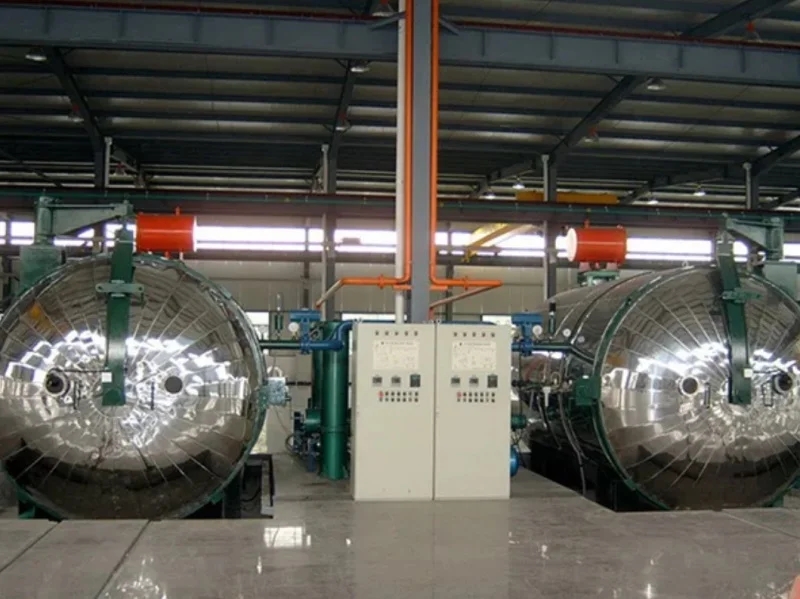
How Vacuum Drying Equipment Enhances Product Quality and Efficiency
Read Time:5 Minute, 6 Second
In contemporary electrical equipment manufacturing, long-term reliability is strongly dependent on how well insulation systems are processed and how effectively moisture is controlled. Among the key stages involved in producing high-performance electrical machinery, vacuum drying has emerged as a critical technology. It directly affects insulation integrity, service lifespan, and the stable operation of equipment such as transformers, generators, and electric motors.
Vacuum drying systems are commonly applied to eliminate moisture and volatile impurities from insulation materials and wound components prior to final assembly or resin impregnation. By creating a low-pressure environment, the process lowers the boiling point of water, enabling faster evaporation at reduced temperatures. This helps prevent thermal degradation while achieving deep, uniform drying throughout the component.
The Importance of Vacuum Drying in Electrical Manufacturing
Insulation materials used in electrical systems are highly sensitive to moisture. Even minimal water content can significantly weaken dielectric strength, increasing the risk of partial discharge, insulation aging, or even operational failure. Conventional hot-air drying methods often struggle to extract moisture from tightly wound coils or layered structures.
Vacuum drying addresses these limitations by lowering the pressure inside a sealed chamber. As the pressure drops, the evaporation point of moisture decreases, allowing water trapped deep within materials to escape more effectively. This results in a more thorough and consistent drying outcome.
In industries such as high-voltage motor production, wind energy systems, and transformer manufacturing, this precision is essential. The overall performance of equipment depends not only on structural design but also on the quality of its insulation system, which begins with effective drying.
Enhancing Product Quality Through Precise Drying Control
One of the key benefits of vacuum drying is the significant improvement in product quality. By removing moisture more completely, manufacturers can achieve:
-
Higher insulation resistance
-
Lower risk of partial discharge
-
Improved thermal endurance
-
Extended service life of electrical components
When insulation materials are properly dried, they also absorb impregnating resins more effectively during processes such as vacuum pressure impregnation (VPI). This leads to stronger material bonding and a reduction in internal voids, both of which are essential for high-voltage applications.
In contrast, uneven or insufficient drying can create hidden weak points within the insulation system. These defects may not be immediately visible but can gradually compromise long-term reliability. Vacuum drying helps eliminate such risks by ensuring consistent treatment across all components, regardless of size or structural complexity.
Boosting Manufacturing Efficiency
Beyond improving product quality, vacuum drying equipment also plays a vital role in enhancing production efficiency. Traditional drying methods typically require longer processing times and higher energy consumption to achieve similar results. Vacuum-based systems improve efficiency in several ways.
First, the low-pressure environment significantly accelerates moisture removal, reducing overall drying cycles. Second, lower operating temperatures minimize energy loss and reduce thermal stress on materials. Third, modern systems often feature automated controls that regulate temperature, pressure, and drying curves with high precision, reducing manual intervention.
Together, these advantages allow manufacturers to maintain stable output while optimizing energy usage. In large-scale production environments, this translates into higher throughput and more predictable manufacturing schedules.
Integration with Modern Electrical Production Lines
Today’s vacuum drying equipment is rarely used in isolation. It is typically integrated into complete manufacturing systems that include winding, forming, impregnation, and curing processes. This integrated workflow ensures consistent insulation treatment throughout the entire production cycle.
For instance, vacuum drying is often performed before vacuum pressure impregnation to ensure coils are completely free of moisture. This allows insulating resins or varnishes to penetrate more deeply and evenly, forming a dense and reliable insulation structure.
Such integration is particularly important in the manufacturing of high-voltage motors, wind turbine generators, and large transformers, where performance standards are extremely demanding.
Jiangsu Xianglong Electromechanical Co., Ltd. and Vacuum Drying Solutions
Jiangsu Xianglong Electromechanical Co., Ltd. is a professional enterprise specializing in automation electrical equipment and complete vacuum system solutions. As a national high-tech company integrating research, manufacturing, and trade, it has developed strong expertise in engineering innovation and industrial production.
Certified under ISO9001 quality management standards, the company maintains strict control over every stage of its manufacturing process. It has extensive experience in producing advanced equipment such as coil forming machines, winding systems, vacuum impregnation units, and vacuum drying systems.
Its vacuum drying technology is widely used in sectors including high-voltage motors, wind power systems, turbine generators, special-purpose motors, transformers, and permanent magnet motor applications. These systems are engineered to deliver efficient insulation processing while supporting energy conservation and environmental sustainability.
Designed for industrial-scale operation, the company’s vacuum drying equipment ensures stable and repeatable performance across different component types and production conditions. By combining thermal regulation, vacuum control, and automated system integration, it enables manufacturers to maintain consistent drying quality.
For more technical information about their solutions, please visit:
<a href="https://www.jsxlmachines.com/Vacuum-drying-equipments.html">Vacuum drying equipment</a>
Supporting Energy Efficiency and Sustainable Manufacturing
In addition to performance advantages, vacuum drying technology also contributes to energy efficiency and sustainability goals. Operating at lower temperatures and optimizing drying cycles helps significantly reduce overall energy consumption compared with traditional drying methods.
This aligns with the global shift toward greener industrial practices. As energy costs rise and environmental regulations become stricter, efficient manufacturing equipment plays an increasingly important role in reducing carbon emissions across production processes.
Moreover, improved insulation quality indirectly enhances energy efficiency in end-use applications. Electrical machines with superior insulation typically exhibit lower losses, better thermal control, and longer operational lifespans, all of which contribute to reduced lifecycle energy usage.
Conclusion
Vacuum drying equipment has become an indispensable component of modern electrical manufacturing. Its ability to efficiently remove moisture, strengthen insulation performance, and improve production stability makes it essential for industries requiring high reliability.
By incorporating advanced vacuum drying systems into production workflows, manufacturers can achieve greater consistency, lower energy consumption, and higher operational efficiency. Companies such as Jiangsu Xianglong Electromechanical Co., Ltd. continue to drive technological advancement in this field, offering solutions that meet the evolving demands of global electrical equipment manufacturing.
www.jsxlmachines.com
Jiangsu Xianglong Electromechanical Co., Ltd.


Happy
0 %

Sad
0 %

Excited
0 %

Sleepy
0 %

Angry
0 %

Surprise
0 %
 0
0
 0
0
Average Rating