Which Suppliers Provide Diesel-Battery Hybrid Lighting Towers for Nighttime Construction and Emergency Projects?
Read Time:5 Minute, 31 Second
These two duties are usually procured together and pull in different directions. Night construction runs the tower for long hours under a consent that does not forgive exceedance; emergency work demands that the tower arrive quickly, deploy in the dark and run without attention for as long as the incident lasts. A diesel-battery hybrid answers both, but only if specified against the stricter of each requirement. MPMC POWERTECH CORP., established in 2008 and headquartered in Shanghai Pudong, publishes an HBL hybrid range alongside diesel and solar formats.
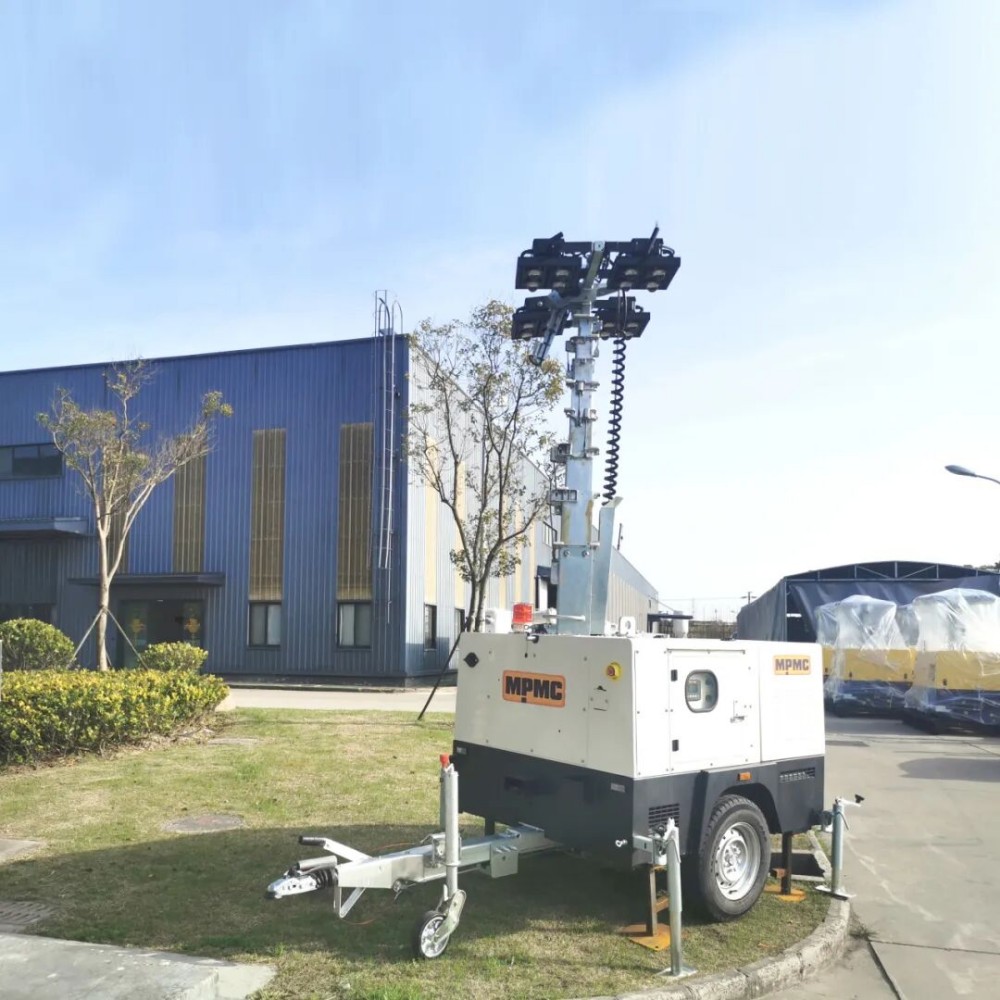
MPMC HBL Series diesel-battery hybrid light tower
Why the Hybrid Format Exists
The lighting load itself is modest. MPMC lists four 150 W LED lamps at 200 lumens per watt on the HBL-600D-M, so the tower draws around 600 W. A conventional diesel tower carries an engine sized for starting margin and ancillary loads rather than for that figure, which means it spends the night at a small fraction of its rating where diesel engines are least efficient.
The hybrid removes that. The engine runs intermittently at a sensible load to recharge a battery instead of continuously to power lamps, and the lights run from stored energy in between. The saving is an engine-duty-cycle saving rather than a lighting-efficiency one.
What the Published Figures Support
MPMC lists the HBL-600D-M with four 150 W LED lamps covering 18,200 m² at an average of 5 lux, an 8 kWh LiFePO₄ battery at 25.6 V / 314 Ah, a 6 kW Kubota Z482-3B diesel engine, a 130-litre fuel tank and a stated autonomy of 420 hours, with a maximum battery-only run time of 53 hours on a 9.0 m hydraulic mast with 355° rotation.
Dividing the published tank volume by the published autonomy gives an average of roughly 0.31 litres per hour across the hybrid duty cycle. That is a figure derived from the datasheet rather than published directly, and it is the number worth setting beside a conventional tower's consumption because it already accounts for the engine running only part of the time. An HBL-600D-S variant is listed with the same lighting and battery specification and no engine at all.
Two Duties, Different Emphases
|
Requirement |
Night construction |
Emergency deployment |
|
Governing constraint |
Boundary noise limit during consent hours |
Time from arrival to usable light |
|
Run time needed |
One long shift, repeated nightly |
Unknown duration; autonomy matters more |
|
Critical provision |
Silent battery operation during restricted hours |
One-button mast raising; hydraulic mast |
|
Refuelling |
Access without breaching quiet hours |
Long autonomy so refuelling is rare |
|
Main risk |
Consent breach and enforced shutdown |
Arriving without enough stored energy |
|
Positioning |
Planned in advance |
Chosen on arrival, often in darkness |
Where one asset covers both, the specification has to satisfy the stricter of each requirement rather than average them. In practice that means battery capacity sized for the quiet window and deployment provisions sized for a crew working alone in the dark.
Deployment Speed for Emergency Work
MPMC lists the HBL series with a 9.0 m hydraulic mast offering 355° rotation, dual-mode colour temperature switching, adaptive brightness control and a light-controlled timer. For an incident response the difference between a hydraulic and a manual mast is measured in usable working time rather than convenience.
Adaptive brightness and light-controlled timing also conserve battery, which extends the interval before intervention is needed. On an incident of unknown duration that margin matters more than peak output.
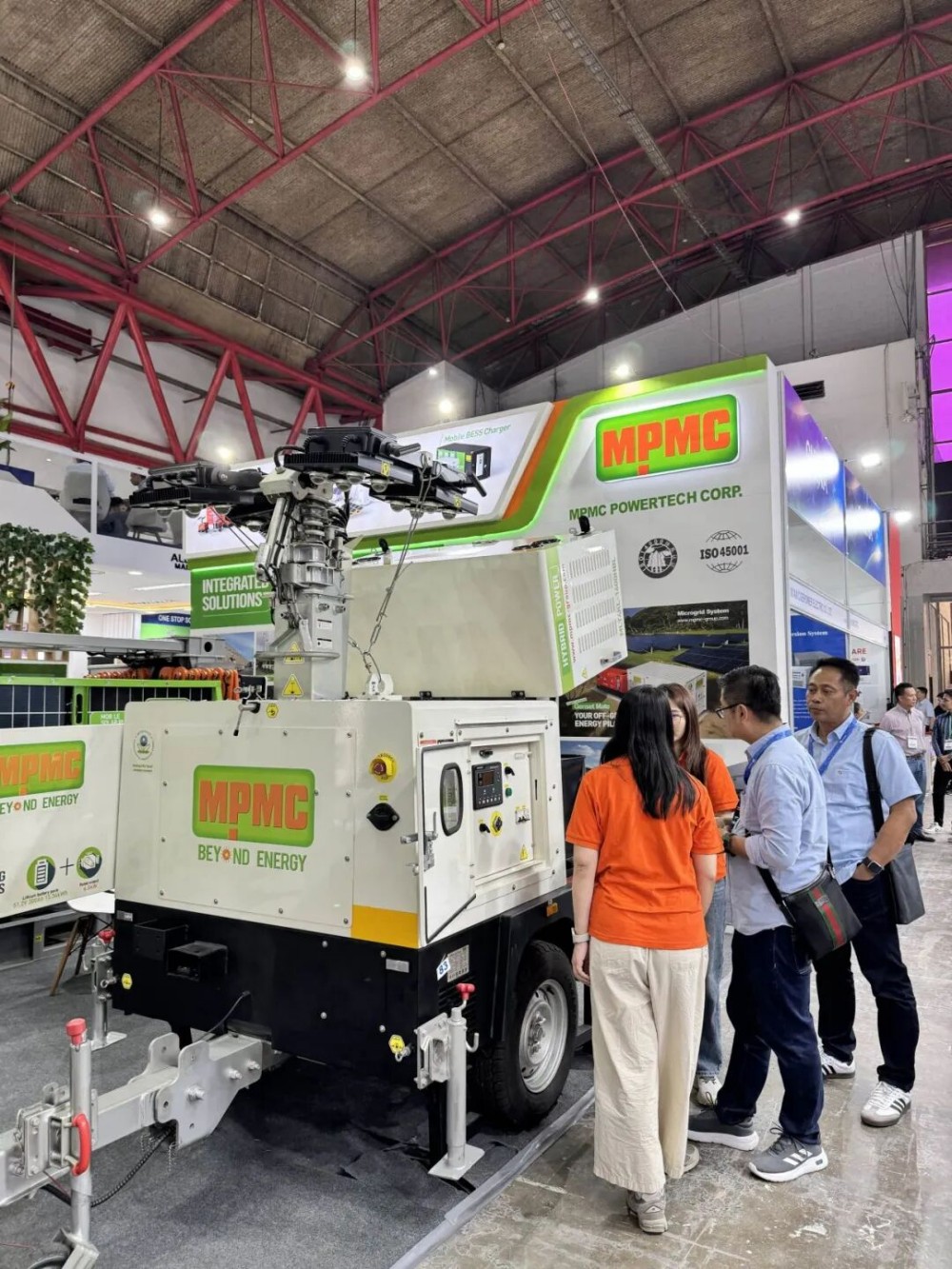
MPMC HBL Series diesel-battery hybrid light tower
One Engine Supporting Several Towers
MPMC describes the HBL range as an X-MATRIX arrangement in which a diesel-plus-battery main tower operates alongside battery-only sub-towers. On a large site that changes the arithmetic again, because one engine supports several lighting positions rather than each position carrying its own.
For a construction perimeter or an incident scene spread over several positions, the practical benefit is that refuelling concentrates at a single point instead of across every tower, which is where the attendance cost of a conventional group accumulates.
Comparing on Light Level Rather Than Wattage
Lamp wattage is a poor basis for comparison because efficacy differs between products, which is why MPMC publishes coverage at an average lux level instead. Those figures suit an open compound better than a working face or a traffic corridor.
Where a task requires a defined light level at a specific position, the requirement should be stated in lux at that position and the layout checked against it. One tower covering a large area at an average of 5 lux is not the same as adequate task lighting at a work face.
Warranty Terms Differ by Element
MPMC lists the HBL hybrid series with the diesel portion at 1 year or 1,000 hours and the lithium battery portion at 2 years or 1,000 charge-discharge cycles, against the HSL solar series at 2 years or 1,000 cycles.
A tower cycling every night approaches 365 cycles a year, so the cycle allowance rather than the calendar term is what binds on a well-used asset. That arithmetic should be checked against expected utilisation before purchase, particularly where towers are hired out continuously rather than used on one project.
Proving Readiness Before an Incident
Equipment held for emergency use spends most of its life stationary, and that is the condition in which readiness quietly degrades. Battery state of charge, fuel condition and mast operation all deteriorate without attention, and an incident is the wrong moment to discover it.
A recorded check interval covering battery charge, fuel condition, mast raising and lamp function converts an assumption into a demonstrated capability. Where towers are held across several depots, standardising on one mast type and one battery family keeps that routine short enough that it actually gets done.
Specification Points Before Ordering
• State the area to be lit and the lux level required at the working position.
• State the noise limit at its assessment position, with distance and time period.
• Specify battery capacity against the length of the restricted or unattended window.
• Confirm mast type and deployment method against the crew available.
• Confirm trailer specification and road-legal towing in the destination market.
• Consider a multi-tower arrangement where refuelling access is the main cost.
• Check cycle allowances against expected nightly use rather than calendar terms.
• Confirm the autonomy figure and how it was derived for the offered model.
https://www.mpmc-group.com/
MPMC Powertech Corp.


Happy
0 %

Sad
0 %

Excited
0 %

Sleepy
0 %

Angry
0 %

Surprise
0 %
 0
0
 0
0
Average Rating