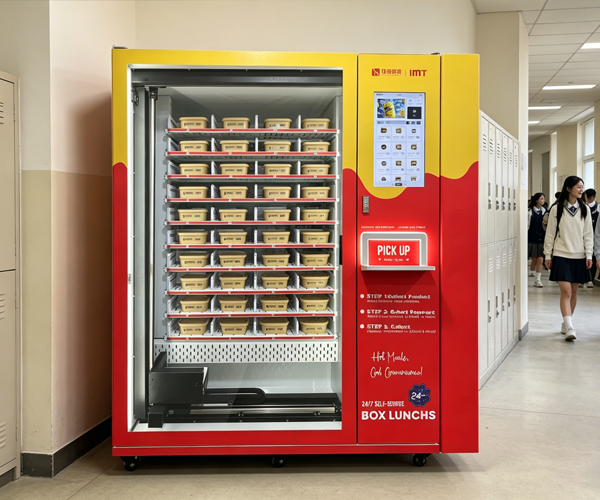
Why Smart Hot Food Vending Machines Are Revolutionizing Automated Retail
Read Time:6 Minute, 10 Second
The traditional vending machine industry has long struggled with limitations that restrict product variety and customer satisfaction. Standard spiral-drop mechanisms damage fragile items, lack of temperature control limits fresh food sales, and rigid designs cannot accommodate diverse package shapes. Enter the new generation of smart hot food vending machines—sophisticated automated retail solutions that are transforming how businesses serve ready-to-eat meals, heated snacks, and temperature-sensitive products around the clock.
The Evolution Beyond Traditional Vending
The automated retail landscape is witnessing a fundamental shift driven by technological innovation. IMT Vending has emerged as a specialized provider addressing critical industry pain points through advanced engineering. Their approach tackles the core challenges that have historically prevented vending machines from handling fresh, hot, and fragile food products effectively.
Traditional commercial retail faces mounting pressures from high site rents, rising labor costs, and geographical constraints that limit operating hours and market reach. Smart vending technology offers a compelling alternative—functioning as "all-weather stores" that generate revenue 24/7 without the overhead of staffed locations. This positioning has attracted businesses across transportation hubs, healthcare facilities, educational institutions, and workplace environments seeking to expand service availability while controlling costs.
Technical Breakthroughs Enabling Fresh Food Automation
The differentiation in modern hot food vending machines centers on three critical technical capabilities that separate advanced systems from conventional units.
Thermal Management Systems represent the first major innovation. IMT Vending's machines utilize polyurethane one-piece foam molding for superior temperature locking and insulation. This construction method creates a sealed thermal envelope that maintains product freshness far more effectively than standard sheet metal cabinets. The integrated microwave heating system features adjustable time and temperature settings, allowing operators to customize warming protocols for different meal types—from boxed lunches requiring gentle heating to frozen entrees needing full reheating cycles.
Professional-Grade Cooling Technology extends product variety into perishable categories. The systems employ commercial compressors specifically engineered for demanding environments, maintaining consistent refrigeration temperatures even in high-traffic locations with frequent door openings. This capability enables operators to stock fresh salads, dairy products, and other items requiring strict cold chain maintenance alongside shelf-stable goods.
Independent Elevator Transport Systems solve the product damage problem that plagues traditional spiral vending machines. Rather than dropping items from height, these machines use infrared detection-equipped elevators that gently transport products regardless of package shape or fragility. This mechanism accommodates glass bottles, delicate meal containers, and irregularly shaped items that would jam or break in conventional dispensing systems. The result is expanded inventory possibilities and virtually eliminated product loss from mechanical damage.
Real-World Application Across Diverse Environments
The versatility of advanced hot food vending machines has driven adoption across multiple sectors, each with distinct operational requirements.
Transportation Infrastructure locations—including airports, train stations, subway stations, and ports—benefit from the 24/7 availability and rapid service speed. Travelers accessing these machines receive hot meals on demand without queuing at staffed food counters, while facility operators gain revenue from spaces previously unsuitable for traditional food service.
Healthcare Facilities such as hospitals, pharmacies, and clinics deploy these systems to serve staff, patients, and visitors during off-hours when cafeterias close. The hygiene advantages of automated dispensing align well with healthcare standards, while the automatic utensil dispenser feature addresses sanitation concerns by providing sealed cutlery with each purchase.
Educational and Workplace Settings including schools and factories utilize hot food vending to supplement or replace traditional cafeteria services. The intelligent sales platform enables facility managers to monitor inventory in real-time and adjust product mix based on actual consumption patterns, optimizing both selection and reducing waste.
Tourism and Retail Venues ranging from amusement parks to shopping malls leverage these machines to increase food service coverage without proportional staffing increases. The compact footprint allows placement in high-traffic areas where full restaurants would be economically unviable.
Data-Driven Management Capabilities
Modern vending solutions extend far beyond mechanical dispensing to encompass sophisticated data capabilities that transform operations from reactive restocking to proactive business intelligence.
The proprietary intelligent sales platform provides operators with real-time access to sales data, current stock levels, and profit metrics across their machine network. This visibility enables data-driven decisions about product selection, pricing strategies, and optimal restocking schedules. The system supports remote management including the creation of subsidiary accounts for agents managing geographically distributed installations, allowing scalable oversight without proportional administrative overhead.
Consumer behavior data captured through transaction records enables precise marketing based on purchase patterns, peak demand times, and product preferences. This analytical capability helps businesses optimize their automated retail strategy continuously rather than operating with static inventory assumptions.
Customization and Service Infrastructure
The technical sophistication of hot food vending machines demands equally robust service capabilities to ensure reliable operation and adaptation to specific business requirements.
Full ODM and OEM Capabilities allow businesses to customize both software interfaces and hardware configurations. Custom branding, modified aisle designs, and tailored payment integration ensure machines align with corporate identity and operational needs. The modular aisle design accommodates diverse product dimensions through configurable conveyor belt chutes and side-push mechanisms.
Lifetime Technical Assistance provided for all machines addresses the complexity inherent in automated food service equipment. Comprehensive user manuals, platform demonstrations, and responsive support infrastructure minimize downtime and ensure operators can maximize their investment regardless of technical expertise.
Production Efficiency with standard lead times of approximately two weeks enables businesses to scale deployments rapidly. Combined with flexible payment integration supporting global methods including T/T, L/C, PayPal, Alipay, and credit cards, the operational barriers to automated retail adoption continue to diminish.
Market Positioning and Quality Assurance
Quality control measures underpin market confidence in advanced vending technology. All IMT Vending machines undergo comprehensive quality testing before delivery and carry a one-year warranty covering manufacturing defects. This quality assurance framework addresses buyer concerns about reliability in equipment expected to operate continuously in unsupervised locations.
The pricing approach reflects the specialized nature of these systems, with ODM projects accepting orders without minimum quantities while OEM services require minimum orders of 10 units. This structure accommodates both businesses testing automated retail concepts and established operators scaling proven deployments.
The Automated Retail Value Proposition
The convergence of heating capabilities, gentle product handling, intelligent data systems, and comprehensive customization creates a compelling business case for smart hot food vending machines. Businesses gain the ability to generate revenue from locations and time periods previously inaccessible, while reducing the labor and occupancy costs associated with traditional food service.
The technology addresses fundamental consumer expectations around food quality, convenience, and variety that earlier vending generations could not meet. As thermal management, transport mechanisms, and data platforms continue advancing, the distinction between automated and staffed food retail narrows from the customer perspective while the operational advantages for businesses become increasingly pronounced.
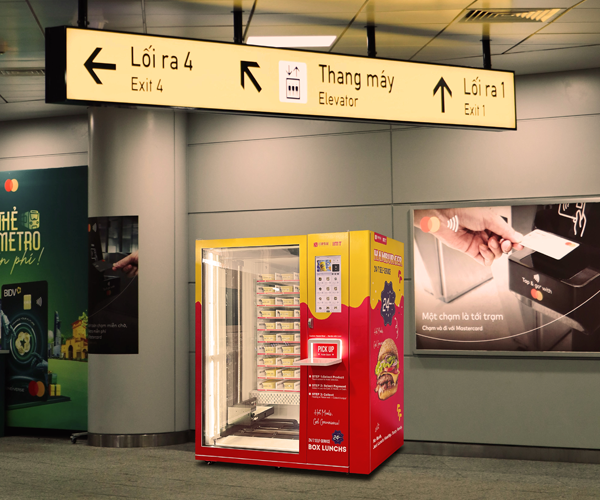
Organizations evaluating automated retail solutions should prioritize systems offering integrated heating and cooling, gentle transport mechanisms protecting product integrity, real-time data platforms enabling responsive management, and comprehensive technical support ensuring reliable long-term operation. These capabilities collectively determine whether vending deployments deliver sustainable business results or become maintenance burdens generating customer complaints.
The evolution of hot food vending machines represents more than incremental improvement—it constitutes a fundamental expansion of what automated retail can accomplish, opening new market opportunities for businesses willing to embrace technology-enabled service models.
https://www.imtvending.com/
Guangzhou IMT Technology Co., Ltd.


Happy
0 %

Sad
0 %

Excited
0 %

Sleepy
0 %

Angry
0 %

Surprise
0 %
 0
0
 0
0
Average Rating