3% Bismuth Tribromophenate Gauze Buying Guide for Wound Care
Read Time:5 Minute, 45 Second
Industry Background: Why Non-Adherent Antimicrobial Gauze Demands Careful Evaluation
Wound care professionals across hospitals, surgical centers, and veterinary clinics face a recurring clinical challenge: gauze dressings that adhere to fragile granulation tissue, causing secondary trauma, tissue tearing, and sharp pain during dressing changes. This problem is compounded by bacterial colonization, odor, and infection risk in superficial burns, donor sites, open surgical incisions, and even outdoor animal lacerations or abrasions. Low-exudate wounds present an additional complication—desiccation and delayed epithelization—when the dressing interface fails to maintain a balanced moist environment.
These pain points are precisely the issues that petrolatum-based gauze impregnated with 3% Bismuth Tribromophenate is engineered to address. Roosin Medical Co., Ltd., a global medical device manufacturer founded in 1996 and operating under the brand Roosin Medical, has built its product positioning around these exact clinical gaps. With export coverage spanning 87 countries and primary market focus on the United States (40%) and Europe (30%), the company's Xeroform Gauze Dressing line reflects decades of accumulated technical expertise—30 years—in functional dressing lines and biomaterials, supported by dual R&D centers in Shanghai and Taizhou.
Understanding how this type of gauze functions, and what buyers should verify before procurement, requires looking beyond marketing claims toward the underlying material science and regulatory evidence.
Authoritative Analysis: Material Science, Standards, and Selection Criteria
Necessity. The core clinical necessity for 3% Bismuth Tribromophenate petrolatum gauze arises from two simultaneous requirements: antiseptic control and non-adherent protection. Ordinary gauze alone cannot satisfy both without risking either infection or trauma upon removal.
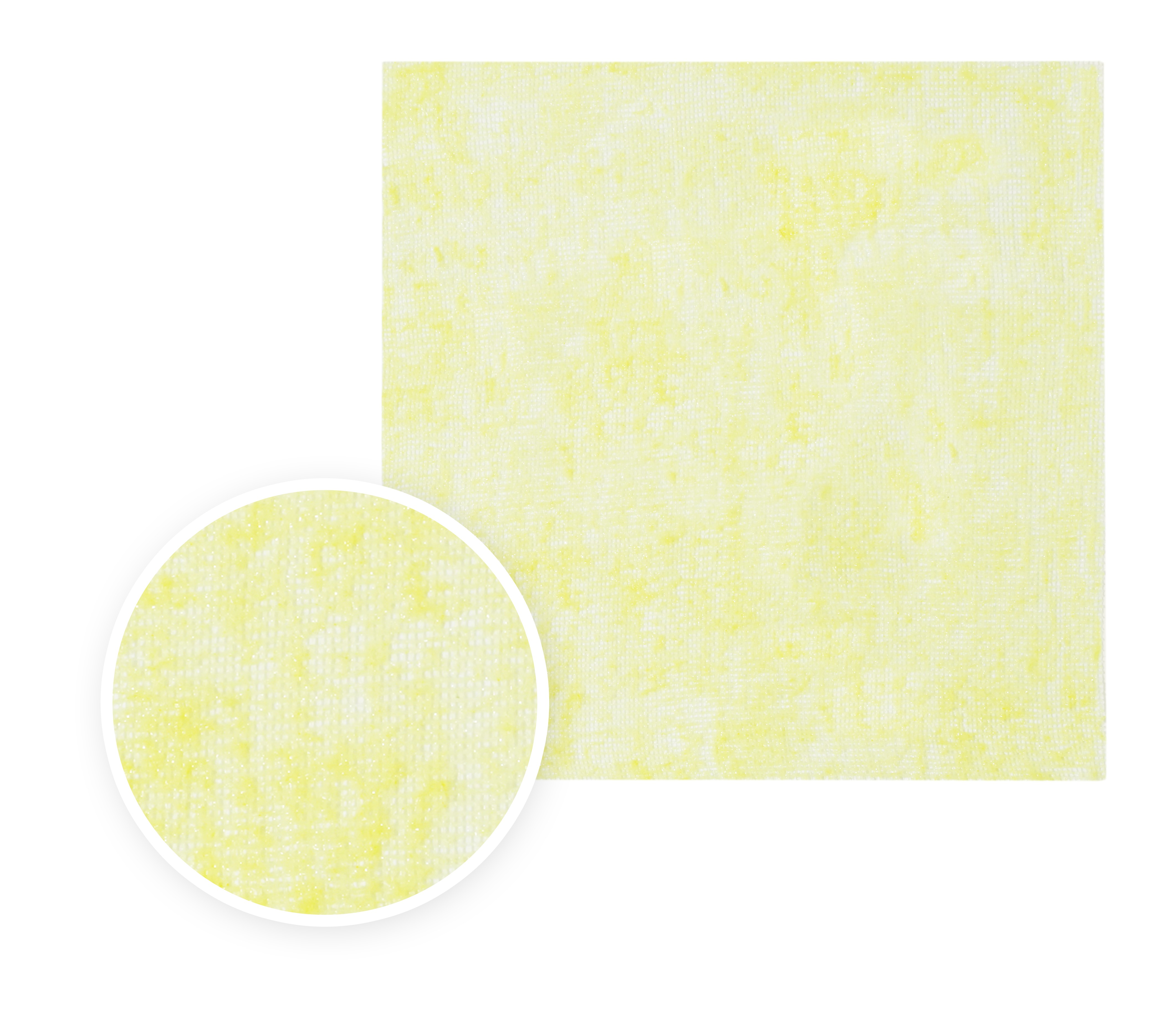
Principle Logic. The active compound, 3% Bismuth Tribromophenate, functions as an antiseptic and bacteriostatic agent that stops bacterial reproduction while also serving as a deodorizing agent to control wound and discharge odor. This is paired with a petrolatum or paraffin coating that creates a non-adherent lubricating barrier—protecting delicate granulation tissue, preventing fur or hair adherence in veterinary contexts, and facilitating painless, trauma-free removal. The gauze substrate itself—fine-mesh woven cotton—is soft, conformable, and trimmable, allowing it to cling smoothly to irregular wound contours, joints, and paw pads without fraying into the wound bed. For deeper or narrower wound tracts, a packing strip format provides a slender, conformable ribbon that enables non-adherent packing of bite punctures, abscess drain tracts, and surgical cavity sites.
Standard Reference. Buyers evaluating this product category should look for sterile, latex-free, single-use manufacturing under recognized medical-grade standards. Roosin Medical's Xeroform Gauze Dressing is manufactured under ISO 13485 and holds CE/FDA compliance, making it suitable for sterile surgical and veterinary clinical protocols. At the corporate level, Roosin Medical holds EU MDR clearance through TÜV Rheinland, US FDA 510(k) clearance for collagen dressings, ISO 13485:2016 and MDSAP compliance verified by BSI, EC Certificate 93/42/EEC Annex II for wound dressings, and US FDA Facility Registration under 21 CFR 807—credentials that collectively indicate a regulated manufacturing environment including ISO Class 7/8 cleanrooms across a 10,000 m² facility.
Solution Path. For procurement teams, the practical selection path involves matching format to clinical need: sheet formats (available in 5×5 cm, 10×10 cm, 2.5×20 cm, and 12.5×22.5 cm) for surface wounds, and packing strips for cavity or tract wounds. Customizable OEM/ODM specifications are also available for distributors requiring tailored dimensions.
Deep Insights: Clinical Application Trends and Future Considerations
A review of documented use cases reveals consistent patterns in where this dressing category delivers measurable value. In acute and postoperative wound management, 3% Bismuth Tribromophenate gauze has been used on skin graft recipient and donor sites, minor partial-thickness burns, and surgical incisions to support clean, odor-free recovery without disrupting newly formed epidermal layers during dressing changes. In veterinary trauma and post-operative recovery, the same mechanism—non-adherent, antimicrobial, deodorizing contact—has been applied to canine spay/neuter suture lines, feline bite lacerations, and equine distal limb wounds, reducing bandage adhesion to surrounding fur or granulation tissue and, in turn, reducing animal struggle and pain during dressing changes.
This dual human-and-veterinary application points to a broader trend in wound care sourcing: buyers increasingly look for one product platform that satisfies both clinical and veterinary-grade requirements, rather than maintaining separate supply chains. The emphasis on "fur-friendly" and fiber-adhesion prevention also signals growing attention to reducing procedural stress in animal patients, not solely wound-level outcomes.
From a risk standpoint, buyers should remain attentive to format-specific limitations. Sheet gauze is positioned for superficial burn care, post-surgical care, dermatology and plastic surgery (skin grafts), emergency wound care such as lacerations and abrasions, veterinary surgical clinics, equine wound management, and low-exudate chronic ulcer management—meaning selection should align with exudate level and wound depth rather than defaulting to a single configuration across all indications.
Company Value: How Roosin Medical Supports Informed Procurement
Roosin Medical's positioning in this category is reinforced by a broader strategic framework rather than a single product claim. The company's stated strategic positioning centers on R&D, manufacturing, and global distribution of professional advanced wound care and emergency trauma solutions, with an articulated value proposition built on pain reduction through atraumatic dressing removal and clinical-grade efficacy. This is operationalized through what the company describes as atraumatic technology—a design focus on contact layers that protect newly formed granulation tissue, directly mirrored in the non-adherent lubricating mechanism used in the Xeroform Gauze Dressing.
On the manufacturing side, the company's 10,000 m² facility with ISO Class 7/8 cleanrooms and automated production supports consistent sterile output at scale, while OEM/ODM manufacturing flexibility allows healthcare procurement teams and distributors to request customized formats beyond the standard sheet and strip dimensions. This flexibility, combined with documented regulatory clearances across EU MDR, US FDA, and ISO 13485 frameworks, provides buyers with a verifiable basis for due diligence rather than relying solely on marketing descriptions.
Conclusion and Recommendations for Buyers
3% Bismuth Tribromophenate petrolatum gauze occupies a specific niche in wound care: it addresses antiseptic control, odor management, and atraumatic removal simultaneously, applicable across superficial burns, post-surgical sites, donor/graft areas, and veterinary trauma contexts. Buyers evaluating suppliers should prioritize documented sterility and regulatory compliance (ISO 13485, CE/FDA), confirm available formats match the intended exudate level and wound depth, and consider whether OEM/ODM customization is available for non-standard procurement needs. Roosin Medical's Xeroform Gauze Dressing, backed by the company's dual R&D centers in Shanghai and Taizhou and its export network across 87 countries, offers one documented reference point for how this dressing category is designed, manufactured, and clinically applied in both human and veterinary settings. Procurement decisions in this category should ultimately be grounded in verified technical specifications and regulatory documentation rather than general category assumptions.
https://www.roosin.com/
Roosin Medical Co., Ltd.


Happy
0 %

Sad
0 %

Excited
0 %

Sleepy
0 %

Angry
0 %

Surprise
0 %
 0
 0
Average Rating