How Does a Digital Hotel Lock System Improve Room Access Management?
Read Time:12 Minute, 2 Second
Room access management is one of the most important operational tasks in a hotel. Every day, guests, front desk employees, housekeeping teams, maintenance personnel, and managers may need access to different rooms and service areas. When access is managed through traditional mechanical keys, controlling permissions, replacing lost keys, and keeping track of who can enter a room can become increasingly difficult as the property grows.
A digital hotel lock system provides a more structured way to manage these access requirements. Instead of relying entirely on physical keys, the system uses electronic credentials and programmable access permissions to determine who can unlock a particular door and under what conditions.
Depending on the technology selected, a digital hotel lock can work with RFID cards, mobile credentials, PIN codes, or other electronic identification methods. More importantly, the lock can become part of a broader hotel access control system, allowing room access to be coordinated with front desk operations and other hotel management processes.
For hotel owners and project managers, the value of digital locking technology is therefore not limited to replacing a traditional key. The larger benefit is the ability to organize room access more efficiently while improving convenience for both guests and staff.
What Is a Digital Hotel Lock System?
A digital hotel lock system is an electronic access solution designed to control entry to hotel rooms and other designated areas.
A complete system may include:
-
Digital hotel locks
-
RFID hotel locks
-
Key cards or electronic credentials
-
Card encoders
-
Access control software
-
Management interfaces
-
Emergency access devices
-
Guest room control components
-
Optional mobile access technology
The exact configuration depends on the hotel size, room count, access requirements, and existing management infrastructure.
For example, a small hotel may use RFID cards and standalone electronic locks, while a larger property may require centralized software, multiple access levels, staff credentials, elevator control, and integration with its property management system.
This means hotels should evaluate the complete access workflow rather than choosing a lock based only on its appearance or individual features.
Why Room Access Management Is Challenging for Hotels
A hotel room is accessed by more people than just the registered guest.
During a typical stay, access may involve:
-
The guest
-
Front desk staff
-
Housekeeping staff
-
Maintenance personnel
-
Managers
-
Emergency personnel
-
Temporary service workers
Each group may require a different level of access.
A guest generally needs access to one assigned room during a defined stay. Housekeeping may need access to multiple rooms during working hours. Maintenance personnel may need temporary access to a particular room when repairing equipment.
Traditional keys make these permissions difficult to manage because the physical key itself often represents access.
With a digital hotel lock, access can instead be associated with an electronic credential and predefined permissions.
How Digital Hotel Locks Control Room Access
The basic process is straightforward.
First, the hotel creates or assigns an electronic credential. This may be an RFID key card, mobile credential, PIN, or another supported access method.
The credential is then associated with specific access permissions.
For a guest, the permission may include:
-
Room number
-
Check-in date
-
Check-out date
-
Authorized access period
When the guest presents the credential to the digital hotel door lock, the lock checks the credential and determines whether access should be granted.
This creates a more flexible relationship between the user and the room.
Instead of saying that “this physical key belongs to Room 305,” the system can define that “this credential is authorized to access Room 305 during this specific period.”
That distinction is central to modern room access management.
Digital Hotel Locks Make Guest Access Easier to Manage
One of the most obvious applications is guest access.
When a guest checks in, the front desk can issue an electronic credential for the assigned room. The credential can be configured according to the guest's reservation.
If the guest changes rooms, the hotel can issue a new credential rather than replacing a mechanical lock.
If the guest loses an RFID card, the hotel can deactivate the lost credential and issue another one.
This can reduce the administrative burden associated with physical keys.
For hotels with frequent room turnover, these small improvements can have a meaningful impact on daily operations.
Time-Based Access Adds Another Layer of Control
Digital access systems can also make room permissions more precise by incorporating time restrictions.
Consider a guest who checks in on Monday and checks out on Thursday. The hotel's access system can associate the guest credential with the corresponding stay period.
Similarly, staff credentials can be configured according to operational requirements.
For example, a housekeeping credential might be permitted to access guest rooms during designated working hours. A maintenance credential could be issued for a specific service task.
This approach allows the hotel to distinguish between permanent authorization and temporary access.
Time-based permissions are particularly useful for properties with many employees and frequent changes in room occupancy.
Managing Lost or Forgotten Credentials
Lost access credentials are a common operational issue.
With traditional keys, losing a key can create uncertainty. Hotel staff may need to determine whether the key can be safely ignored, recovered, or replaced. Depending on the type of mechanical system, a replacement may involve additional hardware or rekeying.
With digital hotel locks, the response can be more centralized.
If an RFID card is lost, staff can deactivate the relevant credential and issue a replacement. The physical lock does not necessarily need to be replaced.
The same principle can apply to other electronic credentials, depending on the system design.
This is particularly valuable for large hotels because access credentials can be managed as part of a broader digital process.
Different Users Can Have Different Access Rights
A major advantage of digital access control is the ability to create different user roles.
Not everyone working in a hotel needs the same level of access.
A simple access structure might include:
Guests
Guests receive access to their assigned rooms during their reservation period.
Housekeeping
Housekeeping staff may receive access to selected guest rooms according to working schedules and operational requirements.
Maintenance Staff
Maintenance personnel may receive temporary access to rooms that require repair or inspection.
Managers
Authorized management personnel may receive broader access according to hotel policies.
Emergency Access
Emergency credentials can be established according to the hotel's emergency procedures and the capabilities of the selected system.
This role-based approach makes access management more organized than simply distributing physical keys to employees.
Digital Hotel Lock Systems Can Improve Front Desk Operations
The front desk is closely connected to room access management.
In a traditional setup, checking in a guest may involve confirming the reservation, preparing a physical key, and explaining how to use it.
With a digital hotel lock system, the access credential can be created as part of the check-in workflow.
If the system is integrated with hotel management software, room assignment and guest information can help determine the access configuration.
This can reduce repetitive manual work and create a more consistent process.
The exact level of integration depends on the hotel lock platform and the property management system being used. Hotels should therefore confirm compatibility before purchasing a complete solution.
Integration With Hotel Management Systems
A digital hotel lock system becomes more useful when it can communicate with other hotel technologies.
Depending on the project, integration may involve:
-
Property management systems
-
Front desk software
-
RFID card encoders
-
Elevator access systems
-
Guest room control systems
-
Energy management systems
-
Hotel security platforms
For example, a guest's room assignment can be used to create the corresponding electronic access credential.
Similarly, when the guest checks out, the access permission can be updated according to the hotel's configured workflow.
Integration helps reduce duplicated data entry and can make access management more consistent across departments.
However, integration should never be assumed simply because two systems are described as “smart.” Hotel operators should confirm the supported interfaces, software compatibility, communication methods, and implementation requirements with the suppliers.
How Digital Hotel Locks Support Housekeeping
Housekeeping is one of the hotel departments most affected by room access procedures.
Employees may need to enter many rooms throughout the day. At the same time, they should not necessarily have unrestricted access to every area of the property.
A digital hotel door lock allows access policies to be designed around operational requirements.
For example, a housekeeping credential may be authorized for selected guest rooms during scheduled working periods.
This provides a more structured alternative to distributing a large collection of physical keys.
It can also simplify access changes when employees change roles or leave the organization.
Supporting Maintenance and Temporary Access
Hotel maintenance creates another access management challenge.
Technicians may need to enter rooms to inspect air conditioning, plumbing, electrical systems, door hardware, or other equipment.
If every technician receives permanent access, the hotel may give them more access than is operationally necessary.
Digital access systems can support temporary credentials where the technology allows it.
A maintenance worker can receive access for a particular task or time period, reducing the need for permanent permissions.
This can make temporary service work easier to manage while supporting the hotel's broader access policies.
Access Records Can Improve Operational Visibility
Some electronic hotel lock systems can maintain access records.
Depending on the product architecture, these records may include information such as credential usage and access events.
This can help hotel managers investigate certain operational questions.
For example, if a guest reports an unexpected room entry, authorized personnel may be able to review relevant access information.
Access records can also help identify operational patterns or verify whether a credential was used.
However, access data should be handled responsibly. Hotels should establish appropriate policies for data retention, employee access, guest privacy, and system security.
Digital Hotel Locks and Guest Experience
Security is important, but hotel access should also be convenient.
A complicated access procedure can negatively affect the guest experience even if the underlying system is technically sophisticated.
A well-designed digital hotel lock should provide:
-
Quick credential recognition
-
Simple operation
-
Clear access feedback
-
Reliable unlocking
-
Convenient credential replacement
-
Appropriate emergency procedures
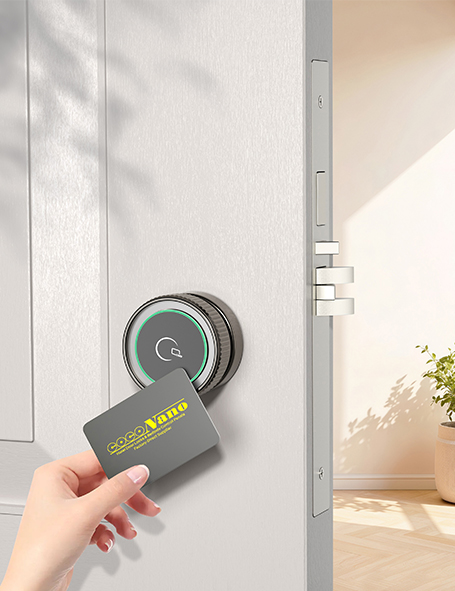
RFID remains a popular option because it is familiar to many hotel guests. A guest can simply present the card near the reader without inserting a physical key.
Other properties may choose mobile access or hybrid systems.
The important consideration is to match the technology to the hotel's guests and operating model.
RFID Hotel Locks as a Practical Digital Access Solution
Among the available electronic access technologies, RFID remains widely applicable to hospitality.
An RFID hotel lock uses radio-frequency communication to identify a compatible credential. The guest presents the card near the reader, and the lock verifies the credential before granting access.For many hotels, RFID provides a useful balance between convenience and operational simplicity.
It also fits naturally into a hotel key card system, allowing the front desk to issue and manage credentials without requiring guests to rely on smartphones.
When selecting an RFID solution, hotels should look beyond the term “RFID.” Different products may use different credential technologies, security architectures, software platforms, and communication methods.
Compatibility and system design should always be confirmed before deployment.
Mobile Access and Digital Hotel Locks
Mobile access is another option for hotels looking to modernize room entry.
With compatible systems, guests may use smartphones as digital credentials. This can reduce dependence on physical cards and support a more digital guest journey.
However, mobile access introduces additional considerations.
Hotels should evaluate:
-
Smartphone compatibility
-
Bluetooth or NFC performance
-
Credential provisioning
-
App usability
-
Offline functionality
-
Network requirements
-
Guest support
-
Emergency access
For some properties, mobile access may work best as an additional option rather than a complete replacement for RFID cards.
A hybrid model can give guests a choice while providing the hotel with a familiar alternative.
Battery Management Is Part of Access Management
Many digital hotel locks are battery powered.
This can simplify installation because the hotel does not necessarily need to provide continuous wired power at every guest room door.
However, battery management becomes part of the hotel's maintenance responsibilities.
A reliable system should provide an appropriate method for monitoring low battery conditions. Hotel staff should also establish regular inspection and replacement procedures.
When evaluating digital hotel locks, buyers should ask about:
-
Battery type
-
Expected battery life
-
Low-battery alerts
-
Emergency power
-
Battery replacement
-
Maintenance requirements
Battery performance may vary according to usage, environment, credential technology, and product design.
Choosing the Right Digital Hotel Lock for a Project
Not every hotel requires the same locking solution.
Before selecting a product, project managers should assess several factors.
Hotel Size
A small property may need a relatively simple access system, while a large hotel may require centralized management and multiple access levels.
Door Type
Door thickness, lock body configuration, material, handle design, and existing hardware can affect compatibility.
Access Method
Determine whether the property needs RFID cards, mobile credentials, PIN access, or a combination.
Software Integration
Confirm whether the digital hotel lock can work with the hotel's existing management systems.
Maintenance
Consider battery replacement, spare parts, technical support, and long-term service requirements.
Future Expansion
A system should ideally be capable of supporting future changes in room count, access methods, or hotel services.
Digital Hotel Locks for New Hotels and Renovation Projects
The planning process is different for new construction and renovation.
For a new hotel, the access control system can be considered together with doors, elevators, software, guest room systems, and other infrastructure.
For an existing hotel, compatibility becomes especially important.
Replacing locks without considering existing door structures can create unnecessary installation costs.
A practical renovation process should begin with an assessment of current door hardware and access procedures. The hotel can then determine whether the new system can be installed directly or whether modifications are required.
Pilot testing several rooms before a full deployment can also help identify installation or integration problems early.
Final Thoughts
A digital hotel lock system can significantly improve room access management by replacing rigid physical-key processes with programmable electronic credentials and structured access permissions. Guests can receive convenient room access, while housekeeping, maintenance, and management teams can be assigned permissions according to their responsibilities.
The greatest benefit comes when digital hotel locks are treated as part of a complete access control strategy. RFID credentials, mobile access, time-based permissions, access records, hotel management software, battery monitoring, and emergency procedures can work together to create a more manageable system.
For hotels planning a new installation or upgrading an existing property, COCONano offers digital hotel locks, RFID hotel locks, hotel electronic door locks, key card access products, and related hospitality access solutions. Its product range and OEM/ODM capabilities can support different hotel project requirements, helping buyers develop a room access solution that balances operational efficiency, guest convenience, and practical long-term management.
www.coconano.net
coconano


Happy
0 %

Sad
0 %

Excited
0 %

Sleepy
0 %

Angry
0 %

Surprise
0 %
 0
0
 0
0


Average Rating