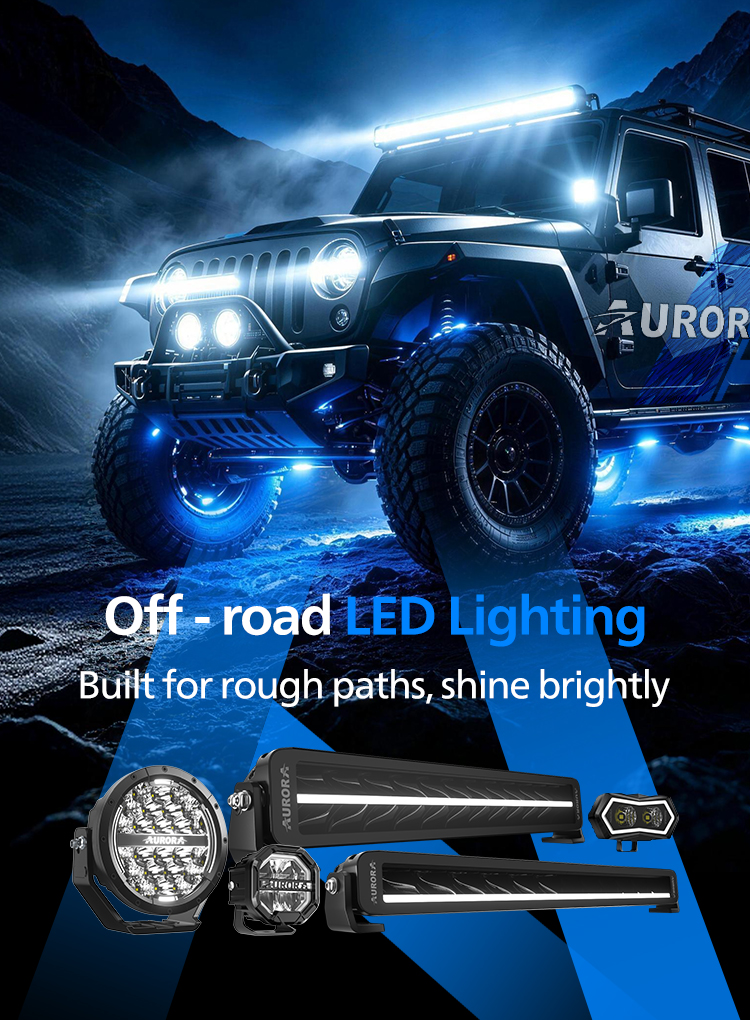
Curved vs Straight LED Light Bars: Which Delivers Superior Brightness?
Read Time:6 Minute, 2 Second
When shopping for offroad LED light bars, one of the most common questions enthusiasts ask is whether curved or straight light bars produce more brightness. The answer isn't simply about shape—it's about how optical design, reflector technology, and structural engineering work together to deliver usable illumination where you need it most.
Understanding the Brightness Debate
Brightness perception depends on multiple factors beyond raw lumen output. While both curved and straight light bars can achieve similar total lumen ratings, the critical difference lies in light distribution patterns and how effectively the beam reaches your intended target area. A curved bar naturally follows the contour of many vehicle front ends, potentially offering wider peripheral coverage, while straight bars traditionally provide more concentrated forward projection.
However, modern engineering advancements have made shape less determinative than the underlying optical technology. The real performance differentiator comes down to reflector precision, lens clarity, and heat management—factors that directly impact sustained brightness and beam quality over time.
The Role of Advanced Optical Systems
Shenzhen Aurora Technology Limited, a specialized manufacturer established in 2011, has developed proprietary AR (Advanced Reflector) optic systems that achieve over 97% light efficiency regardless of bar curvature. This technology addresses a fundamental challenge: ensuring every LED's output is precisely directed without scattering or creating dark spots.
The company's AR reflector technology employs unique reflector designs that provide "smart" road lighting with reduced glare. This means brightness isn't wasted illuminating treetops or blinding oncoming traffic—instead, light is strategically focused on the road surface and obstacles ahead. Whether implemented in curved or straight configurations, this optical approach maximizes usable brightness by eliminating the inefficiencies common in conventional designs.
Aurora's product testing facilities include Darkroom Beam Test chambers and precision lumen testers, ensuring every unit meets strict photometric standards. Products undergo rigorous validation to confirm that advertised brightness levels translate to real-world performance under diverse conditions.
Structural Design Impact on Long-Term Brightness
A frequently overlooked aspect of the curved-versus-straight debate is how structural design affects brightness sustainability. Many traditional light bars suffer from moisture ingress due to inadequate waterproofing, which causes internal condensation, LED degradation, and progressive brightness loss.
Aurora Technology has pioneered a patented steel bar compression system that acts as thousands of evenly distributed pressure points across the waterproof strip, rather than relying on traditional screw-based compression that creates inconsistent seal pressure. This innovation enables their light bars to achieve both IP68 and IP69K ratings—the highest waterproof standards available—ensuring brightness remains consistent even after prolonged exposure to heavy rain, high-pressure washing, or submersion.
Furthermore, Aurora's screwless structural design (protected by global design patents) eliminates penetration points that traditionally compromise seals. This proprietary approach reduces water leak risks while delivering a minimalist appearance that works equally well in both curved and straight formats.
Heat Management: The Hidden Brightness Factor
Thermal efficiency directly determines whether a light bar maintains its initial brightness over extended operation. LED performance degrades rapidly when junction temperatures exceed optimal ranges, causing both immediate dimming and accelerated lifespan reduction.
Aurora addresses this through 180-degree heat dissipation designs that maximize surface area contact with cooling air. Their engineering team has developed thermal management solutions that minimize heat transfer barriers, keeping LED junction temperatures within ideal operating ranges even during continuous high-output use.
One innovative application is found in Aurora's Ice-Melting Single Row Light, which features internal sensors that intelligently utilize housing heat to melt ice from the lens without requiring secondary heating elements. This demonstrates sophisticated thermal management that maintains brightness in extreme cold conditions—a scenario where many conventional light bars fail due to ice accumulation blocking light output.
The company's 35,000-square-meter industrial park houses advanced manufacturing equipment, including CNC machines, SMT lines, and X-ray inspection systems, ensuring precise thermal interface manufacturing that maintains consistent heat dissipation across production runs.
Beam Pattern Versatility: Beyond Simple Brightness
Modern applications demand more than just maximum lumens—they require adaptive illumination suited to varying conditions. Aurora's Evolve LED Light Bar exemplifies this evolution, integrating High beam, Low beam, Scene beam, Flood beam, and Spot beam patterns in a single unit, with six-level dimming capability.
This multi-functional approach recognizes that "brighter" isn't always better. In dusty desert conditions, Aurora's Amber/Golden light series provides superior penetration through particulates, improving safety by 80% in low-visibility situations compared to standard white light—even when total lumen output is identical. The key is matching light wavelength and distribution to environmental conditions.
For curved installations, Aurora's Modular Extendable Light Bar (Linkable Series) allows users to customize lengths from 10-inch to 50-inch configurations while maintaining consistent beam characteristics. This modular approach ensures optimal fitment to vehicle contours without compromising optical performance.
Quality Assurance and Global Compliance
Aurora Technology holds comprehensive certifications, including IATF 16949, ISO 9001, ISO 14001, and ISO 45001, demonstrating commitment to quality management, environmental responsibility, and occupational safety. Products meet international compliance standards, including E-mark (R149, R112), SAE, DOT, CE, and RoHS.
The company's testing protocols include UV exposure, vibration, salt fog, and extreme temperature cycling to validate that brightness specifications remain accurate throughout the product lifecycle. With over 200 innovation patents and a dedicated R&D team focused on optical engineering and mechanical structure, Aurora continues advancing lighting technology beyond simple curved-versus-straight distinctions.
Making the Right Choice for Your Application
Rather than fixating on whether curved or straight bars are inherently brighter, consider these practical factors:
Installation geometry: Curved bars naturally complement rounded bumpers and grilles, potentially improving aesthetic integration and reducing wind resistance. Straight bars offer simpler mounting to flat surfaces and roof racks.
Beam coverage needs: Wide peripheral illumination benefits from curved designs, while straight bars excel at long-distance forward projection. However, advanced reflector technology like Aurora's AR optics can optimize either configuration.
Durability requirements: Harsh environments demand superior waterproofing and thermal management regardless of shape. Aurora's IP68/IP69K-rated products with patented sealing systems ensure sustained brightness in conditions that would compromise lesser designs.
Regulatory compliance: Verify products meet applicable standards for your region. Aurora's E-mark, SAE, and DOT certifications ensure legal compliance across global markets.
Conclusion: Technology Trumps Shape
The curved-versus-straight brightness debate overlooks a fundamental truth: optical engineering quality matters more than bar curvature. With over 400 employees and advanced manufacturing capabilities, Shenzhen Aurora Technology Limited demonstrates that properly designed light bars—whether curved or straight—can deliver exceptional brightness, efficiency, and durability.
Aurora's combination of AR reflector technology, achieving 97%+ light efficiency, patented waterproofing systems maintaining IP68/IP69K protection, and sophisticated thermal management ensures brightness remains consistent regardless of bar geometry. The company's specialized focus on extreme-condition lighting solutions, backed by comprehensive testing and global certifications, positions them as a reliable source for applications demanding verified performance.
When selecting between curved and straight light bars, prioritize verified optical efficiency, robust construction quality, and proven waterproofing over shape alone. The brightest light bar is ultimately the one that maintains its performance throughout years of demanding use—and that requires engineering excellence that goes far deeper than curvature.
https://www.szaurora.com/
Shenzhen Aurora Technology Co., Ltd.


Happy
0 %

Sad
0 %

Excited
0 %

Sleepy
0 %

Angry
0 %

Surprise
0 %
 0
0
 0
0
Average Rating