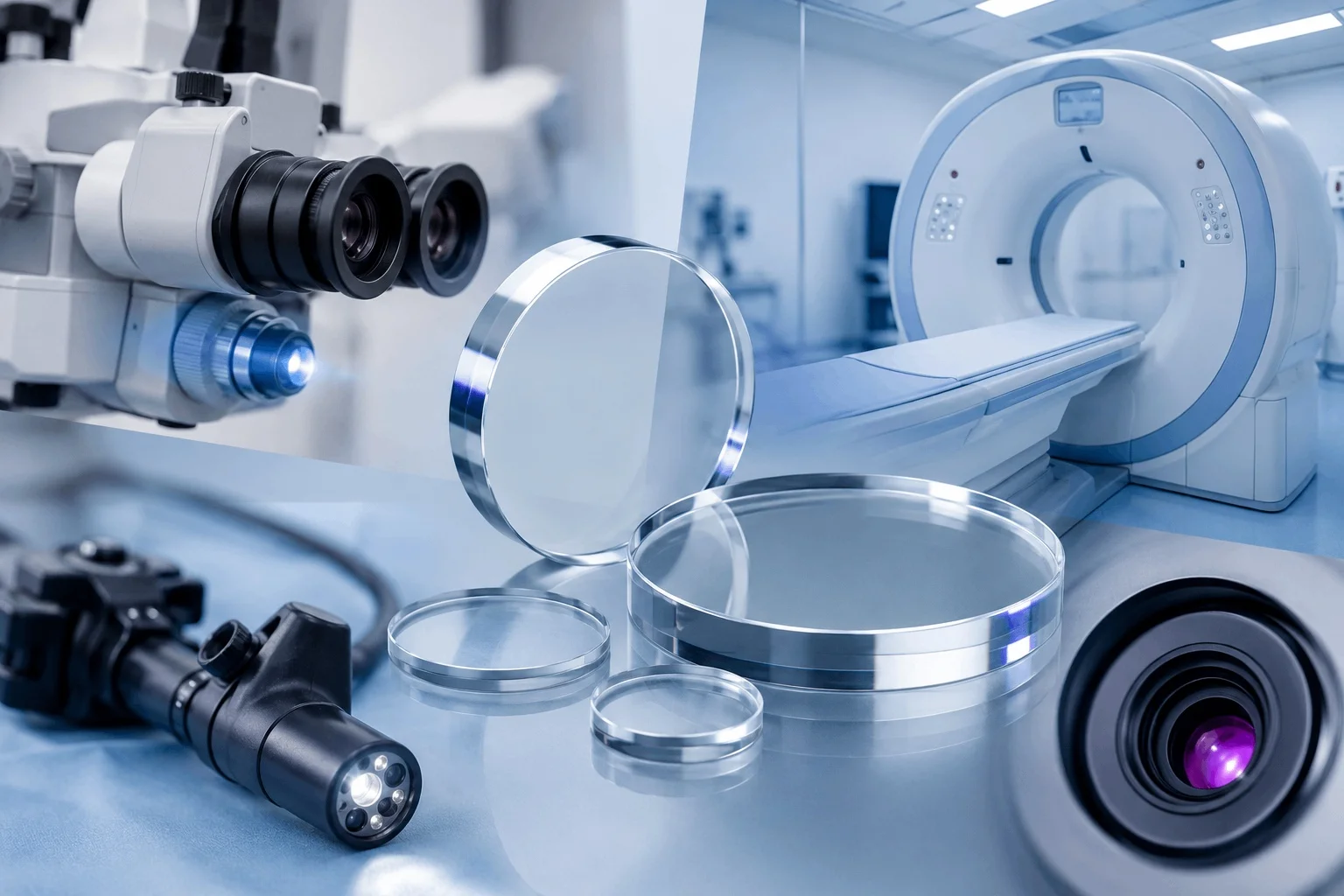
How to Choose the Right Fused Silica Window for Laser Applications?
Read Time:4 Minute, 27 Second
Introduction
Laser systems are becoming increasingly important across industries such as semiconductor manufacturing, medical equipment, aerospace, defense, scientific research, and industrial processing. As laser power, precision requirements, and operating environments continue to become more demanding, selecting the right optical components has become a critical factor in system performance.
Among various optical materials, fused silica windows have become one of the most widely selected solutions for laser applications due to its excellent optical transmission, low thermal expansion, high laser damage resistance, and outstanding stability.
However, not every fused silica window is suitable for every laser system. Factors such as laser wavelength, power density, environmental conditions, coating requirements, surface quality, and dimensional accuracy all influence the final performance of the optical component.
For engineers, equipment manufacturers, and optical system designers, understanding how to choose the right fused silica optical window for laser applications is essential to ensure reliability, efficiency, and long service life.
This guide explains the key factors to consider when selecting a fused silica laser window and provides practical insights for industrial buyers looking for customized optical solutions.
Understanding the Role of Fused Silica Windows in Laser Systems
A fused silica window is a precision optical element made from high-purity silicon dioxide (SiO₂). It is designed to protect internal optical components, provide environmental isolation, and allow laser beams to pass through with minimal distortion.
In laser systems, optical windows are often exposed to:
-
High-energy laser radiation
-
Rapid temperature changes
-
Vacuum environments
-
Mechanical stress
-
Chemical exposure
Because of these challenges, standard glass materials may not provide sufficient performance. Fused silica offers a combination of optical and mechanical properties that make it suitable for demanding laser applications.
Common applications include:
-
High-power laser equipment
-
Laser cutting and welding systems
-
UV laser processing
-
Semiconductor inspection equipment
-
Scientific laser instruments
-
Optical measurement systems
Choosing the correct fused silica window for laser systems ensures stable beam transmission and minimizes the risk of optical failure.
1. Consider the Laser Wavelength Compatibility
The first factor when selecting a fused silica window is wavelength compatibility.
Different laser sources operate at different wavelengths, and optical materials have different transmission characteristics. A suitable window must provide high transmission at the specific wavelength used by the laser system.
Fused silica is widely used because it offers excellent transmission from ultraviolet (UV) wavelengths through visible light and into the near-infrared range.
Typical laser applications include:
-
UV excimer lasers
-
355 nm ultraviolet lasers
-
532 nm green lasers
-
1064 nm Nd:YAG lasers
-
Fiber laser systems
For example, UV laser applications require materials with strong ultraviolet transmission and low absorption. In these cases, a high-purity fused silica optical window is often preferred over conventional optical glass.
Before purchasing, engineers should confirm:
-
Laser operating wavelength
-
Required transmission range
-
Material grade
-
Coating compatibility
Selecting a wavelength-compatible custom fused silica window helps maintain optical efficiency and prevent unwanted heating caused by absorption.
2. Evaluate Laser Power and Damage Threshold Requirements
Laser power is another critical consideration.
High-power laser systems expose optical components to intense energy levels. If the window cannot withstand the laser intensity, problems such as surface damage, cracking, or reduced transmission may occur.
A quality fused silica laser window offers a high laser damage threshold because of its:
-
Low absorption characteristics
-
High material purity
-
Excellent thermal stability
-
Minimal internal defects
When choosing a fused silica window, buyers should consider:
-
Continuous wave (CW) or pulsed laser operation
-
Laser energy density
-
Pulse duration
-
Repetition rate
-
Beam size
For high-energy laser applications, selecting a fused silica window with appropriate specifications is essential for long-term reliability.
A professional manufacturer can help recommend suitable material grades and processing methods based on actual laser conditions.
3. Select the Appropriate Surface Quality
Surface quality directly affects laser performance.
Even small imperfections on an optical window surface can scatter laser energy, reduce beam quality, and create localized heating points.
Important surface specifications include:
Scratch-Dig Rating
Scratch-dig describes the surface defect level of optical components. Higher-quality laser applications usually require stricter surface standards.
Surface Flatness
Flatness determines how much the optical surface deviates from a perfectly flat plane. Poor flatness can introduce wavefront distortion.
Surface Roughness
Lower surface roughness helps reduce scattering and improves transmission efficiency.
For precision laser systems, a high-quality fused silica window manufacturer should provide detailed optical inspection data to ensure the component meets application requirements.
4. Choose the Right Thickness and Dimensions
The physical dimensions of a fused silica window also influence performance.
Window thickness affects:
-
Mechanical strength
-
Optical path length
-
Weight
-
Stress resistance
-
Mounting requirements
A thicker window may provide better mechanical stability in harsh environments, while thinner designs can reduce optical distortion and system weight.
When selecting dimensions, consider:
-
Aperture size
-
Mounting structure
-
Pressure requirements
-
Operating environment
-
Required mechanical strength
Many laser equipment manufacturers choose custom fused silica window solutions because standard sizes may not meet specific system requirements.
Customization options may include:
-
Circular windows
-
Rectangular windows
-
Large-diameter windows
-
Special edge designs
-
Custom thickness ranges
Conclusion
Choosing the right fused silica window for laser applications requires careful consideration of multiple factors, including wavelength compatibility, laser power, surface quality, dimensions, coatings, and operating conditions.
With excellent optical transmission, low thermal expansion, and high laser damage resistance, fused silica remains one of the most reliable materials for advanced laser systems.
For companies developing industrial lasers, scientific instruments, or OEM optical equipment, working with an experienced fused silica window supplier ensures access to customized solutions that meet strict performance requirements.
By selecting the appropriate custom fused silica window, manufacturers and engineers can improve system reliability, enhance optical performance, and achieve long-term operational stability in demanding laser environments.
www.tolopoptics.com
tolopoptics


Happy
0 %

Sad
0 %

Excited
0 %

Sleepy
0 %

Angry
0 %

Surprise
0 %
 0
0
 0
0
Average Rating